




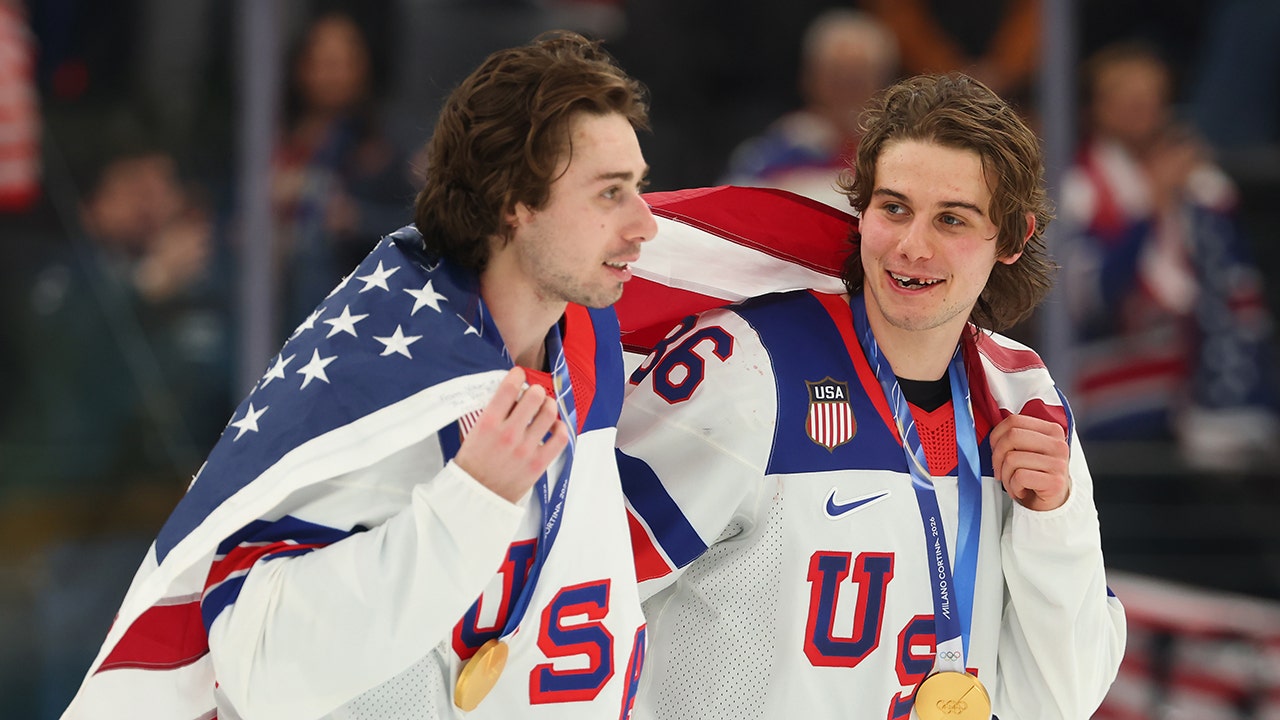
President Donald Trump picked up the phone one snowy afternoon in January, his voice booming with that unmistakable energy, to call the United States men’s Olympic hockey team. They’d just clinched gold in one of the most underdog triumphs in sports history, and Trump wanted to heap on the praise. Picture this: The team, a ragtag bunch of NHL stars who ditched their leagues to pull off miracles on ice, had fought through grueling matches, their skates etching gritty stories of perseverance into the Olympiad’s frosty annals. Trump, ever the showman, invited them to the State of the Union address on Tuesday, promising a spectacle that would rival their on-ice feats. But as the call wrapped up, he tossed in a quip that sparked a firestorm: He’d “have” to extend the same invite to the women’s team too, or risk getting impeached. It was classic Trump—bold, banter-filled, and unintentionally controversial. Back in Beijing, the air was still electric with victory. Jack Hughes, the New Jersey Devils phenom, had buried that golden goal in overtime, silencing Canada and lifting the U.S. men’s team to unthinkable glory. Hughes wasn’t the star of the show throughout the tournament; he was fourth on the team in goals. Yet, in those final seconds, his shot found net, turning a 2-0 deficit into overtime ecstasy. The team celebrated like brothers, jerseys tossed in the air, their victory a testament to the American dream resonating on the world’s stage. Trump, who watched it all unfold from afar, couldn’t resist chiming in personally. His words to the players? A mix of admiration and that presidential flair: “You guys are incredible, absolute warriors on the ice.” Beyond the gold, it was about national pride—how a group of men, bonded by sweat and sacrifice, reminded everyone of unity in divided times. The Olympics, that quadrennial spectacle of human endeavor, had delivered heartbreak and heroism in equal measure. The men’s side, overshadowed by heavier favorites, defied odds with a style that blended youthful exuberance and veteran grit. Stars like Nathan MacKinnon, Auston Matthews, and yes, Hughes himself, shared dorms, late-night chats, and strategies that echoed the camaraderie of old locker rooms. Trump’s call was timely, coming just as the team jetted back home, their wins inspiring a generation of kids dreaming of hockey stardom. But in congratulating them, Trump unwittingly stirred a debate about equality, highlighting how sports can mirror society’s broader conversations on recognition and respect. It wasn’t just about hockey; it was about how victories ripple through culture, uniting fans from all walks. Trump’s invitation to the State of the Union felt like a presidential high-five, a nod to their status as heroes. Yet, beneath the surface, his joke about impeachment hinted at the political tightrope he walks, always dancing on the edge of storm. The women’s team, too, had captured hearts with their own golden journey, charging into the narrative as trailblazers in a sport often dominated by men.
Three days before Hughes’ game-changer, the spotlight shone just as brightly on the women’s side of the rink. Megan Keller, a 23-year-old powerhouse from Minnesota, unleashed a shot that mirrored Hughes’ brilliance, clinching a 3-2 overtime thrill against Canada. It was poetic symmetry: two teams, two genders, two moments of triumph in the same games. But Trump’s call focused squarely on the men, praising their grit without pausing for the women who’d etched their names into Olympic lore. Critics pounced, deeming it a snub, a reflection of subtle biases where male achievements sometimes overshadow female equivalents. Keller’s goal wasn’t just a flash of genius—it came after a defensive stand that held off a powerhouse Canadian squad, much like the men’s comeback. The women’s team, coached by Joel Johnson, had navigated intense pressure, from balancing NHL jobs to family commitments, all while fighting for parity in a sport that once barred women from key events. Their victory dance? Just as electric, with hugs and laughter echoing through the arena, proof that skill knows no gender divide. Yet, in Trump’s eyes, it seemed the men’s story grabbed the headlines first, perhaps because hockey’s big leagues remain male-dominated. The criticism wasn’t just media noise; it underscored a broader push for equality, where every athlete’s sweat deserves equal airtime. Imagine the coaches’ rooms—women strategizing alongside men in informal meetups, sharing tips and tales. Trump’s omission, intentional or not, highlighted how even in celebration, old divides linger. Social media buzzed with debates: Was it a harmless oversight, or a wink to tradition? For the players, it was bewildering—hockey wasn’t about gender wars; it was about the game itself, pure and exhilarating. Keller’s moment, replayed endlessly on screens worldwide, symbolized resilience, much like Hughes’. But Trump’s chat reignited conversations on respect, reminding us that sports are a mirror to societal progress, reflecting both strides and setbacks.
Ellen Hughes, mother of Jack and a seasoned voice in women’s hockey development, stepped into the fray with grace and insight. As a player development consultant for Team USA’s women’s ice hockey program, she’s seen the inner workings of the sport firsthand— the grueling practices, the emotional highs, and the quiet battles for recognition. Far from offended by Trump’s quip, she viewed it through a lens of profound unity. “These players, both the men and women, can bring so much unity to a group and to a country,” Ellen told “Today,” her words laced with the warmth of someone who’s nurtured dreams on ice. She painted a picture of hockey as a great equalizer, where passions transcend politics and partisanship. Fans who normally steer clear of the rink cheered wildly for the gold—Republicans rooting for Democrats, or vice versa, united by the sheer joy of victory. Ellen’s role isn’t just professional; it’s personal. Watching her sons thrive, she’s witnessed the overlap between men’s and women’s worlds. In the Olympic village, it’s not segregated silos but shared spaces—dorm rooms buzzing with laughter, hallways echoing game recaps. The women’s team cheered for the men, and the men returned the favor, creating a tapestry of synergy that rivals the best team-building exercises. “If you could see what we see from the inside,” Ellen continued, her voice evoking those late nights under fluorescent lights, “the camaraderie and the way the women cheered on the men and the way the men cheered on the women—that’s what it’s all about.” For her, Trump’s comments were just noise; the athletes cared deeply about humanity, unity, and the nation’s spirit. It’s a refreshing take: Amid impeachment jokes and political whirlwinds, the games remind us of simpler bonds. Ellen spoke of the “other things they cannot control”—the external judgments—and how players focus on the core: Lifting each other, celebrating shared victories. Her perspective humanizes the athletes, showing them not as heroes on posters, but as kindred spirits forging connections in a divided world.
Quinn Hughes, Jack’s brother and a dynamo in his own right, added layers to this tale of mutual support. As a key forward for the men’s team, Quinn had scored a dazzling overtime goal against Sweden just a week earlier, propelling the U.S. into gold medal contention. His experiences in the Olympic village painted an intimate portrait of inter-team fellowship. “It was amazing to spend some time with the women’s team,” Quinn shared, recalling casual hangs amidst the hectic schedule. Picture spontaneous gatherings—players swapping stories over cafeteria meals, or huddling to watch highlights on phones. During those precious moments, gender faded into the background; they were all Olympians, chasing the same dream. “And then obviously watch them, me and Jack were there, we watched them win the gold medal,” he said, his tone filled with genuine awe. Attending the women’s final wasn’t just polite; it was an embrace, a way to honor the sisterhood on skates. In turn, the women showed up for the men’s games, their cheers mingling with the thunderous roars. “They came to our game and were able to watch us,” Quinn noted, emphasizing the back-and-forth support. That exchange wasn’t scripted; it blossomed organically, humanizing the elite athletes as approachable figures with shared dreams. Getting to know the women “a little better” felt special, underscoring how sports can bridge divides. Quinn’s words echoed the village’s vibe—a place where discipline meets downtime, where rivalries dissolve into respect. It challenged stereotypes, showing men and women not competing in silos but collaborating in a grand narrative of excellence. For Quinn, the Olympics transcended wins; it was about building memories, fostering empathy, and celebrating collective triumph. His story invites us to imagine the joy in those interactions—a high-five here, a shared laugh there—reminding us that unity often stems from simple, human connections.
As the controversies simmered, the invitations from the White House spotlighted logistical challenges and priorities. The women’s team, despite their historic win, politely declined the State of the Union invite, citing packed schedules that didn’t align with their commitments. Life as an Olympian doesn’t pause after gold; there’s media, endorsements, and returning to familial duties. Several men’s players, however, embraced the opportunity after a well-deserved break—partying in sunny Miami on Monday, letting loose with music and merriment, a counterpoint to the Olympics’ intense focus. The following day, some headed to D.C., stepping into the grandeur of the Capitol for Trump’s address, their presence a living testament to victory. It was a moment of national pride, where athletes intersected with politics, blurring lines between sport and statecraft. Yet, the declines and acceptances highlighted human elements: Exhaustion from battles frozen, the pull of rest versus duty. Trump’s joke about impeachment lingered like a punchline, but for the teams, it underscored how public figures must navigate perceptions. The men’s acceptance wasn’t unanimous; priorities varied, with the NHL season resuming on Wednesday. Players like Hughes would lace up for regular games, transitioning from Olympic glory to league grind. This shift reminded us of the athletes’ multifaceted lives—Olympians one week, professionals the next. Following Fox News Digital’s sports coverage on X provided a window into these stories, while the Fox News Sports Huddle newsletter kept fans in the loop. Related articles delved deeper, connecting dots in the web of sports diplomacy. Ultimately, the episode was a microcosm of American spirit: Triumphs celebrated, debates sparked, but unity persevering through schedules and formalities.
In wrapping this up, the Olympic hockey saga reveled in its ability to humanize champions, stripping away facades to reveal characters bound by passion. Trump’s call, with its blend of praise and provocation, ignited dialogues on equity, yet the athletes’ responses emphasized what truly matters—connections forged on neutral ground. From Keller’s goal mirroring Hughes’ to the shared cheers in the village, the games illuminated a path to cohesion. Ellen and Quinn Hughes’ insights transformed potential division into narratives of synergy, where external noise fades against the roars of support. The invitations, accepted or declined, highlighted real-world balances, proving that heroes juggle fame with functionality. As the NHL roared back to life, fans followed on platforms eager for more, the story a reminder of sports’ power to unite. But beyond the ice and politics, it was the humanity—the late-night talks, the reciprocal cheers—that left the lasting mark, encouraging us all to root for each other in our own arenas, regardless of the spotlight’s whims. This Olympics wasn’t just about gold; it was about golden threads of empathy weaving through the fabric of our shared experiences, proving that in the end, it’s the people, not the prizes, that endure.