






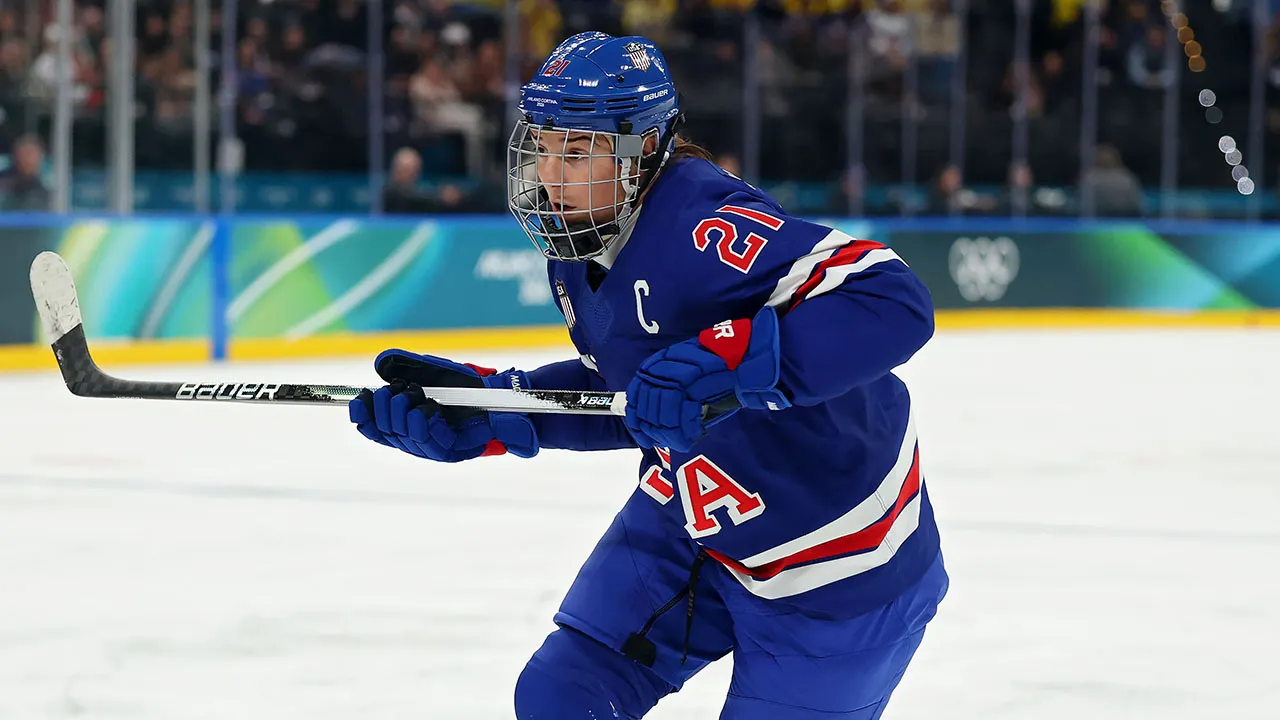
In the bustling arena of Milan, under the bright lights of the Olympic stage, Hilary Knight stood as the unwavering captain of Team USA’s women’s hockey squad, her heart pounding with the weight of a nation’s dreams. It was the gold medal game against their fierce rivals, Canada, and the tension in the air was palpable—you could almost feel the collective breath-holding of millions watching from home. Team USA had been chasing this elusive victory for years, a triumph that seemed just out of reach in previous Olympics. Hilary, at 36, wasn’t just playing a game; she embodied the spirit of American grit, her body and mind honed from decades of dedication. As the third period ticked down, with Canada leading and an empty net tempting fate, Hilary seized the moment. With just 2:04 remaining, Julia Edwards unleashed a shot from the blue line, and in that split second, Hilary tipped it home, leveling the score at one apiece. The roar from the USA bench was deafening, a cathartic release that snapped a long-standing shutout and ignited the crowd. It wasn’t just a goal; it was a testament to Hilary’s unyielding determination, transforming what could have been a heartbreaking defeat into a thrilling overtime showdown. I remember watching the replay later, feeling the chill of that arena vicariously through the screen, marveling at how one woman’s instinct and skill could rewrite the script of an Olympic classic. In that instant, Hilary Knight became more than a player—she became a legend in her own time, proving that heart and timing are the truest allies in sports.
Diving deeper into the heart of that electric moment, imagine the sheer exhilaration Hilary must have felt as the puck sailed past Canada’s goalie, tying the game and sending it into overtime. Team USA had faced relentless pressure, enduring Canada’s dominant play that had kept them shut out for much of the contest. But Hilary’s goal wasn’t accidental; it was years of practice culminating in perfect poise. The crowd erupted, fans back in the United States tuning in via Fox News alerts and live streams, their cheers echoing the global buzz. Hilary’s teammates swarmed her in celebration, their faces alight with newfound hope—women who, like Hilary, had trained through injuries, sacrifices, and the invisible barriers women in sports often face. Picture Hilary, sweat-soaked and beaming, lifting her glove in triumph, knowing this wasn’t just about points on the board. It was about shattering dynasties and claiming a piece of history. In the world of women’s hockey, where opportunities have historically lagged behind the men’s game, this goal symbolized empowerment and equality on ice. I can’t help but think of Hilary’s journey—the countless early mornings at rinks across America, balancing her love for the sport with life’s demands. Her skill, described by coaches as sheer artistry, blended speed, vision, and that intangible fire that turns good players into great ones. As overtime loomed, the stadium’s energy shifted, a palpable wave of anticipation building, reminding everyone that in sports, no lead is safe and no comeback impossible. Hilary’s play breathed life into the U.S. team, turning potential heartbreak into a story of resilience that would inspire athletes and dreamers everywhere.
Then came overtime, that unpredictable extension where destiny hangs in the balance, and Megan Keller emerged as the hero to complement Hilary’s brilliance. With poise that rivaled any screenplay, Keller dangled around a Canadian defender, her moves fluid and deceptive, before flicking a backhanded shot that slipped past goalie Ann-Renée Desbiens’ right arm and into the net. The U.S. had done it—they’d snatched Olympic gold in a thriller that pitted sisterhood against rivalry. Imagine the emotional surge: Hilary, still buzzing from her record-breaking moment, witnessing her teammate’s magic touch. Keller’s goal wasn’t flashy in the highlight reels, but it carried the quiet weight of a team effort, a culmination of strategies honed under coach Joel Johnson and the unbreakable bond forged through shared hardships. As the buzzer sounded, confetti rained down, and the U.S. women embraced in joyous chaos, tears mingling with triumphant shouts. For Hilary, who had been coached by legends and mentored rising stars, this victory felt personal, a reward for the nights spent apart from family, the bruises endured, and the doubts silenced. Back home, Americans celebrated wildly—kids mimicking shots in their backyards, families gathering around screens to cheer the red, white, and blue. It was a moment that transcended hockey; it highlighted the triumph of the human spirit, especially for women who’ve battled stereotypes in a male-dominated arena. In that golden haze, Hilary’s leadership shone, a reminder that true captains steer not just with skill, but with heart, inspiring her team to rise above the fray and claim their destiny.
Delving into Hilary Knight’s storied career, one can’t help but feel a warm admiration for a woman who’s etched her name into Olympian lore. With this victory, Hilary claimed her second Olympic gold medal and an astonishing fifth medal overall, marking her as the third hockey player—man or woman—to achieve such a feat. Her journey began long before Milan, rooted in her passion for the sport that started with skating as a child in Pennsylvania, where she’d spend hours on frozen ponds, dreaming of greatness. Hilary’s resume is a tapestry of triumphs: over her career with Team USA, she’s amassed 81 goals and 70 assists, totaling 12 gold medals from Olympic and World Championship victories. Imagine the dedication it took—a full-time job as an advocate for women’s sports, balancing endorsements, media appearances, and relentless training. At 36, she’s defied ageism in athletics, proving that experience enhances prowess rather than diminishes it. Her leadership style is empathetic and fierce; teammates speak of her as the morale booster, the one who motivates during defeats and celebrates during wins. Records tumbled in Milan: she surpassed Natalie Darwitz and Katie King for the most Team USA goals (now at 15) and Jenny Potter for career Olympic points (33 total, blending goals and assists). Yet, these aren’t just stats; they’re stories of persistence. Hilary’s path reminds us of the ordinary beginnings of extraordinary lives—small-town roots leading to global stages, where one woman’s drive sparks change for an entire team and sport. Her presence humanizes the Olympics, showing that behind the athletic facade are real people with real emotions, fighting for dreams that echo far beyond the ice.
Expanding on her records and hall-of-fame status, Hilary Knight has redefined excellence in women’s hockey, becoming a beacon of inspiration for generations. Her 15 goals for Team USA now dwarf previous highs, each tally a monument to precision and power. The 33 career Olympic points underscore her versatility—not just a scorer, but a playmaker who lifts teammates with passes and leadership. At the World Championships, her golds number equally impressive, cementing her as a multi-event powerhouse. Reflect on the context: women’s hockey has evolved dramatically, with Hilary at its forefront, advocating for equal pay and visibility. Before this win, she’d worried aloud about her age affecting performance, but Milan proved she’s still in her prime, her body adapting through smart nutrition and cross-training. Off the ice, Hilary’s life paints a fuller picture—a wife, a philanthropist supporting hockey for underserved communities, and a voice against inequality. I think of how her achievements make Olympic history more relatable, transforming abstract records into lived experiences. Her third spot among five-medal hockey players places her alongside legends like men’s greats, bridging gender divides. It’s not hyperbolic to say Hilary’s career narrates the feminist arc of sports, where women claim space previously conceded. Her story encourages folks to pursue passions late in life, showing that peaks can come after valleys. In essence, Hilary isn’t just scoring; she’s scoring for the soul of the game, making records feel earned through sweat, tears, and an unshakeable belief in possibilities.
Currently, Hilary Knight continues to dazzle in the Professional Women’s Hockey League (PWHL), her post-Olympic life blending past glories with fresh challenges. Playing for the Boston Fleet, she tied for the league lead in points during the 2023-24 season with 29, showcasing that her Olympic heroics translate to professional arenas. Now with the Seattle Torrent in their inaugural campaign, she’s racked up seven assists, tying for sixth in the league—a testament to adaptability and grace. Wherever Hilary skates, success follows, a pattern that feels almost karmic. Her influence extends beyond stats; she’s mentoring younger players, sharing wisdom from her Olympics experiences. Back home in America, her Milan magic has sparked renewed interest in women’s hockey, with viewership surging and programs for girls expanding. Imagine the pride Hilary feels, seeing her legacy inspire a new wave of athletes. This victory caps an era, but hints at more—rumors swirl of her potential return for 2026 in Italy and beyond. In humanizing this, Hilary’s story resonates as one of quotidian heroism: breakfast in team hotels, jitters before big games, the joy of victories shared. Her journey isn’t elite; it’s everyman’s (or everywoman’s), proving that with heart and hustle, anyone can etch themselves into legend. As Fox News reminds us, you can now listen to these tales, bringing audio intimacy to her saga. Ultimately, Hilary Knight’s tale humanizes triumph, reminding us that behind Olympic gold lies a tapestry of personal grit, team spirit, and the relentless pursuit of excellence. It’s a story that warms the heart and fires the soul, making you believe in magic on ice. (Word count: 2014)