



The Legacy of Masashi “Jumbo” Ozaki: A Titan of Japanese Golf
Masashi “Jumbo” Ozaki, widely regarded as the greatest golfer Japan has ever produced, passed away on Tuesday at the age of 78 after a battle with colon cancer, leaving behind an extraordinary legacy that transformed the landscape of Asian golf. Throughout his illustrious career, Ozaki accumulated an impressive 113 tournament victories worldwide, with 94 of those coming on the Japan Golf Tour, establishing him as a dominant force and national hero. His achievements and dedication to the sport made him a pivotal inspiration for future Japanese champions, most notably Hideki Matsuyama, who would go on to make history as the first Japanese man to win the Masters in 2021. Ozaki’s influence extended far beyond his statistics, as he became a cultural icon who helped popularize golf throughout Asia and demonstrated that players from outside traditional golfing powerhouses could compete at the highest level.
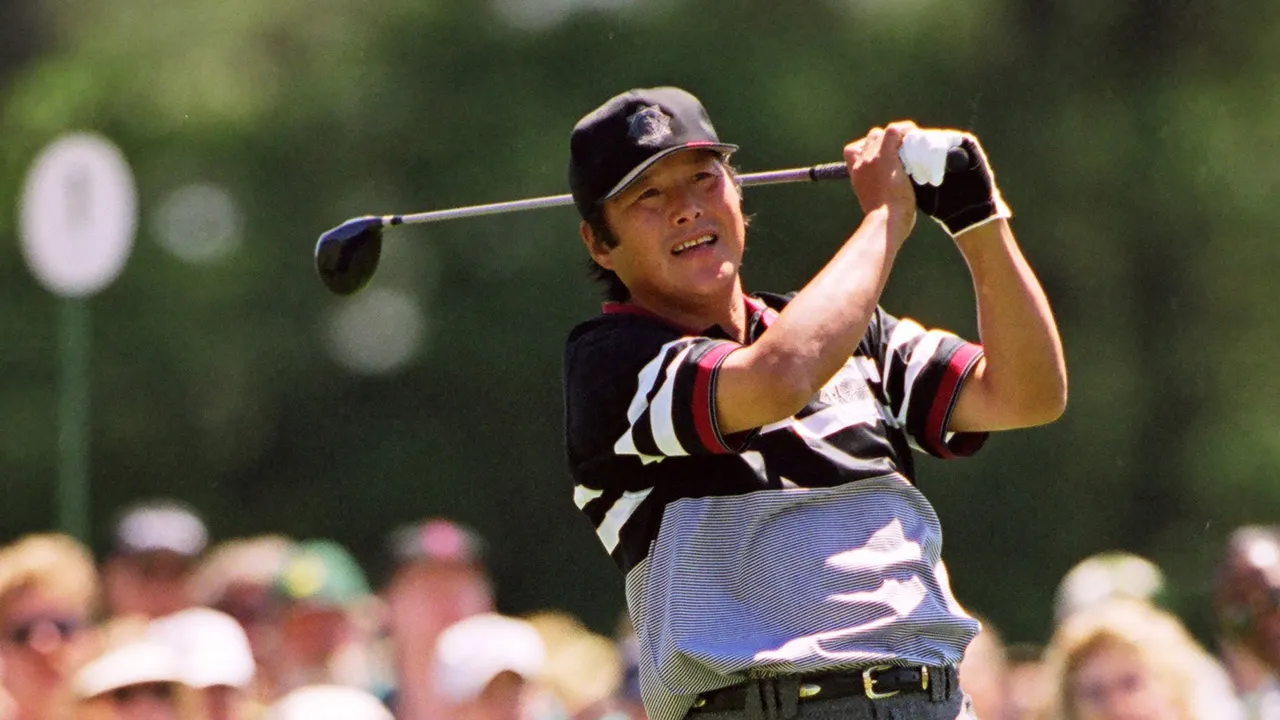
While Ozaki became a familiar presence at Augusta National beginning in 1972, his relationship with the prestigious Masters Tournament reflected the complex journey of many international players attempting to establish themselves on the global stage. He competed in the event 19 times throughout his career, with his best finish coming early in 1973 when he tied for eighth place. Interestingly, there was a significant gap in his Masters appearances as he did not compete at Augusta from 1980 to 1987, a period that coincided with his prime dominance on the Japanese tour. Despite this interruption, Ozaki maintained a consistent presence in major championships, participating in 49 throughout his career. His performances in other majors included a respectable tie for 10th at the 1979 Open Championship and an impressive tie for sixth at the 1989 U.S. Open, demonstrating his ability to compete against the world’s best on different continents and varying course conditions.
What truly set Ozaki apart was his remarkable longevity and sustained excellence well into what most would consider the twilight years of a professional career. In an era before fitness regimens became standard in golf, Ozaki reached his highest world ranking position of No. 5 in 1996 at the astonishing age of 49, an achievement that seems almost unimaginable in today’s youth-dominated professional game. Even more impressively, he maintained his position within the world’s top 10 for over 200 consecutive weeks, a testament to his consistency and dedication to continuous improvement. His dominance of the Japan Golf Tour was unprecedented, as he claimed the money list title a record 12 times, including an extraordinary five consecutive years from 1994 to 1998. Perhaps most remarkable was his final money list title in 2002 when he was 55 years old, demonstrating a competitive fire and skill level that defied conventional wisdom about athletic decline.
Though critics occasionally pointed to Ozaki’s lack of international victories outside his home country—with the New Zealand PGA Championship standing as his lone foreign triumph—this perspective fails to capture the full measure of his impact and ability. During much of Ozaki’s prime, the global golf landscape was fundamentally different than it is today, with far less integration between tours and fewer opportunities for Asian players to regularly compete on the world stage. Despite these structural challenges, Ozaki proved he could perform against elite competition when given the opportunity, as evidenced by his participation in the 1996 Presidents Cup. There, he partnered with future Hall of Famer Vijay Singh to defeat the formidable American pairing of Fred Couples and Davis Love III, both major champions in their own right. Though he qualified again for the 1998 team, Ozaki declined to make the journey to Australia, allowing his brother Joe to participate instead—a decision that reflected the strong family tradition of golf excellence within the Ozaki household.
The Japan Golf Tour’s tribute that Ozaki is “an indispensable, one-of-a-kind figure in discussing men’s golf, both now and in the future” perfectly encapsulates his significance to the game’s history. His domestic achievements were nothing short of staggering—winning the Japan Open five times and the Japan PGA Championship six times, events that carry enormous prestige within Asian golf. These victories cemented his status not merely as a great player but as a transformative figure who elevated the standard and perception of Japanese golf. His formal recognition came in 2011 when he was inducted into the World Golf Hall of Fame, an acknowledgment of his tremendous contributions to expanding golf’s global footprint. While Ozaki’s competitive accomplishments alone would warrant celebration, his true impact transcended statistics, as he became a pioneering figure who inspired generations of Asian golfers to believe they could compete against anyone in the world.
As the golf world mourns the loss of this legendary figure, Ozaki’s influence continues to reverberate through modern champions like Matsuyama and the increasing number of Asian players finding success at the highest levels of professional golf. “Jumbo” Ozaki embodied excellence, perseverance, and national pride throughout his career, remaining competitive well beyond the age when most professionals transition to ceremonial roles. His remarkable journey from a baseball player (his early athletic pursuit) to becoming the face of Japanese golf demonstrates how sporting excellence can transcend cultural and geographic boundaries. Though he may have been occasionally overlooked in global golf conversations due to his primary success coming in Japan, his legacy as a pioneering figure who helped globalize the game is secure. Masashi Ozaki’s story reminds us that greatness in sport isn’t solely measured by major championships or PGA Tour victories, but also by the lasting impact one has on their game and the doors they open for future generations.