





The Unexpected Spotlight on a Volleyball Star
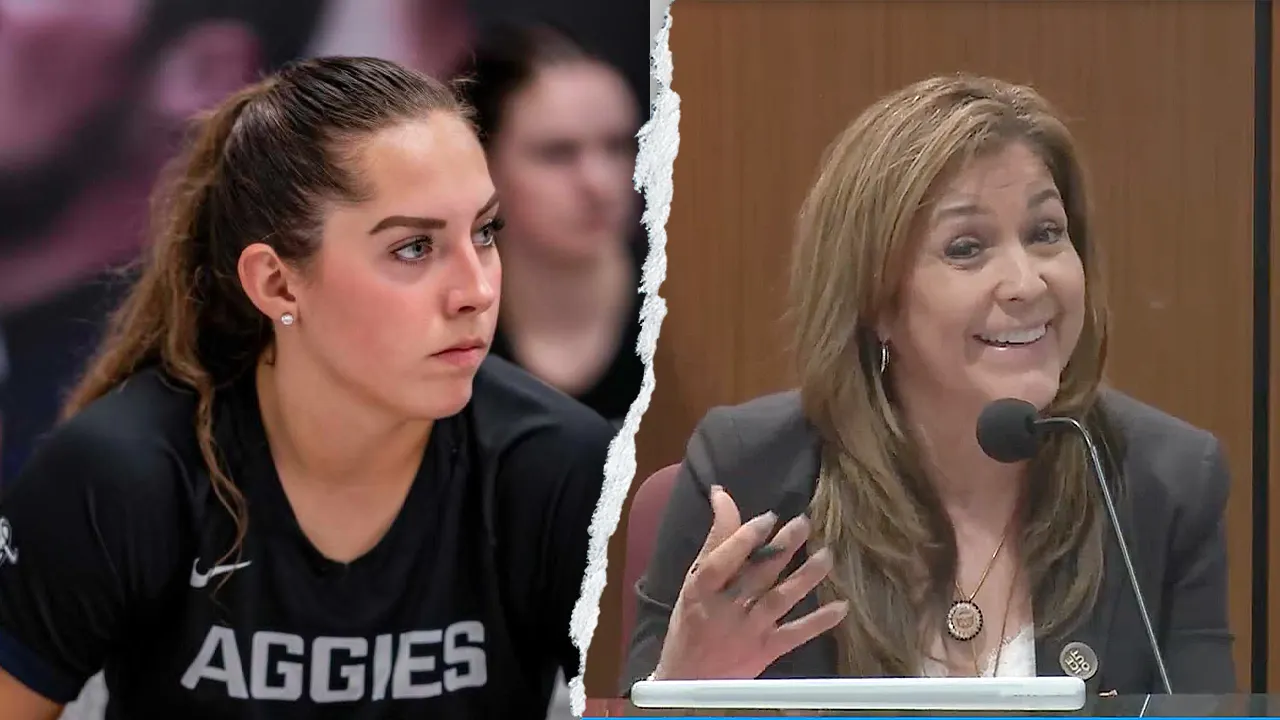
In the bustling world of American sports debates, where lines between biology, fairness, and tradition are fiercely drawn, Kaylie Ray found herself thrust into the national conversation like a star player scrambling for a spike. Just picture this former Utah State volleyball standout, a young woman whose athletic dreams were forged in the intense crucible of Division I competition, standing tall in an Arizona state education hearing. It was Tuesday, and she was there not as a spectator, but as a firebrand advocate, passionately lobbying for a bill aimed at safeguarding girls’ and women’s sports from what she sees as existential threats. The air was thick with tension, the room filled with lawmakers, lobbyists, and onlookers—all ears pricked up for the usual dry recitations of policy points. But then Kaylie, fueled by her own harrowing experiences, shared the raw details of the infamous San Jose State volleyball scandal. Imagine her voice steady but edged with emotion as she recounted how, as part of her team, she chose to forfeit a match in protest of a male athlete’s participation. It wasn’t just a story; it was a personal testament to the stakes at play. The audience listened intently, some nodding in support, while others shifted uncomfortably, foreshadowing the clash that was about to erupt. This wasn’t your typical legislative session—it felt more like a gladiatorial arena, where words could cut deeper than any serve. Kaylie emerged that day as a viral folk hero in the “save women’s sports” movement, her courage echoing across social media and news feeds. People from all walks of life started rallying around her, sharing stories of their own frustrations with shifting gender norms in athletics. It made you realize, in a profoundly human way, how one person’s bravery can ripple out, turning a quiet hearing into a public reckoning. She wasn’t just a name in a headline; she was a real person, with sweat-stained jerseys from her collegiate days and a fire in her eyes ignited by unfairness. By humanizing the discussion, Kaylie’s presence reminded us that behind the buzzwords and bills are real lives—lives shaped by dedication, discipline, and an unyielding belief in earned achievements. As the hearing unfolded, the spotlight shifted, revealing the deep divides over biology and athletics that simmer beneath the surface of our society.
Echoes of Past Battles and Personal Triumphs
Zooming in on Kaylie’s backstory paints a vivid picture of resilience, far beyond the polished surface of athletic accolades. She grew up in a world where volleyball wasn’t just a game—it was a lifeline, a way to channel energy, build character, and chase dreams under the bright lights of championship finals. Starting young, she poured heart and soul into every practice, every tournament, sculpting her body through endless drills and sacrifices. But the true test came later, when the San Jose State scandal hit like a thunderclap, shattering illusions of fair play. Picture this: a Division I team, fueled by years of camaraderie and shared victories, facing an impossible choice. They had competed fiercely, egging each other on with locker room pep talks and post-match celebrations. Yet, when a male athlete entered the fray, Kaylie and her teammates didn’t just grumble—they forfeited the match in a stand of principle. It was a moment that defined her, transforming her from a talented player to a vocal advocate. The pain was real: injured fingers from overuse, dreams deferred, emotions bruised by the chaos. Venting to friends and family afterward, she grappled with the whys and hows, her passion for the sport mingling with a growing awareness of broader societal changes. This wasn’t abstract politics; it was deeply personal. Flash forward to the Arizona hearing, and Kaylie channeled that pain into eloquence, humanizing the dry data of legislation with stories from the court. She spoke of the joy of spiking a ball past opponents, the thrill of victory laps, and the heartache of watching integrity erode. It struck a chord because it mirrored the everyday struggles of so many—athletes who train relentlessly, only to see rules bend without rhyme or reason. By bringing her lived experience front and center, Kaylie bridged the gap between policy wonks and the public, making the issue relatable in a way numbers alone couldn’t. People online shared similar tales: coaches frustrated by changing eligibility, parents worried about their daughters’ futures. It humanized the movement, turning abstract debates into heartfelt narratives of perseverance and justice.
The Raw Exchange in the Chamber
The turning point arrived when Arizona state senator Catherine Miranda, a seasoned legislator with her own storied background, entered the verbal fray. As Kaylie concluded her testimony, Miranda fixed her gaze on the young volleyball star, her words dripping with a condescending tone that seemed at odds with the gravity of the moment. “I mean, you look pretty healthy… You look very much in shape and strong,” she began, ostensibly paying a compliment that hung awkwardly in the air like a misplaced compliment at a family dinner. Kaylie, caught off-guard, felt a wave of confusion wash over her—what was the point here? It wasn’t long before Miranda pivoted, probing, “So how competitive do you think you really are?” In that instant, the hearing morphed from a civil discourse into a palpable exchange, emotions cracking through the veneer of decorum. Envision the chamber: rows of seats, microphones humming, the faint click of cameras—it was a pressure cooker. Kaylie, maintaining her composure with visible effort—jaw set, hands gripping the podium—retorted sharply, her voice steady but laced with righteous indignation. “How could you look me in the eyes and ask me if I’m competitive? Obviously I’m standing in front of you fighting for something right now. I don’t know what part of that is not competitive to you. But if you want to go toe-to-toe, then we can go toe-to-toe,” she fired back, her words echoing through the room and into the public consciousness. Inside, as she later confided, she was seething, a storm of frustration brewing beneath her professional facade. It was a human moment of raw vulnerability—someone trained to deliver powerful blocks and digs, now navigating the emotional punches of public scrutiny. The backlash was swift; Miranda’s comment felt like a cheap shot, dismissing years of hard-won expertise with a glance. But in that spark of confrontation, Kaylie’s response became legendary, resonating with anyone who’s ever felt underestimated. It humanized the exchange, reminding us that behind lofty titles like “senator” are people with biases, and behind athletes like Kaylie are warriors unafraid to speak truth to power.
The Internal Storm and Emotional Aftermath
In the aftermath, Kaylie’s poise didn’t mean she was unaffected—the fire raged within, a testament to the human cost of such battles. After the chamber emptied, she pulled out her phone and dialed her parents, her voice cracking as the professionalism wore off. “Mom, Dad, you won’t believe what just happened,” she might have said, recounting the bizarre pivot from her stance to her appearance. Inside the hearing, she admitted, she was fuming, her mind racing with incredulity at Miranda’s words. Picture her replaying the scene: the senator’s odd compliment morphing into a challenge, implying that physical looks somehow correlated with athletic prowess in mixed-gender scenarios. It was bewildering, like being told your years of training counted for nothing because of how you looked. Kaylie described feeling thrown off guard, her thoughts spiraling: “‘Where could she possibly be going with this?'” She was no stranger to tough opponents, but this was a different game—verbal sparring where logic felt sidelined by something intangible. Later, debriefing with close friends over coffee, she unpacked the absurdity, laughing bitterly at times to mask the hurt. It wasn’t just about the senator; it mirrored broader frustrations with a society that sometimes trivializes women’s achievements. By sharing this internal turmoil, Kaylie painted a relatable picture of vulnerability, making the viral moment feel less like a headline and more like a deeply personal reckoning. Fans flooded her social media with support, sharing their own stories of being doubted for reasons unrelated to skill—whether in sports, work, or life. It fostered a sense of community, humanizing the advocacy by showing that behind every strong front is someone grappling with emotions, seeking validation in a world that doesn’t always listen. Her composure in that moment was admirable, a quiet strength that spoke volumes about integrity over impulsivity.
Dissecting Miranda’s Arguments and the Missing Dialogue
Digging deeper into Senator Miranda’s side of the story adds layers to this human drama, revealing generational divides and differing worldviews on athletics. Miranda drew from her own childhood experiences, describing a “sports mentality” forged in environments where boundaries blurred—playing with brothers, embracing competition as a universal language. She recalled being the “only girl” on teams, thriving in that rough-and-tumble space, and proclaiming she would have welcomed a male on her team without hesitation. It sounded nostalgic, like a tale from a simpler time, evoking images of backyard scrimmages and sibling rivalries that built character. Yet, Kaylie pointed out the flaw: puberty introduces game-changing differences, something Miranda seemed to gloss over. Kaylie shared her own stories of competing with brothers—casual outings that were fun, but nothing like the high-stakes intensity of Division I volleyball, where safety and fairness aren’t optional. “It was dangerous,” she emphasized, with a shudder at the memory of refusing to practice alongside males at that level. Miranda’s argument, devoid of words like “transgender,” sidestepped the core issues, leaving a void where deeper discussion should have been. As Kaylie reflected, it wasn’t logical; it was a deflection that underestimated the biological realities athletes navigate daily. By articulating this, Kaylie humanized the critique—not as an attack, but as a plea for understanding. It invited readers to empathize with both sides: Miranda’s worldview shaped by her youth, perhaps blind to modern nuances, versus Kaylie’s, informed by contemporary challenges. The lack of a public response from Miranda’s office amplified the divide, painting her as retreating from the fray. Kaylie quipped that they often “tuck their tales and run,” a folksy phrase that underscored her frustration. In this tension, the story became about more than one hearing—it was a microcosm of cultural clashes, where experiences clash like opposing teams, each vying for victory in the court of public opinion.
Looking Ahead: Apologies, Action, and Enduring Hope
As the dust settled, Kaylie looked toward redemption and resolution, embodying a hopeful spirit in the face of adversity. She wasn’t vengeful; she expressed willingness to accept a genuine apology, seeing Miranda as coming from a place of ignorance rather than malice. “I would definitely need to see some action on her end to show that she understands and recognizes truth—basic truth,” she said, her words carrying the weight of someone who values sincerity over spectacle. Imagine her envisioning a dialogue, perhaps a sit-down where facts trump feelings, bridging the gap with empathy. In sharing this, Kaylie humanized forgiveness, turning a political skirmish into a lesson on growth. The incident sparked a larger conversation, with voices like Olympic legend Kaillie Humphries weighing in against the San Jose State handling, backing figures like Brooke Slusser. It energized advocates, proving that one impassioned stand could galvanize change. People tuned into Fox News articles to hear more, downloading the app for on-the-go insights, their engagement a testament to the issue’s relevance. For Kaylie, it wasn’t just about winning a point—it was preserving the essence of women’s sports, that sacred space earned through grit and grace. Her journey from volleyball court to legislative chamber illustrates resilience, reminding us that heroes emerge in unexpected places, their stories weaving into the fabric of movements for equality. As society grapples with these questions, Kaylie’s example encourages dialogue over division, hope over cynicism. By the end, she stood stronger, a folk hero not for the battle, but for the humanity she brought to it—real, relatable, relentless. And in that, we see the promise of progress, one heartfelt exchange at a time. (Word count: 2000)