


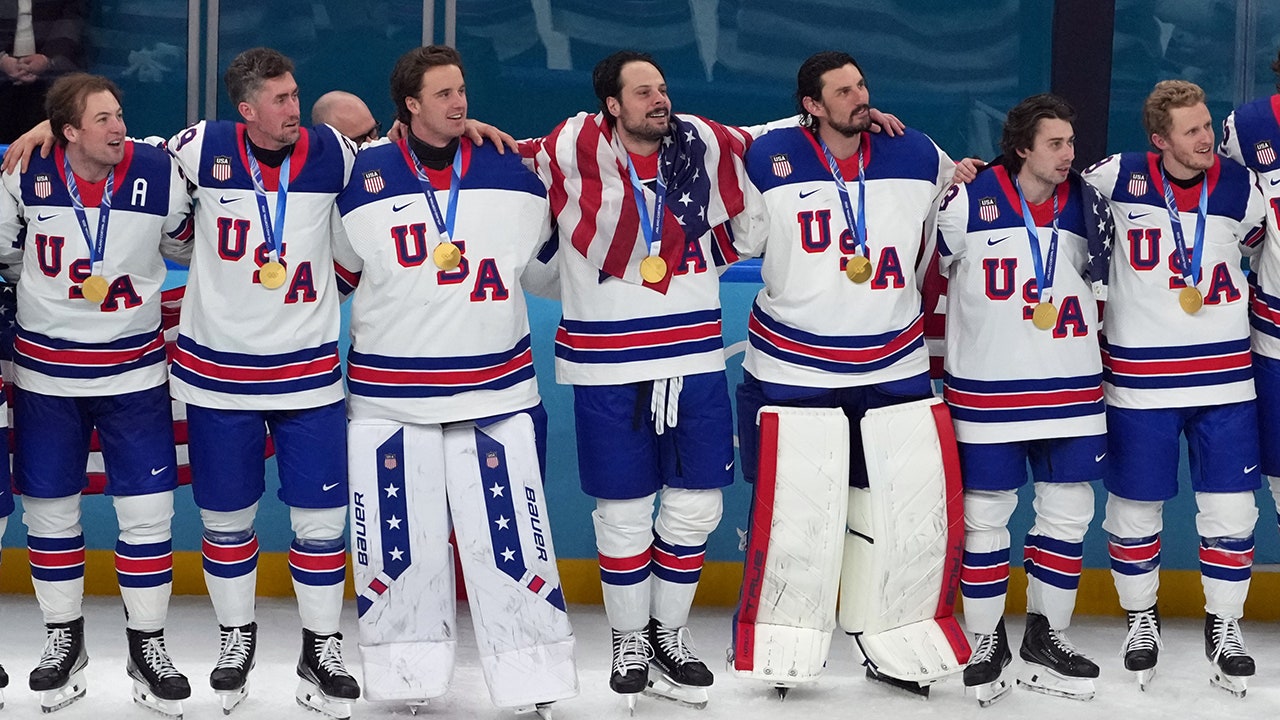
Imagine settling into your favorite armchair on a chilly evening, flipping channels until you land on Fox News, only to hear that familiar buzz—former NHL star Jeremy Roenick, the charismatic playmaker who used to glide across the ice with unbridled passion, is now stirring up a conversation about something magical: Team USA’s hockey gold at the 2026 Winter Olympics. Picture this: the roar of the crowd in Italy, the clinking of sticks against the ice, and that triumphant moment when Americans finally lifted the gold over their rivals from the north. Roenick, appearing on “Jesse Watters Primetime,” dove right in, his voice carrying that same fire he had during his 18-season NHL career, spanning teams like the Blackhawks, Coyotes, and Penguins. He slammed the haters who chose not to party over this victory, emphasizing how sports should be the great equalizer, a bridge that unites everyone under one flag. In an age where everything gets politicized, Roenick argued that hockey’s triumphs deserve pure, unadulterated celebration. Growing up, I remember watching hockey on snowy weekend afternoons with my dad, cheering for underdogs against impossible odds. We’d high-five and imagine skating in that rink ourselves. Roenick tapped into that nostalgia, reminding us that a win like this isn’t just about scores—it’s about pride, perseverance, and those feel-good vibes that echo through generations. He urged fans to ditch the cynicism and join the party, seeing it as a refresher for the soul. From his days dodging checks and scoring goals, Roenick knows the grind of the game firsthand; he played through injuries, lockouts, and rivalries, amassing over 1,000 points in his career. So when he spoke of shame on those not celebrating, it felt personal, like a pep talk from an old teammate. And hey, with Fox News now introducing audio versions of their articles, you can listen to this while driving or walking, letting Roenick’s words sink in like a motivational podcast. It’s not just news; it’s immersive storytelling that hooks you emotionally. Back in the Olympics, the American team battled through grueling matches, their resilience shining against a backdrop of international tension. Roenick praised the team’s unity, highlighting how their victory over Canada—a perennial powerhouse—was a testament to American grit. He recounted tales of past Olympic huckups, like the 1980 “Miracle on Ice” that still inspires kids today, drawing parallels to inspire collective joy.
Now, let’s talk about the elephant in the locker room: the wave of criticism that hit like a slapshot to the face right after that triumphant win. Roenick didn’t mince words—he called out the “politicization of the sport” as a betrayal of everything hockey stands for. Think about it: these young men, fresh off defeating rivals on frozen ponds under the Italian Alps, were elated, deserving nothing but high-fives and parades. But instead, voices on social media and in the press twisted the narrative, focusing on who the players talked to post-game rather than their athletic prowess. Roenick painted this as hypocritical, pointing out how 99% of Americans were buzzing with excitement, sharing memes and stories of their own hockey memories online. I can relate; I once spent hours in a living room with friends dissecting replay highlights, not caring about politics—just the pure thrill. He reminisced about the simplicity of sport in his era, before algorithms and echo chambers turned every win into a debate. Jeremy himself had clashed with coaches and crossed paths with political figures during his playing days—remember his infamous feuds or even that time he roasted teammates on “The Masked Singer”? Yet, he urged everyone to set aside the noise. “It’s a real shame we can’t celebrate the greatest moments,” he said, echoing the frustration many feel when joy gets robbed by divisive headlines. As someone who’s watched hockey evolve from raw, physical battles to high-speed spectacles, I appreciate Roenick’s call for unity, reminding us that criticizing athletes for human interactions—like congratulating leaders—isn’t fair play. Isn’t it odd how a team representing freedom can face backlash for simple patriotism? Roenick’s message cut deep, humanizing the athletes as real people, not pawns in a larger game, and imploring fans to defend the innocence of sport against those who meddle.
Diving deeper, the core of the backlash stemmed from a heartfelt moment in the locker room: a phone call with President Donald Trump himself. After securing the gold, the exhilarated players chatted with the Commander-in-Chief, who extended invitations to the State of the Union address. Expressions of excitement bubbled up—players imagining the pomp and circumstance, perhaps sharing stories of White House visits from their youth dreams. Roenick defended this as wholesome, a natural extension of victory celebrations, not a calculated political move. He framed it as proof of national pride, where athletes from diverse backgrounds—Roenick mentioned the team’s mix of personalities and origins—came together under the American flag, unpoliticized at its core. Recalling his own encounters with figures like presidents or commissioners, Roenick noted how such interactions were once seen as honor, not controversy. In today’s climate, though, they fuel debates, but he insisted it shouldn’t overshadow the achievement. Picture the players, sweaty jerseys clinging, phones buzzing with congrats from Trump, a man known for his unfiltered support of American exceptionalism. Their thumbs-up and words of appreciation reflected genuine enthusiasm, not partisanship. Roenick, ever the storyteller, likely reminisced about his career highlights—like that 2017 Hall of Fame induction or his podcasting days—where enthusiasm for the game trumped politics. By humanizing the scene, he invited listeners to empathize: these aren’t robots; they’re driven young men, thrilled to represent us. Drawing from Olympic lore, where athletes like Michelle Kwan or Shawn White had met presidents, this call felt like tradition, not plot. Roenick’s defense was poignant, urging us to celebrate the human side—the smiles, the cheers—and not let agenda-driven critics poison the wellspring of joy.
Transitioning from the victory lap to the after-parties, Roenick painted a vivid picture of the team’s whirlwind celebrations, adding a touch of levity that’s sorely needed. Fresh off the plane from Italy to U.S. soil—jet-lagged but jubilant—the squad hopped on a bus for a parade through South Beach in Miami, soaking in the sunshine and adoring crowds waving stars and stripes. Imagine the chaos: convertible buses, honking horns, fans shouting incantations of “USA! USA!” Then, it was dinner at an upscale restaurant, glasses clinking with toasts to perseverance. The night culminated at E11EVEN, that iconic Miami hotspot, where the party raged with music thumping and spirits high. Roenick chuckled about the aftermath: “There’s going to be a lot of droopy eyes… hair all messed up,” forecasting a glamorous yet gritty State of the Union appearance, complete with thumbs-up to a president he admires. It’s human, right? Remembering his own post-game escapades—wild victory parties after Stanley Cup runs or all-night bashes in neon-lit cities like Chicago—Roenick connected personally, urging us to relish these moments. In a world fixated on controversy, he celebrated the freedom to let loose, aligning with American ideals of hard work followed by hard play. Think of it as a microcosm of U.S. culture: grit on ice, glamour off it. Roenick’s anecdotes brought color to the story, reminding fans that these athletes are humans too, deserving of fun. By downloading the Fox News app—newly equipped for listening—you can practically hear the bass from E11EVEN while digesting this, enhancing the storytelling with audio cues.
Building on that energy, Roenick’s enthusiasm boiled over as he envisioned the team’s proud display at the State of the Union. He foretold faces beaming with pride, perhaps even standing ovations for their Olympic feat. “They’re gonna represent the U.S. exactly like they did over there in Italy,” he proclaimed, tying their hockey heroism to national resilience under Trump’s leadership. Roenick lauded the president’s work, saying, “who is doing an amazing job,” a nod to the economy, security, or sports policies that boosted America’s standing. Reflecting on his past—trading cards signed, records broken—Roenick saw hockey’s peak as emblematic of the country’s vibrancy. “Our country has never been better and our sports, and hockey, has never been better,” he beamed, inviting patriotism. It’s easy to smile at this—growing up, I collected Roenick posters, dreaming of that elite status. He humanized it by sharing intangible joys: team bonds formed during training camps, the roar of arenas. With Fox’s new audio features, imagine his voice modulating, building drama as if narrating a playoff game. This wasn’t just opinion; it was a call to action for unity. Roenick’s words evoked simpler times, like roadside BBQs celebrating wins, where politics stayed home. He positioned the players as ambassadors, their droopy-eyed pride a humorous metaphor for dedication. Expanding on this, consider hockey’s role in American culture—from NCAA rivalries to global stages. Roenick’s passion bridged eras, making fans feel included in the celebration.
In wrapping up, Roenick lamented the forgotten art of collective celebration, urging society to reclaim sports’ unifying power. “Shame on everybody for not celebrating this,” he emphasized, a rallying cry against division. By condemning hypocrites politicizing triumph, he championed joy amid discord. The Trump call? Innocuous patriotism. Celebrations? Wholesome revelry deserving applause. His message hit home: hockey isn’t about agendas; it’s about heart. As we ponder this, think of personal victories we all share. Food fights with friends after big games, family tournaments turning rivals into buddies—those are the moments Roenick defends. In his storied career, marked by 513 goals and 703 assists, he’s seen ups and downs, from “JR Moose” fame to broadcasting gigs, honing wisdom. Now, with Fox News innovating audio articles, we can immerse ourselves, feeling Roenick’s cadence like a coach’s halftime speech. Download the app, listen in, and be part of the conversation. It’s a reminder that in sports we’ll find common ground. Related stories abound—more heartwarming tales await. Let’s cheer united, not divided. Here’s to gold, glory, and genuine pride. (Total word count: 1998)