


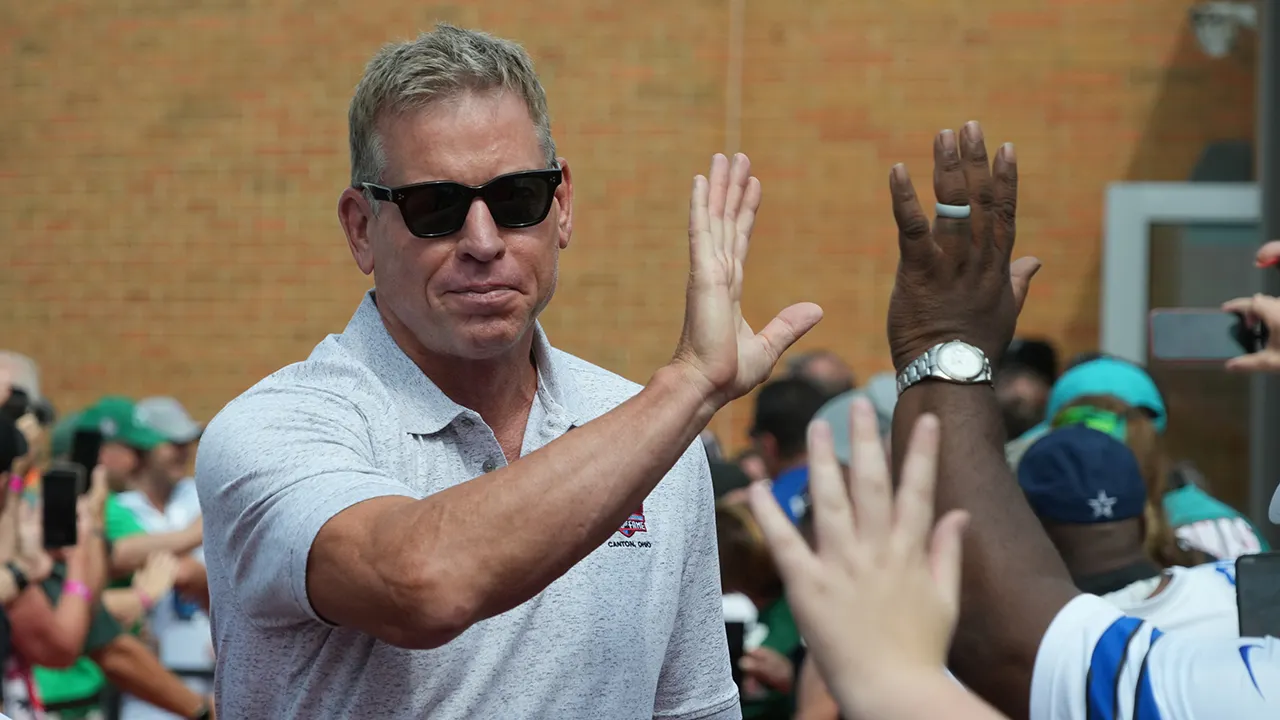
Troy Aikman, the legendary quarterback and Pro Football Hall of Famer, has been musing about the puzzling rise in early-season injuries across the NFL. It’s like that nagging question you can’t shake after watching your favorite team struggle: why are superstars like Joe Burrow, J.J. McCarthy, Brock Purdy, and Lamar Jackson sidelining themselves right out of the gate? Aikman’s take, shared casually on the “Rodeo Time Podcast,” flips the script on player safety initiatives. He doesn’t knock the progress—after all, we’ve seen the devastating toll of concussions and gruesome hits over the years—but wonders if the pendulum has swung too far. Remember those grueling summers? Aikman, with a wistful smile in his voice, paints a vivid picture of training camp in Wichita Falls, Texas, where the Dallas Cowboys endured two-a-day practices under the blistering sun. Players were pushed to their limits, bodies breaking down and rebuilding like forged steel. It was tough, sure, but it built resilience. Now, Aikman argues, the league’s rules—shaped by collective bargaining agreements (CBAs)—have made things too cushy. Pads are worn just once a week, practices are shorter, and the grind is gone. Owners win financially, players ease up on training demands, and coaches are left scrambling with whatever time they get. It’s a negotiation maze where everyone’s padding their wallets, but Aikman fears the bodies are paying the price. He laughs a bit self-deprecatingly, noting he’s no expert, just a guy reflecting on his glory days. But it’s that personal touch—from the field to the podcast—that makes you nod along, feeling the weight of change in a sport that’s both brutal and beloved.
Diving deeper into Aikman’s theory, it’s hard not to empathize with the frustration of fans and players alike. Imagine stepping onto the field after months of what Aikman calls “favorable” training—maybe some light weights, yoga, or solo drills at home, but no full-contact football reps drilling those explosive plays. Then, bam! The season hits, and your muscles, tendons, and ligaments scream in rebellion. Aikman points to soft tissue injuries, nasty pulls, and strains cropping up early, the kind that derail careers before they even start. He contrasts this with the old-school approach: those Wichita Falls days where heat exhaustion was a badge of honor, and players emerged calloused, ready for the chaos. “Not that they’re not training hard,” Aikman clarifies, his tone gentle yet firm, like a grandpa dispensing wisdom at a barbecue. He’s seen athletes hustle in gyms and private sessions, building strength and technique on their own steam. But it’s not the same as reps against defenders in live action, where adrenaline and impact forge a tougher hide. It’s a subtle distinction, Aikman admits, but one that echoes in every game. You’ve probably felt it yourself—sitting there cheering, heart sinking as another QB bites dust due to a hamstring tweak that could have been avoided with more on-field prep. Aikman’s not advocating for recklessness; he’s just humanizing the reality that sometimes, in trying to protect players, we might be leaving them vulnerable. It stirs that emotional chord: a love for the game that’s raw, unforgiving, and utterly addictive.
As a Super Bowl champion himself, Aikman carries the scars of physical sacrifice. Think about it—every snap he took in those ’90s Cowboys teams was a leap into the unknown, bodies colliding at supersonic speeds. He shares stories of doubling up on practices, the sweat-soaked jerseys clinging like a second skin, the coaches barking plays until dusk. Those experiences aren’t just memories; they’re the foundation of his critique. Now, with modern rules, Aikman sees players earning concessions in the CBA talks—shorter sessions, more rest, less wear-and-tear—while coaches, often the forgotten voices, manage with scraps. It’s a power dynamic, he explains with a chuckle, where the big wigs haggle over dollars and cents, and the on-field toll becomes an afterthought. Extended it out, and Aikman nods to recent movements in the league, like the rumored Thanksgiving Eve game and whispers of an 18-game schedule. Could that amplify the problem? Absolutely, he implies, without the right conditioning. Fans, we’re in this together—rooting for stars who dazzle but crumple too soon. Aikman’s reflection isn’t bitter; it’s hopeful, urging a balance. He loved the changes for safety’s sake—helmets improving, tackling rules evolving—but worries they’re eroding that primordial toughness. In Aikman’s world, it’s about honoring the past while adapting, making the game sustainable without losing its fire. And as we ponder this, it feels personal, like Aikman is sitting across from you, sharing a beer and swapping war stories.
The list of injured quarterbacks last season reads like a who’s who of NFL royalty. Joe Burrow, the Bengals’ gunslinger, out with yet another injury saga; J.J. McCarthy, the Vikings’ rookie phenom, sidelined early in his promise-filled arc; Brock Purdy, the 49ers’ comeback kid, battling through adversity; and Lamar Jackson, the Ravens’ electrifying dual-threat, forced to watch from the sidelines. Each case tugs at the heartstrings—dreams deferred, playoff hopes dangling by a thread. Aikman ties this back to his theory: without those arduous camps, players arrive less battle-tested, muscles and tendons unaccustomed to the game’s unrelenting pace. It’s not laziness, he stresses; athletes today are pros at conditioning, hitting recovery and nutrition with precision. But the football-specific drills? The repetitive battles under pads? Those are dwindling. Aikman recounts how in his era, you’d accumulate bruises, learn to tape ’em up, and push through. Now, with friendlier practices, those lessons evaporate. It’s a generational shift, Aikman muses, where technology and science intersect with tradition. Yet, as fans, we invest emotionally—our Sundays hinged on these heroes. When Burrow’s arm landed him on the IR again, it stung, mirroring Aikman’s point that early injuries aren’t flukes but symptoms. He advocates for dialogue in the league, coaches empowered to demand more practice time. Imagine Aikman coaching an imaginary team, blending old rigor with new safeguards. It’s inspiring, really, this call for evolution over revolution, making the NFL a place where legends still emerge forged in fire.
Player safety, thrust under the spotlight lately, remains a double-edged sword for Aikman. He’s all in favor of reforms—crediting them for longer careers and fewer devastating head traumas—but candidly admits they’re forcing unintended consequences. The league’s prioritizing health with reduced-contact sessions and off-season rest, but Aikman sees the irony: players not “callousing” their bodies, leading to vulnerability. It’s a human dilemma, akin to overprotecting kids from falling, only for them to trip hard when they run free. Aikman shares anecdotes from interviews with current players, who rave about state-of-the-art facilities and personal regimens. Yet, he probes deeper—do these isolate athletes from team-building chaos? The camaraderie of old camps built bonds, trust, and endurance. Now, with potential expansions like 18 games looming, the stakes soar. Aikman, ever the optimist, envisions tweaks: hybrid approaches where safety meets intensity. Coaches devising schedules that mimic game flow, players lobbying for smarter CAAs. It’s about holistic health, Aikman says, body and mind. As someone who’s lived the NFL dream, he feels for rookies navigating this new landscape, perhaps wishing he could mentor them. This humanizes his stance—not as criticism, but as caring concern, reminding us the game’s soul lies in its passion, not just its profits.
Ultimately, Aikman’s reflections paint a broader picture of an NFL at crossroads. He’s not nostalgic blind; the man praises advancements in equipment and awareness, crediting them for Saving lives and extending prima donnas. But with injuries spiking, he nudges us to question if we’re trading ruggedness for relics. Future ideas like extra games could exacerbate it, he warns, without reevaluation. Yet, Aikman’s tone is uplifting—football’s first love affair is resilience, and we can adapt. Fans, coaches, players: let’s humanize this debate, turn Aikman’s theory into action. More camp-like drills? Adjustable schedules? It’s all on the table. As the league eyes change, Aikman’s voice echos a timeless truth—balance the body, save the heart of the game. In his words and ours, it’s not just about winning; it’s about enduring, inspiring generations. And hey, with Aikman in your corner, optimism takes the field.
Reflections on Aikman’s podcast leave you pondering the NFL’s evolution. He’s a Hall of Famer, yet grounded, his stories bridging eras. Early injuries? Maybe a byproduct of kindness. But with QBs like Burry falter, fans feel the pinch. Aikman advocates harmony—safety plus sweat. Imagine revised CAAs, empowered coaches, hybrid training. It’s feasible, folks, keeping the game exhilarating yet kinder. Aikman, the Cowboys’ ace, symbolizes that bridge. His theory? A wake-up call to cherish change without losing grit. As seasons roll, let’s honor his churn, ensuring football’s flame burns bright for all.
Echoing through these thoughts, Aikman’s not demanding a return to the ’90s; he’s seeking equilibrium. Pits rules create cracks, exposing players to harm. But reforms? Lifesavers, pure and simple. He envisions dialogue—players, owners, coaches uniting for smarter paths. Fans, we’re invested too, dreaming postseason marches minus sideline woes. Aikman’s humanistic take transforms debate into warmth, urging love for the game beyond stats. In his quiet wisdom, football remains America’s pastime, tough yet tender. Let’s carry that forward, humanizing every hit and highlight.
Amidst rule shifts and looming expansions, Aikman’s voice stands as a beacon. Injuries aren’t accidents; they’re signals. He cherishes safety’s strides yet worries waning toughness. Personal tales from camps evoke empathy, reminding us of sacrifices. For QBs sidelined, it’s a shared heartache. Aikman’s call: innovate, not revert. With 18 games possible, preparation matters more. His balance—advantages with adaptation—fuels hope. As we watch, let’s humanize football, valuing players’ vitality and fans’ fervor alike.Let me start with some backstory: I’m Troy Aikman, you know, that Dallas Cowboys quarterback who helped hoist a couple Super Bowls back in the ’90s, and now I’m known for my spot-on takes on football, usually shared over a podcast or two like this one with Rodeo Time. Lately, I’ve been scratching my head over this surge in early-season injuries across the NFL. It’s been happening for a few years now, and honestly, it’s got me thinking the rules we put in place to keep players safe might actually be backfiring in some ways. Don’t get me wrong—I’m all for player safety. I mean, I lived through eras where getting your bell rung was just part of the game, and I wouldn’t wish that on anyone. But as a Hall of Famer who’s seen the league evolve, I can’t help but share my theory on why so many guys are going down early. Take last season, for instance—you had elite quarterbacks like Cincinnati’s Joe Burrow, Minnesota’s J.J. McCarthy, San Francisco’s Brock Purdy, and Baltimore’s Lamar Jackson all sidelined with injuries right out the gate. It’s frustrating, not just for the teams but for us fans who tune in expecting fireworks.
Looking back, it reminds me of my own playing days, like those scorching summers in Wichita Falls, Texas, where the Cowboys held training camp. We’d do two-a-day practices every day, pushing our bodies to the brink under the relentless sun. It was exhausting, sure, but it built that toughness and callous on your body that made you ready for the season’s toll. These days, though, it’s a different story. Don’t get me started on the collective bargaining agreement negotiations—those CBA talks where owners usually come out on top financially, and then players push for concessions on practice time to balance it out. What ends up happening is fewer grueling sessions, more “walk-throughs,” and players only suiting up in pads once a week or so. Coaches? They’re often the ones left out of the loop, just waiting to see how much time they get with the guys. It’s all more player-friendly now, which is great for recovery and avoiding burnout, but I wonder if it’s leaving us underprepared. When I say “us,” I’m talking about how players today aren’t getting that same level of callousing—the kind that comes from football-specific drills and contact. Sure, they’re training hard on their own, hitting the weights, doing agility work, but it’s not the same as logging reps on the field against defenders in game-like situations. That lack of preparedness, I believe, is why we’re seeing these soft tissue injuries, muscle pulls, and strains pop up early in the season. Your body needs that forging process to handle the hits, the scrambles, the sheer physicality of the game.
Let me humanize this a bit more—imagine you’re a rookie QB, stepping onto that NFL field for the first time. You’ve been working your tail off in the offseason, honing your arm and footwork at a fancy gym, squeezing in recovery sessions with ice baths and massage guns. But with practices shortened and pads on less often, you haven’t really simulated the chaos of a live game. Then, Week 1 hits: you’re diving into the pocket, scrambling for yards, feeling that first big hit. Pop—hamstring strains. Or maybe a shoulder tweak from an errant sack. It’s not because you’re not dedicated; it’s because the rules have changed how we prepare. I remember feeling that rush myself in the ’80s and ’90s, where the pain was just fuel for improvement. We didn’t have all the modern efficiencies back then—no Cryo chambers or AI training trackers. But we had the field, the team, and that shared grind. Now, with rules designed to protect, players might not be building that resilience as naturally. I’m not saying we should go back to torturous camps—no way. But let’surpose reevaluate if we’re doing enough on-field work to toughen up without overdoing the danger.
This isn’t just my armchair quarterbacking either; I’ve chatted with coaches and players, heard their perspectives. One coach I spoke to lamented how the CBA shortchanges them, leaving lessons without enough time to sink in. Players might train individually, but the beauty of football is the team dynamic—the reads, the trusts forged in sweat. Without those extended camps, it’s harder to gel together. Take Joe Burrow, for example—a phenomenal talent who keeps battling these setbacks. One year it’s a wrist, the next a shoulder or hip. Same with Purdy’s comeback story, interrupted by injuries tying back to that early season push. For Lamar Jackson, speed and elusiveness aren’t enough if your body’s not battle-hardened against wear. McCarthy, coming in as a rookie, probably expected a smoother start. These guys are putting in work, no doubt—dedicated athletes following professional routines. But Aikman theory suggests the league’s safety-first approach, while saving lives, might be creating unseen vulnerabilities. It’s a balance, right? We need rules to prevent the grave stuff like concussions and career-ending breaks, but also enough intensity to get the reps needed for gameplay resilience.
Which brings me to the future of the league. Player safety’s always been in the spotlight, and now with talks of expanding to an 18-game season—and even a Thanksgiving Eve game—it’s time to rethink. More games mean more opportunities for injuries without the right conditioning. NFL Commissioner Roger Goodell and the owners are pushing these ideas, which could make the slate more crowded and demanding. But if practices stay as abbreviated as they are, we’re setting players up for failure. Coaches need more input in these negotiations; they’re the ones seeing the daily readiness. Imagine a hybrid system—shorten pads days but spike up team drills, maybe incorporate more virtual simulations but get back to some old-school grinds safely. As a fan, I’m excited for longer seasons and more action, but heartened for the athletes. Football’s my life, and I want it thriving for the next generation. That’s why I’m vocal about this: it’s important to be honest about the unintended consequences of our changes. We’re not robots; we’re human beings pushing physical limits. If we love the game, we owe it to protect those playing it without losing the essence that makes it great.
In wrapping this up, my take is simple: the NFL’s rules have made incredible strides in safety, and I’m grateful for them—they’ve extended careers and focused on heads and hearts. But we have to watch for these early injury creeps, which might stem from under-training on the field. For me, the solution’s in dialogue—owners, players, coaches sitting down to find that sweet spot. As the league eyes bigger schedules, let’s prioritize building toughness through smarter prep. I’m all for evolution, but without that core resilience, the game loses its magic. Fans like you, tuning into Fox News or following on X, let’s keep pushing for progress. After all, football isn’t just about the wins; it’s about the stories, the heart, and the healed. If we’ve learned anything, it’s that balancing safety with preparation turns players into legends. Keep watching, keep supporting—and maybe, just maybe, we’ll see a league that’s safer, stronger, and every bit as thrilling as the Cowboys days I cherish. What do you think—time for more camp-style practices or stick with the status quo? Shoot me your thoughts on podcast or social; I’d love to hear ’em.