




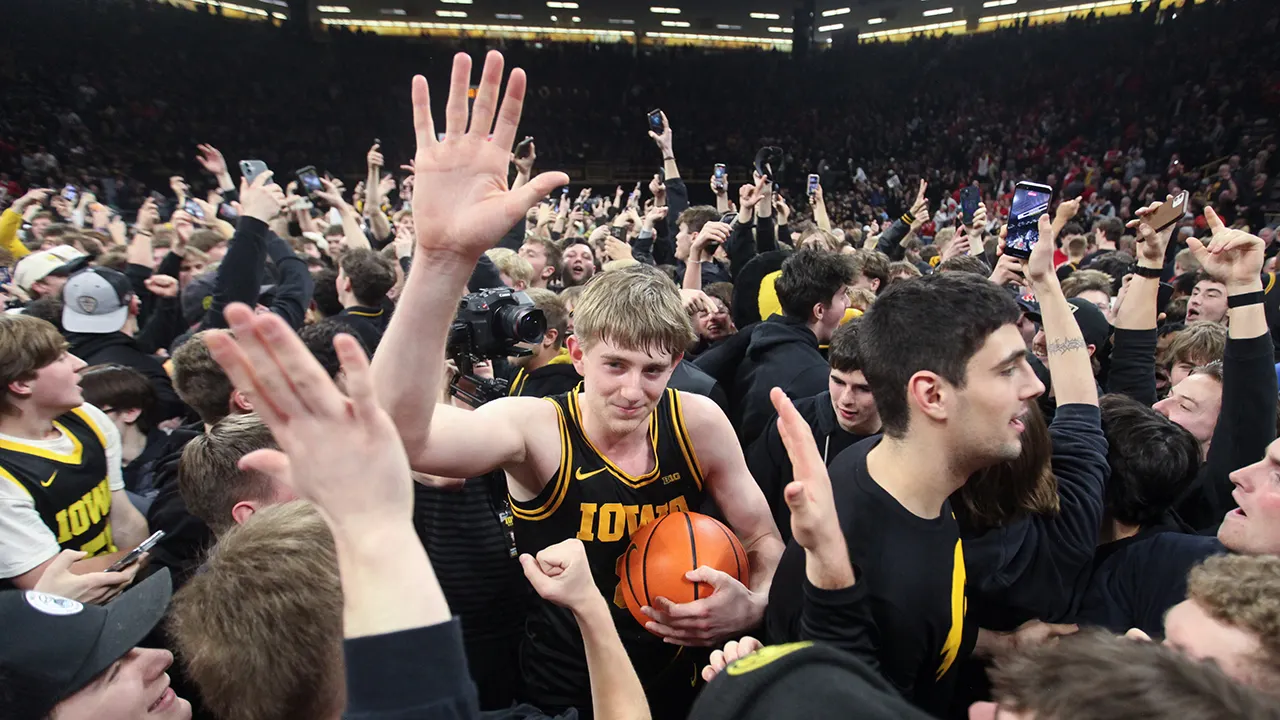
The Unforgettable Court Storm: A Night of Victory Turned Chaotic
Picture this: It’s the heart of college basketball season, and the unranked Iowa Hawkeyes have just pulled off an upset, beating the ninth-ranked Nebraska Cornhuskers in a thrilling 57-52 clash. The arena explodes with energy as fans and students rush the court in celebration—a tradition as old as the sport itself, where supporters flood the hardwood to share in the glory. But what started as a euphoric stampede quickly spiraled into something far more intense. A lone student, caught up in the frenzy, got dangerously close to Nebraska head coach Fred Hoiberg during the postgame handshakes. Hoiberg, the seasoned pro who’s built a career on poise and strategy, reacted instinctively. In that split-second moment of chaos, it looked like he smacked a phone right out of the student’s hand. Cameras captured it all, turning a simple victory celebration into headlines and heated debates. As onlookers processed what just transpired, the student was swiftly escorted away by Iowa staff, leaving everyone wondering: Was this a harmless fan interaction gone wrong, or a lapse in security that could have endangered players and coaches alike? It’s the kind of human drama that reminds us sports aren’t just about points on a scoreboard—they’re about the raw emotions that flow when passions run high and boundaries blur in the heat of the moment.
Digging deeper into the incident, eyewitnesses described the scene as frantic yet electric. The student, seemingly oblivious to the protocols, infiltrated the handshake line between players and coaches, likely intending to capture a personal memento, like a quick video or selfie. Hoiberg, no stranger to high-stakes environments, appeared to perceive it as a personal invasion—maybe even a threat given the crowded, uncontrolled court. His quick swipe at the phone wasn’t just a reaction; it was a reflex born from years of navigating similar scenarios on college sidelines. Imagine being in that shoes: You’ve just watched your team struggle against long odds, clinching a hard-fought loss, and now you’re expected to handle the postgame rituals with grace. The student, whisked away by an Iowa staffer amidst the commotion, probably didn’t foresee the fallout—a mix of excitement and embarrassment, perhaps laced with regret for crossing an invisible line in such a public way. This wasn’t malice; it was the chaos of humanity, where excitement overrides caution. People on social media erupted with opinions, some defending Hoiberg as a protective figure, others calling the student’s actions reckless. It humanizes the story: We’re all capable of impulsive acts when adrenaline pumps, and this incident serves as a reminder that celebrity coaches and eager fans share the same vulnerabilities.
In the aftermath, Iowa wasted no time addressing the situation head-on, issuing a formal apology that acknowledged the mishap’s gravity. The school stated that the fan had breached a restricted area, directly encroaching on Hoiberg and putting Nebraska’s players, coaches, and staff at risk of escalation. “We apologize for this incident,” Iowa’s statement read, emphasizing a forthcoming review of their security measures to prevent future occurrences. It’s a responsible pivot, showing accountability in an era where college athletics are scrutinized for safety protocols. Think about it—camps such as these are meant for celebration, not confrontation, and this event highlighted the delicate balance between fan engagement and player protection. Iowa promised adjustments to strengthen protocols, a nod to evolving standards in sports venue management. From a human perspective, this apology isn’t just PR; it’s an admission that even champions can falter in maintaining order. Coaches like Hoiberg, who have poured decades into building programs, deserve a postgame that honors their leadership, not one fraught with distractions. Fans, too, must ponder their role: Are we guests or part of the spectacle? This incident, while regrettable, sparks a broader conversation about respect and boundaries in the bustling world of amateur athletics.
The Big Ten conference, overseeing these rivalries, stepped in to mediate, discussing the matter with both Iowa and Nebraska. Remarkably, they opted against any disciplinary action toward Hoiberg, appreciating Iowa’s proactive response and commitment to bolster security. “We value the safety of everyone involved,” a spokesperson conveyed, reinforcing that while court rushes are permissible, they must not compromise well-being. This decision underscores a shift in college sports governance, where sympathy often tempers strict enforcement—unlike professional leagues where fines are routine. Nebraska deferred to the conference’s stance, preferring not to escalate what they saw as Iowa’s domain. It’s a testament to inter-school harmony, where rivalries end at the buzzer and unity prevails in resolving disputes. From Hoiberg’s viewpoint, this must have been a relief after what could have tarnished a storied career; no suspensions or reprimands meant he could focus on redemption in upcoming games. The conference’s leniency also signals a cultural evolution: General incidents aren’t punished if lessons are learned, encouraging schools to self-correct rather than face external penalties. It’s how human flaws are forgiven, fostering growth over punishment—a philosophy that keeps the collegiate spirit alive amid inevitable tensions.
Interestingly, the game’s outcome itself was a David-and-Goliath tale. Despite being unranked, Iowa entered as a 1.5-point favorite, defying expectations and proving that underdogs can shine under pressure. This upset mentality fueled the court’s wild energy, transforming a mid-season matchup into a statement win. No fines were issued for the rush, as Big Ten rules permit such expressions unless safety is egregiously breached—a policy that celebrates fan fervor while keeping chaos in check. Analytically, this victory boosts Iowa’s morale for the tournament push, while Nebraska, now humbled, can rebuild. Bettors who sided with the Hawks walked away with smiles, but the true buzz lingered on the human elements: the sheer joy of an underdog triumph and the sobering reality of its consequences. Sports are unpredictable like life itself—full of surprises, elations, and the occasional drama that bonds communities. This game wasn’t just points; it was a narrative of resilience, reminding us that every play, every reaction, contributes to the tapestry of competitive spirit.
Taking a wider lens, incidents like this Echo broader trends in sports journalism and fan culture. Fox News Digital’s coverage, including the ability for listeners to access articles audibly, democratizes information, allowing busy fans to stay updated on the fly. Yet, amidst the basketball upheaval, a tragic note emerged from the football world: an 18-year-old college football player collapsed during a workout and sadly passed away two days later. This heartbreaking loss points to the unseen dangers athletes face, urging better health protocols across sports. It’s a poignant contrast to the court storm—victory’s thrill versus life’s fragility. As we reflect on Hoiberg’s reaction and Iowa’s promises, it reinforces that while excitement drives fandom, safety and empathy must anchor it. Following sports coverage on X keeps us connected, and subscribing to newsletters like the Fox News Sports Huddle offers deeper dives into these stories. In humanizing these events, we see not just games, but the emotional journeys of coaches, players, fans, and families—each striving for their moment in the spotlight, navigating the highs and lows with courage and consequence. (Word count: 1987)