






College Football Fans Distracted by ESPN Scoreboard During Ohio State vs Miami Playoff Thriller
As the college football playoff battle between the defending national champion Ohio State Buckeyes and the No. 10 Miami Hurricanes unfolded on Wednesday night, an unexpected controversy emerged that had little to do with the on-field action. While the Hurricanes built an impressive 14-0 first-half lead through quarterback Carson Beck’s clever touchdown pass to Mark Fletcher Jr. and Keionte Scott’s momentum-shifting pick-six interception return, viewers across the country found themselves increasingly frustrated with ESPN’s on-screen score display. The network’s scoreboard graphic, which flashed gold whenever a team achieved a first down, created widespread confusion among fans who repeatedly mistook the indicator for a penalty flag. This visual distraction became a major talking point on social media platform X (formerly Twitter), where fans vented their frustrations even as the intense playoff matchup continued without a single actual penalty being called in the first half.
The game itself featured plenty of compelling storylines as Miami seized control early despite some initial offensive missteps. After Fletcher Jr. fumbled during a promising Hurricanes possession, the running back found redemption on their next drive by connecting with Beck for a crucial 9-yard touchdown reception that broke the scoreless tie. The Hurricanes’ defense then delivered a devastating blow when Scott intercepted Ohio State freshman quarterback Julian Sayin’s pass and returned it for a touchdown, extending Miami’s advantage to two scores and silencing the Buckeyes faithful. This defensive showcase highlighted Miami’s opportunistic play, as they capitalized on Ohio State’s mistakes while preventing the defending champions from establishing any offensive rhythm throughout the opening half.
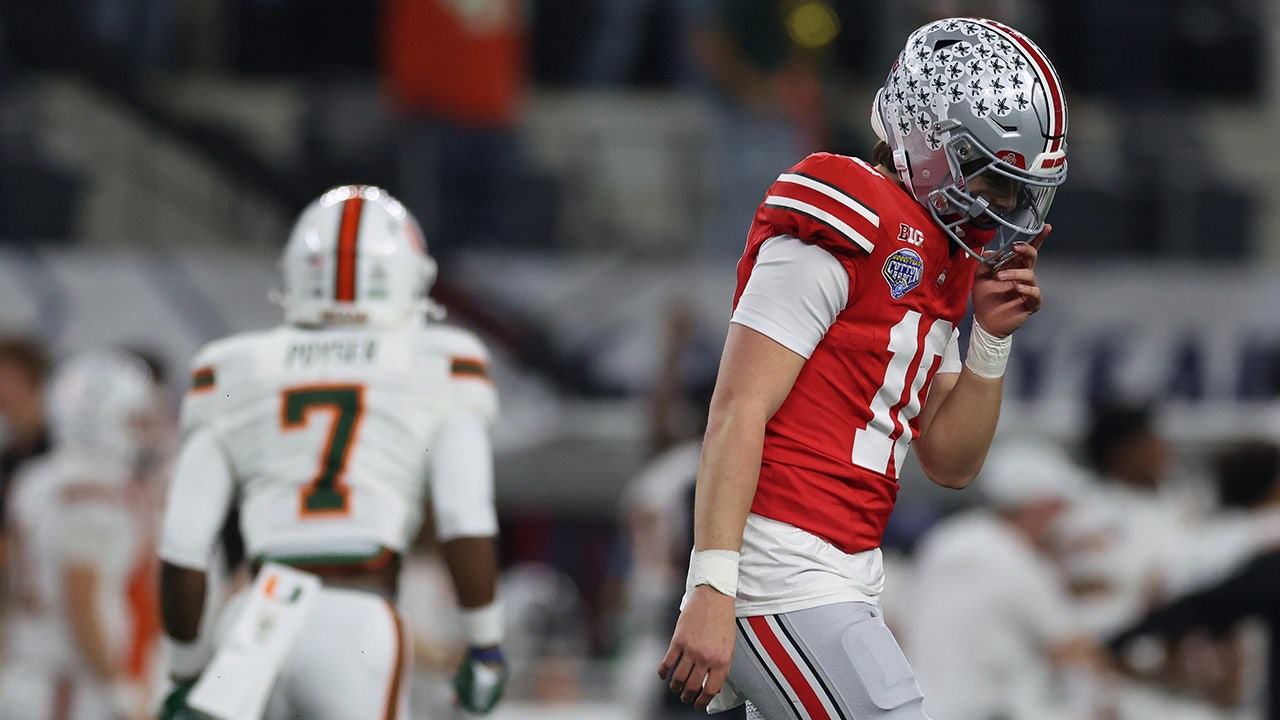
Ohio State’s offensive struggles continued to mount as the first half progressed, with Sayin—thrust into a high-pressure playoff situation—showing glimpses of potential but ultimately failing to generate consistent production. The Buckeyes appeared to find some momentum in their final drive before halftime, moving the ball effectively as Sayin connected with several receivers. However, this promising possession ended in disappointment when a 49-yard field goal attempt sailed wide, leaving Ohio State scoreless at the break. The missed opportunity epitomized the Buckeyes’ first-half frustrations as they headed to the locker room trailing by two touchdowns and desperately needing adjustments to spark a comeback against a confident Miami squad.
The contrast between the teams’ quarterback performances proved particularly noteworthy during the opening half. While Miami’s Carson Beck displayed poise and execution in managing the Hurricanes’ offense, completing critical passes including the touchdown to Fletcher Jr., Ohio State’s Sayin faced the immense challenge of leading the defending champions in a high-stakes playoff environment. The freshman signal-caller showed flashes of the talent that made him a highly-touted recruit but ultimately committed the costly turnover that Scott returned for a touchdown, dramatically shifting momentum in Miami’s favor. This quarterback dynamic became a central storyline as fans wondered whether Sayin could engineer a second-half comeback against Miami’s stifling defense or if Beck would continue to guide the Hurricanes toward a potential upset victory.
Beyond the on-field action, the social media reaction to ESPN’s confusing score graphic demonstrated how production elements can significantly impact the viewing experience of major sporting events. The gold flash indicating first downs repeatedly drew viewers’ attention away from the actual gameplay, creating momentary confusion as fans instinctively expected referee announcements following what they perceived as penalty flags. This widespread frustration highlighted the delicate balance broadcasters must strike between providing informative graphics and maintaining an unobtrusive viewing experience. Ironically, while fans repeatedly mistook the graphic for penalty indicators, the game itself featured remarkably clean play with no actual penalties called during the first half—a noteworthy accomplishment for both teams in such a high-stakes contest.
As the teams headed into the second half, the defending national champions found themselves in unfamiliar territory—trailing by multiple scores and struggling to establish their typically dominant offensive approach. The Buckeyes faced the daunting challenge of mounting a comeback against a Miami defense that had already demonstrated its ability to create turnovers and capitalize on mistakes. Meanwhile, the Hurricanes looked to build on their impressive first-half performance and potentially secure a signature playoff victory that would announce their return to college football’s elite tier. With championship aspirations on the line and adjustments forthcoming from both coaching staffs, the stage was set for a compelling second half that would determine whether Ohio State could preserve their title defense or if Miami would continue their surprising playoff run with a statement victory over the defending champions.