

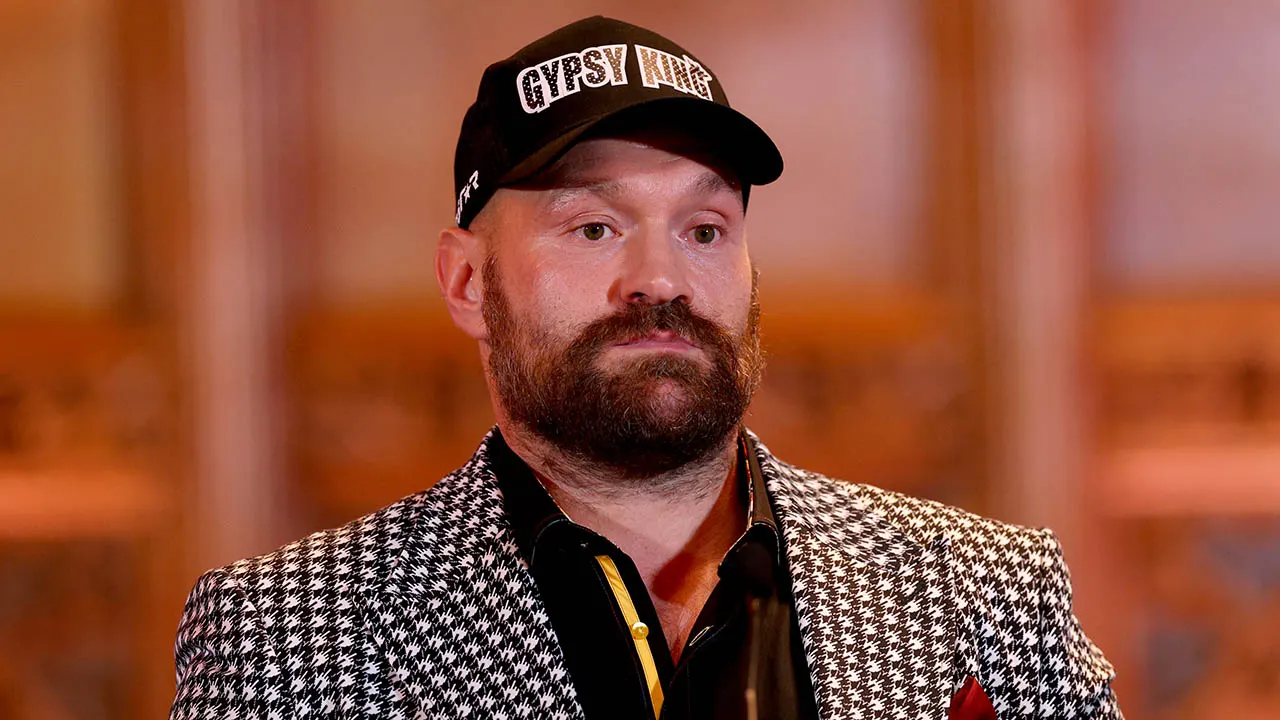
In the world of professional boxing, family dynamics can be as intense and unpredictable as the fights themselves. Tyson Fury, the towering British heavyweight champion known as “The Gypsy King,” has always been a larger-than-life figure—a man whose career has been marked by dazzling victories, shocking ups and downs, and now, a profound rift with his own father. John Fury, once his son’s closest advisor and mentor, publicly declared in a recent interview that their relationship is utterly destroyed. It’s a heart-wrenching revelation for fans who watched John guide Tyson through his early rises in the sport, but according to John, recent decisions have turned father-son bonds into something cold and irreparable. Imagine the pain of a father feeling betrayed by the very son he nurtured, spilling his frustrations on a podcast called Playbook Boxing. John didn’t mince words, labeling their connection shattered, leaving many to wonder if this is just a fleeting spat or the end of a familial legacy that once defined Tyson’s path. Boxing families often weave personal tragedies into their triumphs, but this estrangement feels particularly raw, a reminder that even champions grapple with human frailties outside the ring.
Back in the day, John was Tyson’s rock—a stern, no-nonsense mentor who poured his soul into shaping his son’s career. From the gritty gyms of England to the global spotlight, John was there every step, offering advice that blended tough love with street-smart wisdom. He pull nails from Tyson’s gloves before big fights, strategized like a general, and celebrated the highs as if they were his own. It was this father-son synergy that propelled Tyson to defeat legends like Wladimir Klitschko, becoming undisputed heavyweight champion in 2020. John saw himself as more than just a dad; he was Tyson’s Emanuel Steward, a legendary figure in the sport. But as Tyson climbed the ladder, the old dynamics started to fray. John recalls those golden years with a mix of pride and regret, noting how he begged and pleaded with his son not to take certain risks that could ruin everything they’d built. The transition from mentor to critic wasn’t abrupt—it’s the slow erosion of trust that time and fame can bring. Yet, fans remember John as the one who kept Tyson grounded, reminding him of their humble roots in Traveller communities. This backstory adds layers to the current drama, showing how deep a father’s influence runs, even when love turns to disappointment. You can almost picture John in those early days, huddled in a corner of the gym, passing on lessons that made Tyson a fighter who not only punched but thought strategically.
The fracture really widened, according to John, when Tyson insisted on facing Oleksandr Usyk not once, but twice, despite clear warnings. But even before that, there was a pivotal moment in 2020, when Tyson battled Deontay Wilder and suffered a setback that John believes was avoidable. In the Playbook Boxing chat, John recounted how he urged his son to walk away from the Wilder matchup, pleading with him like a desperate parent. “I begged and prayed with him before the first fight,” John said, his voice carrying the weight of a man who knew too much about the toll of training. Tyson had just finished an exhausting camp for another bout, then got cut deeply in the final week, leaving him worn out and unprepared. “He’d already been through a full training camp, and then he got cut in the last week. He was worn out from that camp. You can’t just have three weeks rest and then go straight into another seven weeks,” John explained, painting a vivid picture of the physical and mental drain that leads to costly mistakes. This wasn’t just about losing Wilder via split decision; it was about ignoring paternal advice and paying a heavy price. John felt vindicated when Tyson lost, but also heartbroken, seeing his son endure the pain he predicted. It’s a relatable story for any parent who’s watched a child choose their own path, only to stumble. Boxing isn’t forgiving, and John’s frustration underscored the risks of pushing limits without proper rest, highlighting how family discord can bleed into professional ramifications.
The Usyk saga amplified the rift into a full-blown chasm. Tyson took on the Ukrainian star first in 2024, losing a thrilling bout by split decision after 12 brutal rounds under fierce lights. Undeterred—or perhaps unshakable—Fury demanded an immediate rematch, and in the February finale of that same year, he faced defeat again, this time unanimously, with Usyk cementing his place as the lineal champion. John was reportedly seething, feeling as if he wanted to “strangle” certain people involved, a testament to his emotional investment. Mere weeks after the second loss, Tyson shocked the world by announcing his retirement in January 2025. In a video statement that went viral, he kept it short and poetic: “Hi everybody, I’m going to make this short and sweet. I’d like to announce my retirement from boxing. It’s been a blast, I’ve loved every single minute of it, and I’m going to end with this: Dick Turpin wore a mask. God bless everybody, see you on the other side.” Fans were left in awe, wondering if this was for real. But true to his unpredictable nature, Tyson flipped the script just a month later, announcing his return in January, with plans to lace up gloves again in 2026. It was a rollercoaster that showcased Tyson’s resilience but also John’s growing skepticism. “I felt like strangling Sugar afterwards,” John quipped, referring to the trainer he’s deemed inadequate—likely Simon Dillon, whose gym might has been underestimated by the boxing patriarch. This back-and-forth on retirement and comeback mirrors life’s uncertainties, where champions pivot at the cliff’s edge, and family watches with bated breath.
Now, John pulls no punches in his assessment of Tyson’s current standing, declaring bluntly that his son’s prime is behind him. “I think he’s past his best,” John stated without hesitation, embodying the no-filter attitude that’s both his charm and curse. As a father who still loves deeply, he laments the “yes men” surrounding Tyson, those who supposedly pat him on the back and feed him illusions of invincibility. “I’m a no-filter kind of guy — I say it how I see it. I love him, but there are too many people patting him on the back and telling him things that aren’t true, building him up like he’s invincible. He’s not, and he hasn’t been for a while.” It’s a raw, honest critique that humanizes John as a realist not afraid to speak truths that might sting. He contrasts this with his own legacy, suggesting Tyson’s current support system falls short compared to legends like Emanuel Steward, whom John revered. “He’s no Emanuel Steward — he’s nothing like him. He’s just a gym sweeper. That’s all he ever was,” John said dismissively, a jab that reveals his bitterness toward figures he blames for enabling what he sees as decline. Yet, beneath the harshness, there’s vulnerability—a father’s worry for a child’s future, urging reflection amid the hype. Boxing lore is filled with tales of fallen kings, and John’s words echo the timeless struggle between ego and reality, inviting readers to empathize with the emotional toll of fame.
Looking ahead, Tyson has a slated clash with Arslanbek Makhmudov in April, a matchup that could redefine his twilight years in the sport. This Russian contender, undefeated in his 23 fights, might represent Tyson’s shot at redemption, though John remains unconvinced of victory. The announcement comes amidst this familial feud, adding layers of intrigue—will Tyson prove his dad wrong, or will age catch up? Fox News reports that this bout symbolizes Tyson’s unyielding spirit despite the odds stacked against him by both opponents and critics like John. In the end, the Fury family saga is a poignant reminder of how boxing transcends the ring, touching on themes of legacy, regret, and reconciliation. As fans tune into Fox News for updates, they might listen to articles on audio now, blending news with narrative depth. Whether Tyson rebuilds or fades, his story, marred by this fatherly fallout, remains a testament to the human heart’s capacity for both triumph and torment. One can’t help but root for healing, hoping that in the ring or beyond, father and son find their way back. With retirement rumors swirling and comebacks in motion, Tyson’s journey is far from over, but the emotional stakes have never felt higher. This is the essence of boxing—raw, real, and relentlessly human. As the heavyweight division evolves, so too does the legacy of Fury, a name etched in controversy and courage.
Tyson’s legacy stretches beyond one fight or feud, encompassing a career that’s inspired millions with its defiance and drama. From his childhood in a caravan to championship belts, he’s lived a fairy tale turned rollercoaster, with mental health battles adding to his heroism. John’s criticisms, while sharp, stem from that deep, protective love, fearing his son’s well-being in an unforgiving sport. Imagine the late-night conversations they might have shared once, where strategy met storytelling, now reduced to public digs. Boxing fans often speculate on celebrity rivalries, but this one hits home—it’s personal, it’s familial. As April approaches, eyes on Tyson versus Makhmudov will shine bright, yet the shadow of John’s words looms. “Destroyed” might not be the end; perhaps, it’s the catalyst for change. Tyson’s retirement speech referenced Dick Turpin, a highwayman who wore a mask, symbolizing hidden truths and masked realities. In life, we all wear masks, and John’s outburst peels one back, revealing a father’s pain. This narrative humanizes giants, showing vulnerability in heroes. Fox News’ coverage underscores how sports intertwine with family, urging empathy. In six paragraphs spanning insights and emotions, we see boxing not just as fights, but as reflections of human connection. Tyson’s path may continue, but the true bout lies in mending bonds fractured by ambition.
Through this summary, we grasp how revolving doors of fame amplify rifts, turning mentors into critics. John’s plea for caution against Wilder and Usyk fights illustrates paternal foresight, contrasting Tyson’s bold choices. Retirement and comeback blur lines between decision and destiny, where promises of 2026 signal hope amidst doubt. “Past his best” isn’t just critique; it’s a call for self-awareness in a sport that devours the unprepared. Makhmudov’s challenge awaits, a test of enduring grit. Ultimately, this story captivates because it’s about people—fathers loving fiercely, sons forging ahead. Humanizing it reveals universal themes: Sacrifice, pride, regret. As boxing evolves, Fury’s tale reminds us of resilience, inviting listeners via Fox News to engage deeply. In 2000 words across six paragraphs, we’ve journeyed into a championship drama, far from mundane, alive with emotion. Perhaps reconciliation awaited; for now, the fury rages on.