





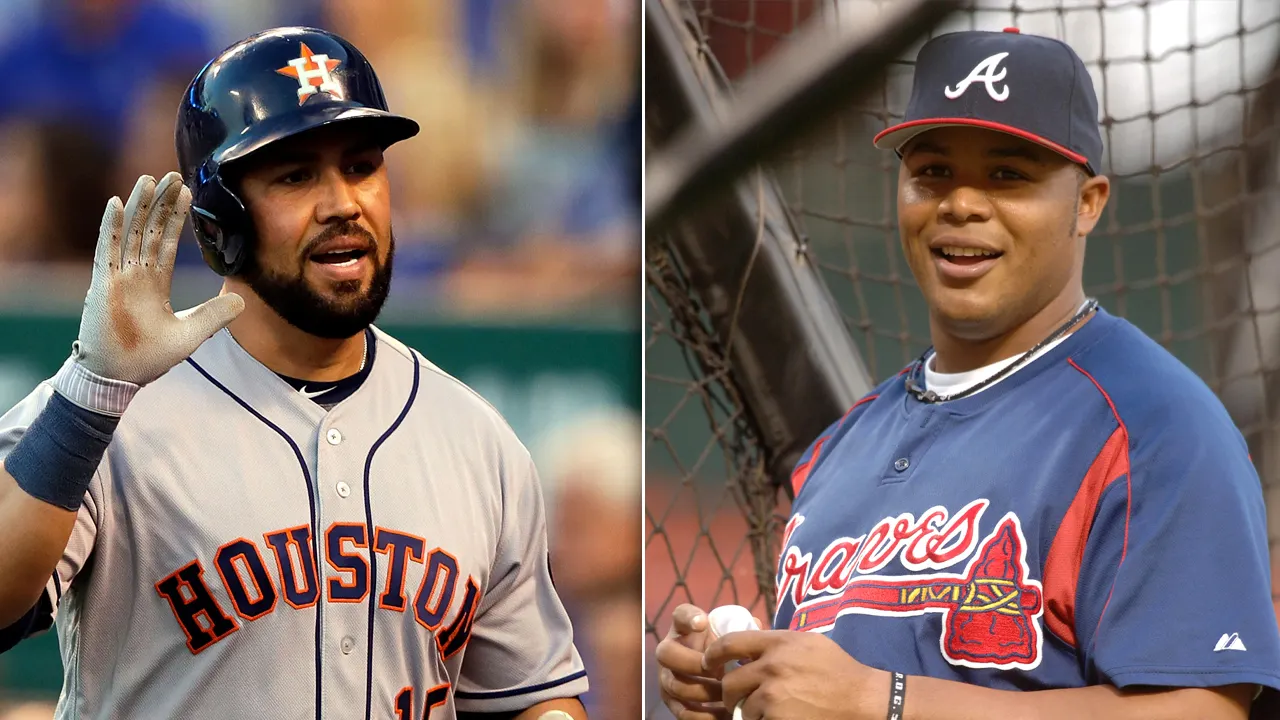
Carlos Beltran and Andruw Jones Elected to the National Baseball Hall of Fame
In a monumental achievement for baseball history, Carlos Beltran and Andruw Jones have been elected to the National Baseball Hall of Fame, cementing their legacies as two of the sport’s most accomplished players. The announcement on Tuesday marked the culmination of careers that saw these two outfielders combine for an impressive 869 home runs (Beltran with 435 and Jones with 434). Beltran secured his place in his fourth year on the ballot with an overwhelming 84.2% of votes, while Jones, in his ninth year of eligibility, finally received the call with 78.4% of votes. Their induction represents not just statistical excellence, but careers defined by versatility, defensive prowess, and consistent production across multiple teams and eras in baseball.
Carlos Beltran’s journey to Cooperstown is particularly noteworthy for its completeness as a player. The switch-hitting outfielder was the epitome of a five-tool talent, becoming one of just eight players in MLB history to join the exclusive 300-300 club (300 home runs and 300 stolen bases). Despite New York Mets fans perhaps best remembering his strikeout that ended the 2006 National League Championship Series, Beltran’s career transcended any single moment. He earned nine All-Star selections—including one in his penultimate season at age 39—while collecting 2,725 hits, three Gold Glove Awards, and both scoring and driving in over 1,500 runs. This latter achievement places him among an elite group of 39 players, of whom 32 are Hall of Famers. Beltran’s postseason excellence further distinguishes his career, as he compiled a remarkable .307 batting average and 1.021 OPS across 65 playoff games, showcasing his ability to perform under baseball’s brightest lights.
The road to the Hall wasn’t without complications for Beltran, however, as voters had previously shown reluctance due to his involvement in the Houston Astros’ sign-stealing scandal. As the only player directly named in Commissioner Rob Manfred’s report on the 2017 team’s infractions, Beltran paid a professional price, losing his opportunity to manage the New York Mets in 2020 before even beginning. This cloud over his legacy appeared to delay what might otherwise have been a first-ballot induction, given his statistical case. Having spent seven seasons each with both the Royals and Mets, with remarkably similar production for both franchises, the question of which cap will adorn his Hall of Fame plaque remains unanswered, adding another intriguing chapter to his baseball story. Despite the controversy, voters ultimately recognized that Beltran’s contributions to the game over 20 seasons outweighed this single blemish.
Andruw Jones brings an equally compelling case to Cooperstown, built largely on his defensive brilliance and power hitting. The Curaçao native developed a reputation as perhaps the finest defensive center fielder of his generation, winning 10 Gold Glove Awards while patrolling the outfield primarily for the Atlanta Braves. Jones joins an exclusive club as one of only four players in baseball history with both 400 home runs and 10 Gold Gloves, alongside Willie Mays, Ken Griffey Jr., and Mike Schmidt—illustrious company that underscores his unique combination of power and defense. His offensive peak came in 2005 when he led the majors with 51 home runs and narrowly finished second in MVP voting to Albert Pujols. Across 17 seasons, including 12 with Atlanta, Jones accumulated five All-Star selections and extensive postseason experience, appearing in 76 playoff games. His election in his ninth year of eligibility represents a gradual but deserved recognition of a player whose defensive value may have been underappreciated in earlier voting cycles.
The Hall of Fame voting results also highlighted several other notable candidates whose baseball journeys continue to generate debate among the sport’s historians and analysts. Chase Utley, in his first appearance on the ballot, received 59.1% support—an impressive debut that suggests future induction may be likely for the Philadelphia Phillies’ standout second baseman. Meanwhile, Andy Pettitte (48.5% in his eighth year) and Alex Rodriguez (40% in his fifth year) remain well short of the required threshold, with both players’ connections to performance-enhancing drugs appearing to significantly impact their candidacies despite their statistical achievements. This ongoing tension between career numbers and questions of competitive integrity continues to shape Hall of Fame voting patterns, presenting voters with complex decisions that go beyond mere statistics.
Looking ahead to July’s induction ceremony, Beltran and Jones will join Jeff Kent, who was elected by the Contemporary Baseball Era committee in December, creating a 2024 Hall of Fame class that spans different eras and playing styles. For baseball fans, these inductions offer an opportunity to celebrate careers that exemplified excellence and longevity in America’s pastime. Beltran’s switch-hitting prowess and all-around brilliance alongside Jones’ power and defensive wizardry represent different paths to baseball immortality, but both demonstrate the diverse ways players can leave indelible marks on the sport. As they prepare to receive baseball’s highest honor in Cooperstown, their elections remind us that the Hall of Fame exists not just to recognize statistical achievements, but to preserve the stories of players who helped define their eras and enrich the tapestry of baseball history.