


Benjamin Karl, the 40-year-old Austrian snowboarder, was on cloud nine after clinching his second consecutive Olympic gold in the men’s parallel giant slalom at Livigno Snow Park. As the final buzzer rang, adrenaline coursed through him, making the biting Alpine cold feel like a gentle breeze. What followed was pure, unfiltered joy—a raw celebration that showed the man behind the medal, embracing every high of victory without a shred of inhibition.
In the race itself, Karl trailed his South Korean rival, Kim Sang-kyum, for much of the way down the snowy trail. But when Kim slipped up, Karl seized the moment like a seasoned champion, edging ahead by a razor-thin 0.19 seconds. It was a nail-biter that reminded everyone of the unpredictability of the sport, where every turn counts and one tiny misstep can rewrite the podium. Karl’s determination paid off, turning potential disappointment into glory.
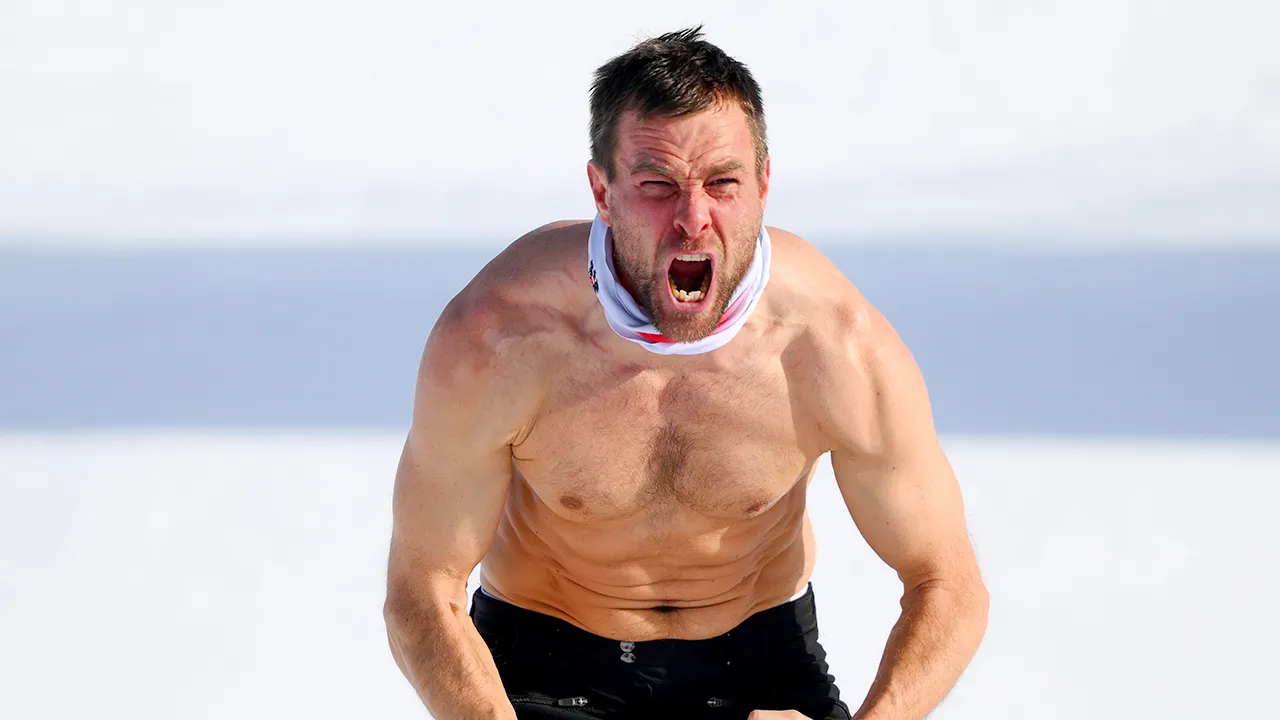
Then came the unforgettable aftermath. Karl ripped off his jacket and four layers beneath it, muscles flexing triumphantly as he screamed into the crisp air. Face down in the snow, he let the thrill consume him, numb to the frost in that euphoric haze. It was as if the world around him faded, leaving only the pounding heart of a man who’d poured his soul into this pursuit—human in his vulnerability, exhilarating in his freedom.
The crowd at Livigno Snow Park erupted in cheers, loving every wild second of Karl’s outburst. This spontaneous display quickly became talk of the Olympics, a stark contrast to the stoic ceremonies that followed. Cluster of fans and spectators felt connected to his raw emotion, witnessing not just a win, but a deeply personal catharsis that mirrored their own dreams of triumph.
After grounding himself, Karl eventually slipped back into his clothes and joined Kim and Bulgaria’s Tervel Zamfirov on the podium. As the Austrian anthem played, his beaming smile never wavered—a father, a competitor, a hometown hero savoring the moment. This wasn’t just about metal; it was about legacy, etched in that infectious grin that warmed everyone watching.
Beyond the day, Karl’s journey resonates as one of perseverance. With four Olympic medals now—a silver from Vancouver in 2010, bronze from Sochi in 2014, and golds from Pyeongchang and now Milano Cortina—he became the first snowboarder to achieve that mark. It’s a life story of pushing limits, embodying the grind and glee of elite sports, where each medal carries memories of laughter, toil, and that fleeting high.