






American Tennis Star Takes a Stand Against Politically-Charged Questions at Australian Open
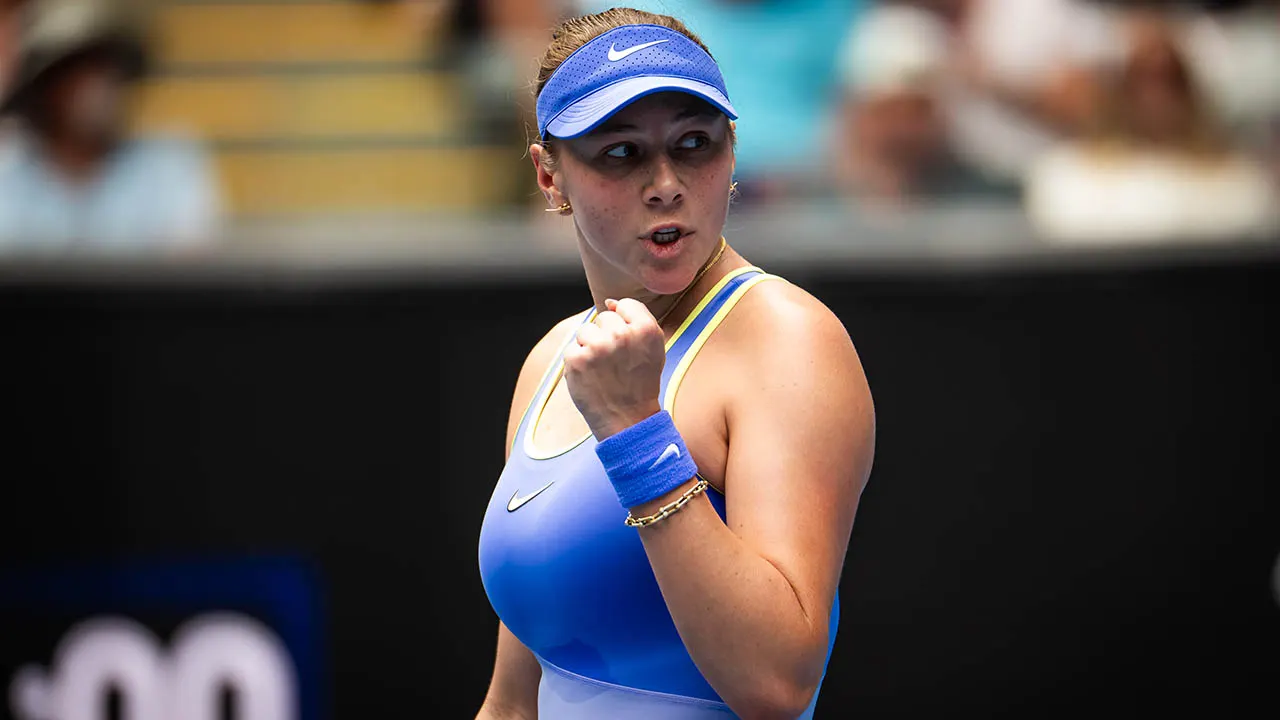
Amanda Anisimova, the American tennis sensation, found herself navigating more than just her opponents at the Australian Open when she stood firm against what she described as “clickbait” questions about representing the United States during the Trump era. Following her impressive fourth-round victory over Wang Xinyu, Anisimova addressed the media storm that erupted after she declined to engage with politically charged questions from a freelance journalist. “The fact that I didn’t want to answer a question that was obviously intended for just like a headline and clickbait, that was my right,” she stated firmly, clarifying that her refusal had “nothing to do with my political views.” The New Jersey native emphasized that it was wrong for people to make assumptions about her political stance based on her choice not to engage with such questions.
The controversy began during an earlier press conference when Anisimova was asked how it felt to “play under the American flag right now.” She responded with pride about representing her country, saying, “I was born in America. So, I’m always proud to represent my country.” However, when the reporter pressed further with a follow-up question asking if “the context of the last year of everything that’s been happening in the U.S.” complicated those feelings, Anisimova firmly shut down the line of questioning with a direct “I don’t think that’s relevant.” This exchange quickly gained attention on social media, with many interpreting her response through their own political lens, despite her intention to keep politics separate from her athletic career.
The incident highlights the increasing difficulty athletes face in navigating the politically charged media landscape. Anisimova acknowledged the challenges of dealing with social media and public scrutiny, noting, “I feel like the internet is – it’s tough. It comes with the job, which is something I’ve learned to get used to.” She admitted there are days “where it bothers me a little bit,” revealing the personal toll such attention can take on athletes who are primarily focused on their sport. The tennis star, who has reached finals at both the U.S. Open and Wimbledon, found herself unexpectedly at the center of a political discussion despite her attempts to focus on her performance at the Australian Open.
Anisimova’s stance resonated with many in the tennis community, including former American tennis stars John Isner and Tennys Sandgren, who publicly defended her right to decline politically charged questions. Her experience wasn’t isolated – other American players, including Taylor Fritz, reportedly faced similar lines of questioning at the tournament. The support from fellow athletes underscores a growing sentiment that sports figures should be allowed to determine when and how they engage with political topics, rather than being pressured to comment on divisive issues during tournaments when their focus is understandably on their athletic performance.
In her follow-up comments to reporters, Anisimova expressed frustration with how her response had been interpreted: “The fact that people assume that they know my stance on certain important topics is just wrong. It’s not factual.” This statement cuts to the heart of a broader issue facing public figures today – the pressure to publicly stake positions on political matters and the immediate judgment that follows regardless of their choice to engage or abstain. For Anisimova, the experience served as yet another reminder of how athletes must navigate not just their sport, but also the complex terrain of public expectation in an increasingly polarized society.
The incident at the Australian Open speaks to larger questions about the boundaries between sports and politics, and about an individual’s right to privacy regarding their political views. While some athletes choose to use their platforms for political advocacy, others prefer to keep their views private or focus solely on their sport. Anisimova’s response asserted her right to make that choice for herself, demonstrating that even in declining to answer politically charged questions, athletes can take a meaningful stand – in this case, for the right to determine the terms of their own public engagement. As she continues her journey at the Australian Open, Anisimova has shown that sometimes the most powerful statement an athlete can make is simply drawing the line between their professional and political lives.