

The Miracle on Ice: Remembering America’s Greatest Olympic Upset
As the 2024 Winter Olympics in Milan Cortina approaches its conclusion next month, it will mark nearly 46 years since what many consider the greatest sporting upset in history. On February 22, 1980, a team of American amateur hockey players accomplished the unthinkable by defeating the dominant Soviet Union 4-3 in what became immortalized as the “Miracle on Ice.” This legendary moment wasn’t just a hockey game—it was a cultural phenomenon that emerged during the tensions of the Cold War and continues to resonate with Americans of all generations.
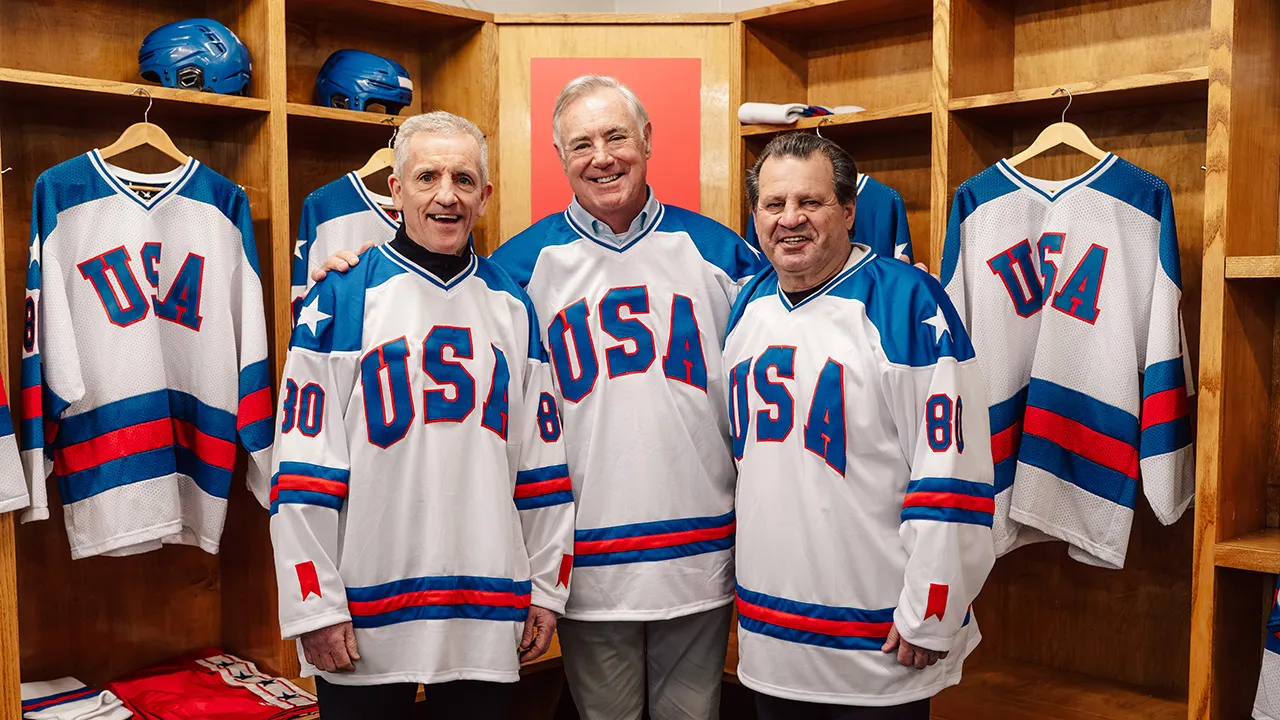
Recently, key figures from that historic victory—captain Mike Eruzione, goalie Jim Craig, leading goalscorer Mark Johnson, and broadcaster Al Michaels—gathered at Herb Brooks Arena in Lake Placid for “Run Back the Miracle,” an event sponsored by Michelob Ultra. The celebration reimagined pivotal moments from that victory using cutting-edge technology including high-definition holograms, full-surface ice projection, and historic footage, allowing fans to experience the magic of that celebrated moment. For the players themselves, this homecoming offered something precious—a chance to properly reflect on and celebrate their achievement. As Jim Craig noted in an interview with Fox News Digital, “What we’re able to do here is we’re able to relive the moment that we never had a chance to do. When the Olympics ended, you know, I think in five days, I was playing in the National Hockey League. So was Mark Johnson. We just, all of a sudden, we were on a team, and we were just gone.” This reunion brought together not just teammates but generations of Americans who have been inspired by their story.
For legendary broadcaster Al Michaels, whose “Do you believe in miracles? Yes!” call has become one of sports’ most iconic moments, this was only his third time returning to Lake Placid since those Olympic Games. The emotional weight of the arena still affects him deeply, as he shared: “I mean, I can feel it. I can just feel it in my bones, my fiber to walk back into this building, even though when obviously it’s been remodeled and refurbished, but I can still remember that night and 1980.” His call, made in the final seconds as the young Americans held off the Soviet juggernaut, has transcended sports to become a cultural touchstone—so much so that Michaels admits he’s extremely selective about when he uses the word “miracle” in his broadcasts, conscious that it belongs to that singular moment.
What made the victory particularly meaningful was its backdrop against Cold War tensions. The Soviet team wasn’t just any opponent—they were essentially professional players representing a global superpower that had dominated international hockey for decades. The American team, averaging just 22 years old and comprised entirely of college players, entered the game as substantial underdogs. For Jim Craig, who had experienced the Soviet Union firsthand during the 1979 World Championships in Moscow, the political dimensions were impossible to ignore: “We really saw how the USSR back then utilized sport as propaganda. To me, it’s not about politics, but you can’t help but get some of those in there. It’s really about pride of being and representing your country, right? And understand that brand is more important than you.” This understanding helped forge the team’s identity under coach Herb Brooks, whose rigorous training and psychological methods united the players despite many coming from rival college programs.
The game itself has become American sports folklore—from Mark Johnson’s goal in the final second of the first period to captain Mike Eruzione’s game-winning shot midway through the third. The final minutes saw the birth of the now-ubiquitous “U-S-A” chant as the team defended their lead. When the final buzzer sounded, the unlikely victory over the Soviets represented more than an athletic achievement—it became a moment of national pride during a challenging period in American history. Two days later, the team secured the gold medal by defeating Finland, completing their improbable run. While that final victory sealed their Olympic championship, it’s the triumph over the Soviets that remains etched in the national consciousness.
As Milan Cortina prepares to create its own Olympic memories next month, the “Miracle on Ice” stands as a reminder of sport’s unique ability to transcend its boundaries and capture something essential about the human spirit. The story endures because it embodies the qualities we most admire: perseverance against overwhelming odds, the power of teamwork, and the possibility that on any given day, dedication and belief can overcome even the most formidable challenges. For Craig, Eruzione, Johnson, and their teammates, their achievement has followed them throughout their lives—not as a burden but as a shared gift with the American public. And for Al Michaels, whose voice became forever linked with that miraculous moment, the restraint with which he uses his famous phrase only underscores its singular importance in American sports history. As new Olympic heroes emerge next month, they’ll be measured against the standard set by those college boys who, for one frozen moment in Lake Placid, made an entire nation believe in miracles.