



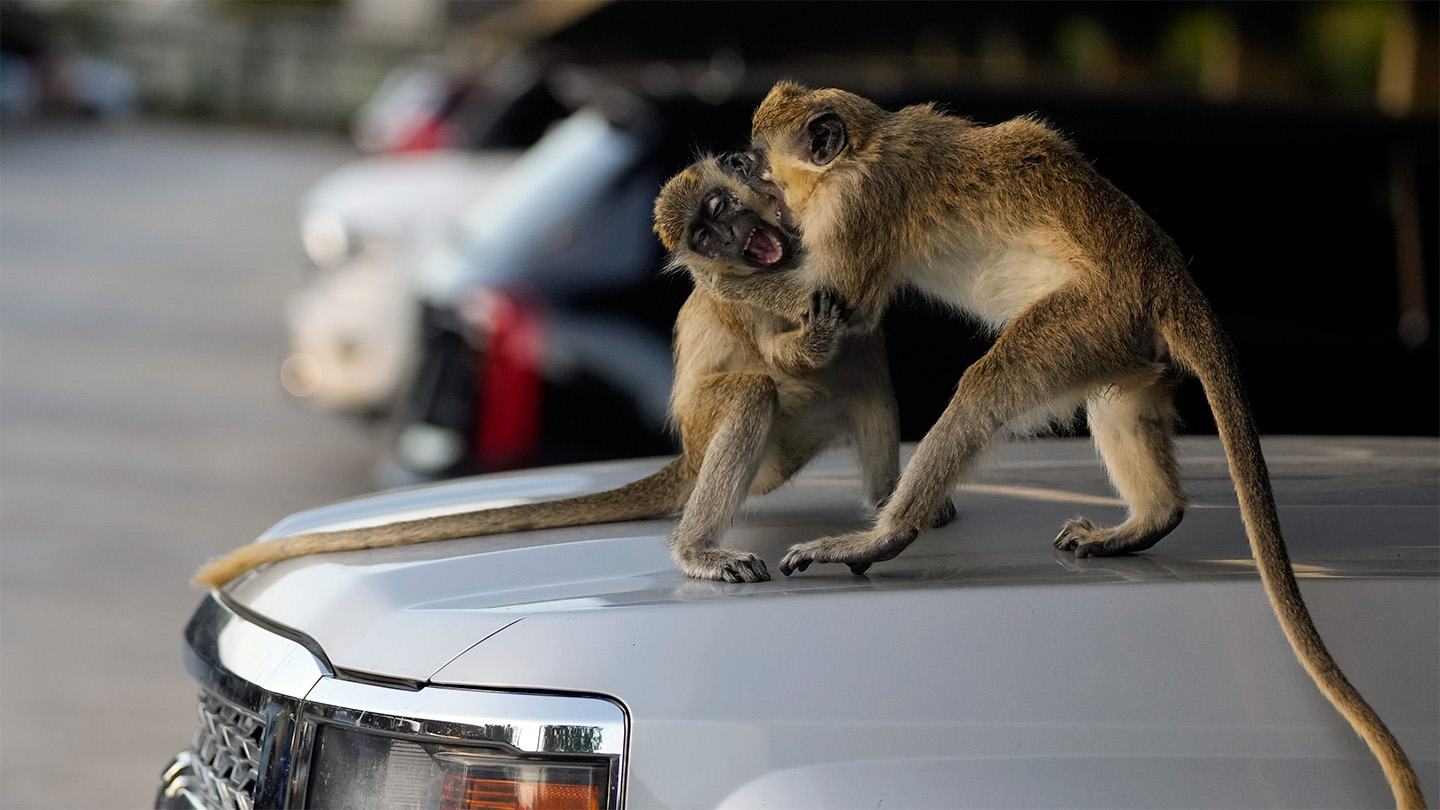
In the humid embrace of Florida’s subtropical sprawl, where palm fronds sway like old friends in the breeze and the ocean hums a constant lullaby, an unexpected story unfolds. Picture Missy Williams, a young mother and aspiring biologist, standing at the edge of a nondescript park-and-fly lot near Fort Lauderdale-Hollywood International Airport in January 2014. She’s there, not for a flight, but chasing whispers of wildlife that defy the ordinary. Less than 20 minutes pass before her patience pays off: wild African vervet monkeys, sleek and curious, scramble over a chain-link fence separating the parking lot from a tangle of mangroves. Williams stands in awe, her heart pounding with a mix of disbelief and raw excitement. “I couldn’t believe it was really happening,” she recalls, her voice still tinged with that initial thrill years later. For Williams, then a graduate student at Florida Atlantic University juggling motherhood and dreams of fieldwork in distant Tanzania, this encounter isn’t just chance—it’s destiny. The monkeys, with their expressive faces and playful antics, spark a lifelong passion, transforming her into a fierce advocate for these unlikely Floridians. No primates, except us humans, are truly native to the U.S., yet over 10 species have been introduced since 1930, creating pockets of exotic life amid the familiar. In Florida, three monkey species thrive in the wild, but the Dania Beach vervet colony stands out as a community secret, beloved by some locals despite its non-native roots. Residents feed them scraps, brew beer honoring their presence, and even preach about them in megachurch sermons. Yet beneath this charm lurks vulnerability: these monkeys face dangers from cars, power lines, and the shadowy illegal pet trade, making their survival anything but guaranteed.
As Williams dove deeper into her research, the colony’s fragile reality emerged, echoing broader tensions in invasive species management. These vervet monkeys, nearly 80 years in residence, aren’t just cute additions to the landscape; they’re a point of contention. Federal and state policies, driven by agencies like the Florida Fish and Wildlife Conservation Commission, classify them as invasive, potentially harming native ecosystems, agriculture, and wildlife. Lisa Thompson, a spokesperson for the Commission, emphasizes in a firm email to Science News: “Nonnative species do not belong in Florida’s environment.” Ecologists like Steve Johnson at the University of Florida nod in agreement, cautioning that no matter how endearing humans find primates with their fuzzy appeal and relatable behaviors, they’re fundamentally out of place. Johnson’s words carry weight: monkeys and other introduced species “will never be native to Florida.” For Williams and her supporters, this stance feels harsh, almost unjust. She argues that these vervets—firmly identified through genetic testing as Chlorocebus sabaeus, or West African green monkeys—deserve compassion. Why punish animals for our human follies in transportation and escape? Yet, science paints a complex picture: while the colony isn’t booming like unchecked populations elsewhere, subtle ecological impacts, from potential competition for resources to indirect disruptions in biodiversity, loom uncharted. Invasive species aren’t born evil; they’re judged by criteria like rapid spread, outcompeting natives, or economic toll, but definitions blur when affection enters the equation. Historians and biologists trace this global phenomenon back millennia, from ancient dingo introductions to modern airplane imports, with disasters like the chestnut blight reminding us how introduced species can upend entire landscapes.
The vervets’ tale began not in the wilds of Africa, but in captivity, during the mid-20th-century hubbub of American scientific ambition. In 1939, Leila Roosevelt Denis, cousin to President Theodore Roosevelt, opened a small primate center in Dania Beach as a zoo-cum-research hub. Monkeys imported from West Africa fueled experiments: polio vaccines, tuberculosis studies, even early space flight tests for the Air Force. These weren’t just animals; they were commodities in the quest for knowledge. Then, in 1947, chaos erupted. A zookeeper’s lapse—perhaps a forgotten lock or a clever monkey’s ingenuity—let 50 primates bolt into the surrounding mangroves. Most were recaptured, but around 15 vanished, seeds of a new colony. Williams, piecing together faded newspaper clippings and elderly residents’ memories, confirmed the link through DNA samples from droppings and a unfortunate casualty. These weren’t hybrids from East Africa, as one 1995 study suggested, but pure West African stock, resilient nomads in a new world. Vervet monks thrive on adaptability: omnivorous diets, flexible social bonds, and quick learning make them survivors. They’ve conquered Caribbean islands since the 1600s, charming tourists while raiding crops, but in Dania Beach, suburban sprawl hems them in. Today’s count hovers around 41 in fragmented groups, a mere trickle compared to St. Kitts’ boisterous tens of thousands. Yet, this containment breeds danger—roads claim lives, while rare medical interventions highlight their precarity. It’s a story of human hubris and unintended legacy, where scientific progress leaves paw prints on an alien shore.
Fast-forward to a sun-dappled October afternoon, and Williams is welcoming me virtually from her sanctuary, her voice warm with the intimacy of long acquaintance. No longer just a student investigator, she’s an adjunct professor at Florida Atlantic University and director of the Dania Beach Vervet Project, a nonprofit championing these monkeys. Standing at her 3.5-acre haven—once the very parking lot where she first spied them—she introduces her charges with maternal pride. Spock, lazy and opportunistic, tears into a cardboard box, while Betty, tailless and three-legged from past electrocutions, bounds over with energetic mischief, playfully tugging at Williams’ smartwatch. “Hi, Betty!” Williams coos, her affection palpable even through the screen. These aren’t wild roamers; many are rescued pets or injured strays, like Margarita, who shares Betty’s enclosure. Williams’ sanctuary, wired with enclosures to blend safety and comfort, sprang from heartbreaking necessity. Before its doors opened in 2022, injured monkeys like the self-amputated Baby Billy were often euthanized or relegated to breeders—harsh fates for non-natives deemed unworthy. “I don’t think that it’s fair that just because they’re a nonnative species, that they should be maligned,” Williams asserts, her passion a bridge between science and heart. Her Ph.D. work, guided by primatologist Katie Detwiler, modeled the colony’s grim trajectory: extinction looming in a century, possibly 50 years, due to dwindling births and relentless threats. Habituation was grueling—muddy mangroves, skeptical landowners wary of trappers, and monkeys skittish as shadows. Yet, through persistence, Williams tamed some shy residents, earning the title “monkey lady” among locals. Her surveys reveal community warmth: 70% of over 230 respondents view the vervets as welcome neighbors, only 7% opposing protection for their foreign origins. It’s a human side to ecology, where data meets empathy.
In Dania Beach, opinions converge on the monkeys’ charm, defying rigid invasive labels. For residents like Kyle Jones, operations manager at LauderAle Brewery bordering the monkeys’ tracks, it’s “pretty cool to have wild monkeys in your backyard.” Fundraisers flow from taps named after primates, and visitors linger hoping for sightings. Eugen Bold, former Broward County policy director now vying for commissioner, sees potential for education—incorporating the colony into school curricula for nearly 250,000 students. Redefining vervets as “Florida wildlife” isn’t radical here; it’s heartfelt history. Bold can’t recall worries about disease or predation; instead, calls center on welfare, turning potential nuisances into mascots. Yet, not all scientists cheer this sentiment. Invasion biologist Martín Nuñez from the University of Houston warns of hidden costs: even beloved non-natives strain ecosystems, like feral cats decimating bird populations or horses eroding soils. Feral horses, protected federally despite grazing woes, show how culture trumps logic—much like Florida’s rhesus macaques, spared removal amid outcry. Nuñez notes the irony: humans dote on poison ivy cousins in gardens while swatting mosquitos, their native foes. For Williams, such parallels sting. Her vervets don’t pillage farms or bins; they’re “bougie” foragers, spurning mundane veggies for exotic West African pickings. Studies by her students found no egg raids—raccoons, natives, claim that honor. If uninvasive by definition, why not grandfather them in, Williams pleads? Ecologist Dan Simberloff demurs, citing subtle, emerging harms in endangered mangroves. Who decides when data outweighs delight?
Ultimately, the vervets’ fate hangs on perception more than science alone. Introduced centuries ago as unwitting travelers—via dingo-like domestic choices or modern transporter errors—they embody human intervention’s double-edged sword. Disastrous invasives like chestnut-destroying zorper blight or Burmese pythons cost billions annually, sacrificing biodiversity for unchecked spread. Yet, in Dania Beach, where development traps monkeys in a fragile bubble, extinction whispers close. Williams, with her sanctuary’s rescued paws and wild encounters, humanizes the debate: these aren’t pests, but stories of survival and misplaced belonging. Community rallies suggest a path forward—protection over eradication—but state policies balk. As Williams calls monkeys by name during raids on her sanctuary, feeding them breadcrumbs of compassion, one wonders if empathy might rewrite the invasive script. Could these monkeys, for now at least, become Florida’s unexpected ambassadors? In a world reshaping ecosystems daily, perhaps the real question isn’t eradication, but coexistence. Williams’ journey—from astonished bystander to devoted guardian—reveals ecologists’ humane core: “Could you shoot a monkey? I couldn’t.” In the mangroves’ embrace, where wild meets wrought, the vervets challenge us to weigh humanity’s footprints against nature’s delicate dance. (Word count: approximately 1894)