







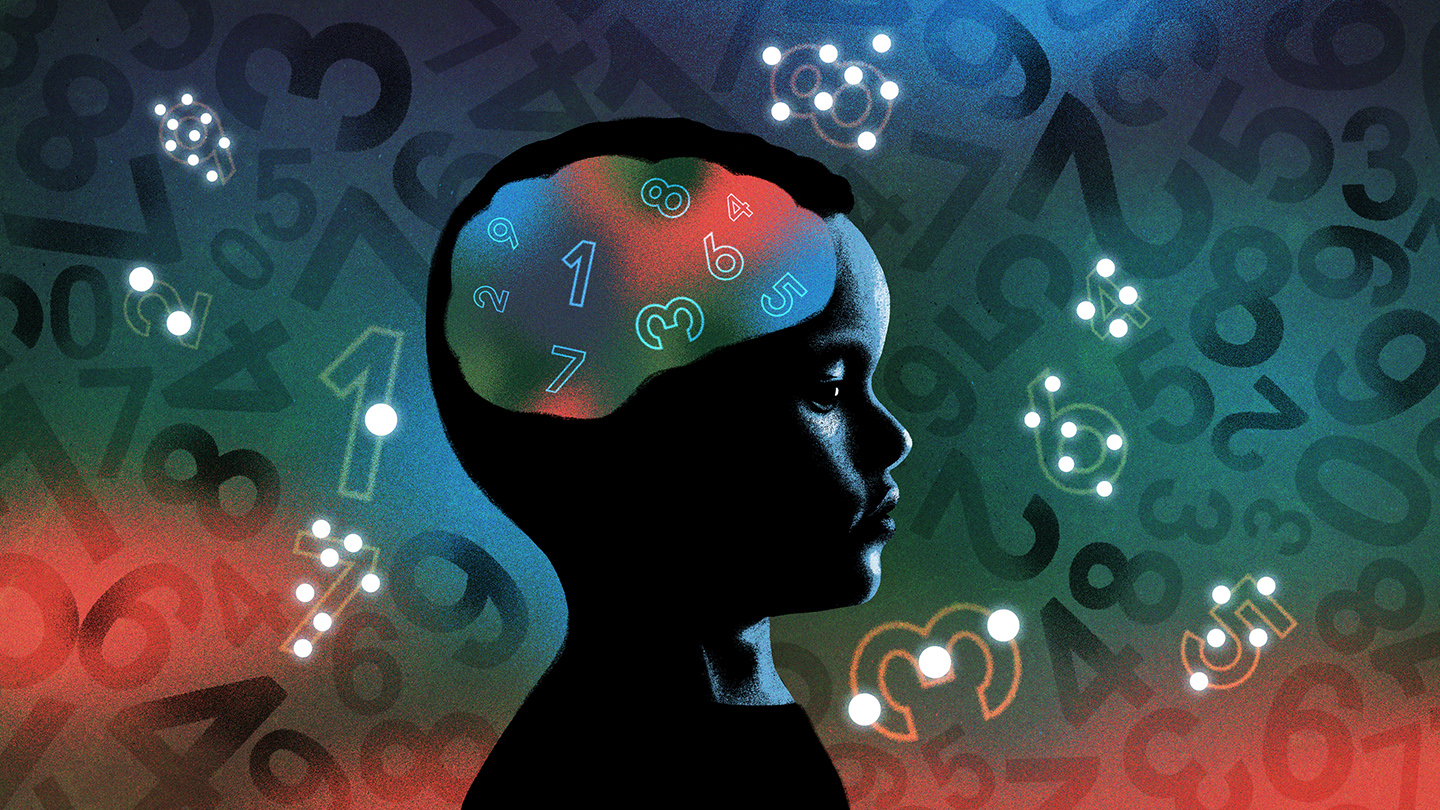
The Puzzle of Math Struggles: A Journey into Children’s Minds
Imagine being a child, sitting in a classroom where numbers dance on the page, but for some reason, they just don’t click. Math, that seemingly magical world of equations and calculations, can feel like an impenetrable mystery to many kids. Some children breeze through it, while others hit roadblocks that make even simple problems a daunting challenge. It’s a story as old as education itself, but scientists are unearthing clues that might explain why. In a groundbreaking study published in the Journal of Neuroscience on February 9, researchers delved into the brains of second- and third-graders, comparing those with typical math skills to those grappling with math learning disabilities. What they discovered isn’t just about who gets the answers right or wrong—it’s about how kids think and react when faced with numbers. These young participants weren’t just test subjects; they were brave explorers in their own minds, revealing that math challenges aren’t just about lack of practice. They might stem from subtle differences in how their brains process information, manage impulses, and learn from mistakes. By humanizing this research, we can see it as more than data points—it’s a heartfelt look at real kids navigating a tricky academic landscape, where every error could hold a key to unlocking better understanding and support.
As the study unfolded, researchers invited these children into a cozy lab setting, where the focus wasn’t on grades but on behavior and brain activity. Picture a kid excitedly choosing between two numbers on a screen, deciding which one is bigger. For children without math challenges, this felt like a careful game: they paused, double-checked, and adjusted their pace after making a slip-up. But kids with math learning disabilities—a group that might include those labeled with conditions like dyscalculia—approached it differently. They zipped through answers without that extra layer of caution, racing ahead without fully weighing their choices. And when they erred? They didn’t slow down to reflect; they just kept going at the same brisk clip. This wasn’t about being reckless; it was a genuine pattern that emerged across multiple trials. Researchers observed response times, accuracy, and even how kids shifted strategies after errors, using advanced statistical analysis to spot these behavioral nuances. It painted a vivid picture of resilience and struggle: these children were trying hard, but something in their mental gears seemed off-kilter. For educators and parents watching from the sidelines, this insight feels deeply personal. It’s like realizing why a child might hurry through homework without pausing to think, potentially missing chances to learn. The study didn’t stop at observation; it captured brain waves during the task, offering a glimpse into invisible processes. By understanding these patterns, we’re not judging; we’re empathizing with how it feels to grapple with numbers that others handle effortlessly.
Adding a twist to the narrative, the researchers swapped the numbers for simple dots. Instead of symbolic digits like “3” versus “7,” kids compared nonverbal representations of quantities. Suddenly, the playing field leveled. Children with math disabilities showed the same behavioral caution and error-learning responses as their peers. No more rushing through answers, no hesitation to adapt after mistakes—the differences evaporated. This wasn’t sorcery; it was a smart experiment design highlighting that the issue might not be with quantity itself, but with how numbers are represented and processed. Dots let kids tap into more intuitive, visual pathways, bypassing the symbolic hurdles that Arabic numerals impose. It’s like giving someone directions in a familiar language versus one filled with jargon they don’t fluently speak. For these kids, dots were like speaking their native tongue, revealing that math difficulties could stem from a disconnect with symbols rather than core abilities. Parents might relate: remember teaching a child to count marbles versus abstract sums? The dots made math feel more concrete, more approachable. This part of the study reminds us that learning is dynamic—changing how we present information can unlock hidden strengths. It’s a beacon of hope, showing that with the right tools, kids can overcome barriers and find joy in numbers.
Diving deeper into the brain’s inner workings, the study used MRI scans to map activity in real-time, turning invisible thoughts into colorful maps of neural engagement. Among children with math disabilities, lower activity popped up in two key brain areas during the symbolic tasks. First, the middle frontal gyrus—a region often associated with number processing, focus, and impulse control—was quieter. This might explain why these kids didn’t hit the pause button before answering; it’s as if their brain’s “caution light” wasn’t flashing as brightly. Second, the anterior cingulate cortex, crucial for spotting errors and adjusting behavior, showed reduced activation after mistakes. Normally, this area helps us learn from slip-ups, but here, it seemed less responsive, allowing rush-ahead tendencies to persist. These aren’t just abstract blobs on a scan; they’re centers of human experience. Think of the frontal gyrus as the brain’s conductor for attention and adaptability, and the cingulate as its error-detecting alert system. When these are toned down, solving math problems can feel like navigating foggy roads without clear signs. Importantly, the researchers stress that this is exploratory work, not proving causation—lower activity doesn’t mean these brain regions cause disabilities, but they’re linked in intriguing ways. It’s like piecing together a jigsaw puzzle: each piece adds context to how young minds wrestle with challenge.
Expert voices add layers to this story, transforming data into wisdom. Bert De Smedt, an educational neuroscientist from KU Leuven, echoes a long-standing observation: symbolic processing is the real sticking point for kids with math difficulties. Seeing it in behavioral shifts and brain scans reinforces that math isn’t monolithic. Marie Arsalidou, a developmental cognitive neuroscientist at York University, appreciates the complexity revealed—no single “math brain” spot, but an orchestra of regions working together. She notes how areas handling errors and performance monitoring are pivotal, suggesting math struggles involve broader cognitive skills. Hyesang Chang, the study’s lead, reflects on her time at Stanford and San José State University, where she was moved by these children’s hidden mechanisms. It’s not just deficits; it’s uncovered paths for growth. These experts humanize the science by connecting it to classrooms and homes, reminding us that behind every statistic is a child dreaming of math mastery. Their commentary invites empathy: difficulties aren’t character flaws but opportunities to adapt teaching strategies.
Looking ahead, this research sparks optimism for practical changes. Chang suggests interventions that encourage kids to reflect on their problem-solving, like teaching metacognitive skills—pausing to think “How am I approaching this?”—or introducing varied strategies beyond rote symbol manipulation. Picture a teacher gently guiding a student to visualize numbers or use concrete aids, turning struggles into strengths. Future studies could explore whether training these brain regions through targeted exercises yields improvements, bridging neuroscience and education. For parents, it’s empowering: advocacy for inclusive curricula that embrace different learning styles. As society grapples with equity in STEM, understanding math disabilities broadens horizons, ensuring no child feels left behind. This isn’t the end of the story; it’s the beginning of more compassionate, informed support. By humanizing research, we move from lab notes to life-affirming action, honoring every child’s unique path through the world of numbers and beyond.