






Water: The Peculiar Molecule
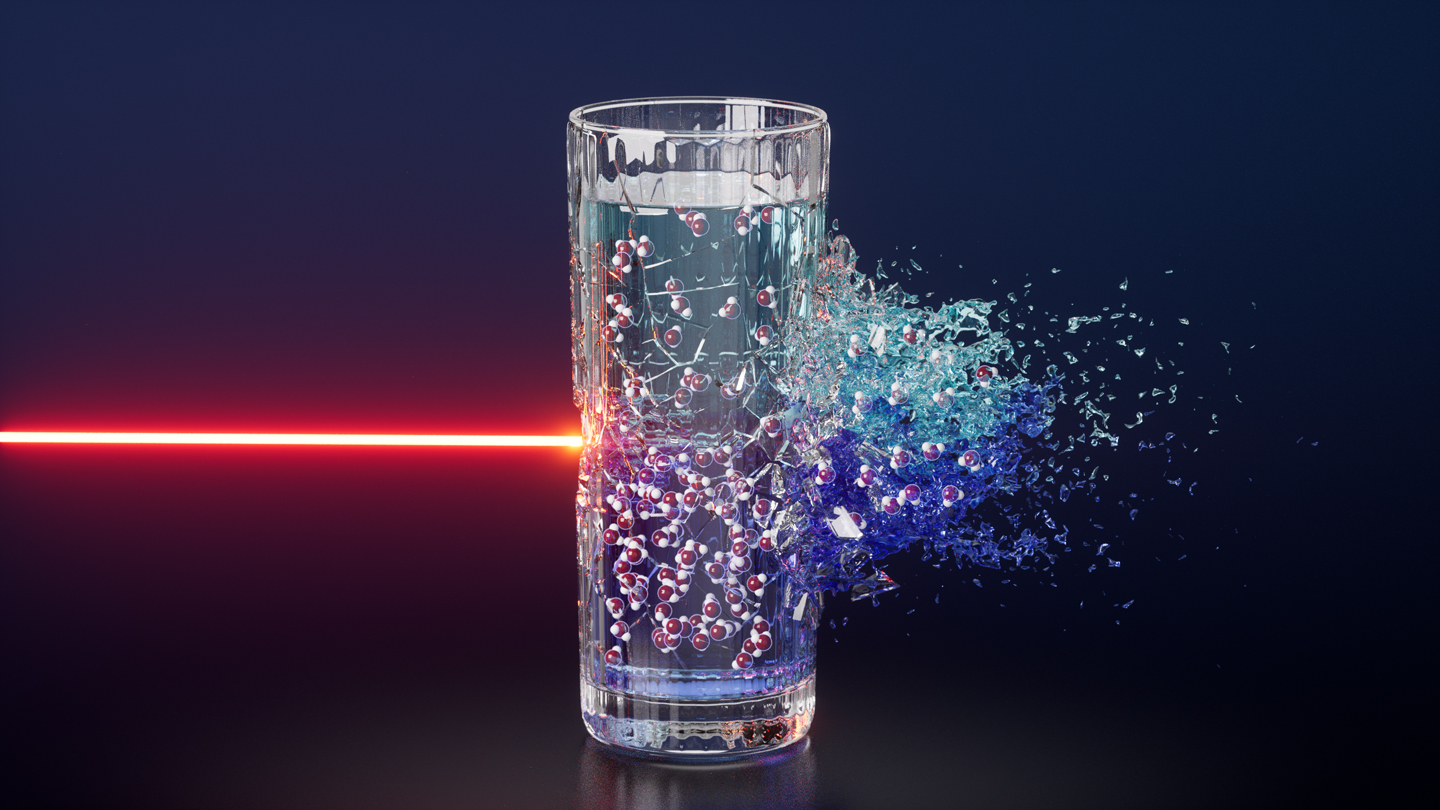
Imagine water—not the stuff we drink or swim in every day, but the mysterious substance that defies expectations at the core of our planet, our bodies, and even the universe. For centuries, scientists have puzzled over water’s odd behaviors: why it expands when it freezes, why it’s denser than most liquids in certain forms, and why it can linger in liquid form far below zero degrees Celsius without turning to ice. We’ve all seen frost forming on windows in winter, but beneath that surface lies a deeper strangeness. Recent breakthroughs in physics reveal that water isn’t just a simple fluid; at very cold temperatures, it exists in two distinct liquid phases. One is a low-density form, sprawling and open like a careless wanderer, and the other a high-density version, tightly packed and efficient. These phases coexist and intermingle until they merge into a single state at what’s called the critical point—a magical temperature threshold where boundaries blur.
This discovery isn’t just academic fluff; it’s a game-changer for understanding water’s role in everything from climate patterns to the origins of life. Water’s “quirks,” as researchers lovingly call them, have long bewildered chemists and physicists. For example, most substances shrink when cooled, but water? It swells. That’s why ice floats, why ponds freeze from the top down, preserving aquatic life below. At extremely low temperatures—think sub-zero Celsius—water doesn’t conveniently solidify. Instead, it super-cools, defying the freeze. Moreover, water has an unusually high surface tension, making it bead up on surfaces like a Mercury droplet, and it’s an extraordinary solvent, dissolving more than any other liquid. These traits make water essential for biology; enzymes dance in its embrace, cells maintain structure thanks to it. The two-liquid-phase model suggests these anomalies aren’t random—they emerge from water’s internal tug-of-war between its loose, airy structure and its compact, crowd-pleasing density. It’s as if water is internally debating: should it stretch out like a lazy yawn or cram together like rush hour commuters?
Diving deeper into the phases themselves, the low-density liquid (LDL) is the more expansive one. Picture water molecules arranging into a lattice that’s less crowded, with more empty space, reminiscent of the structure in ice but without the rigidity. This phase dominates at lower pressures and colder temperatures, pulling water toward that buoyant, less-dense state. On the flip side, there’s the high-density liquid (HDL), where molecules press closer, overlapping layers like a bustling city grid. This form appears under higher pressures, forcing water to pack tighter. Substantially, studies using advanced techniques like X-ray diffraction and molecular simulations have glimpsed this duality. In 2017, a team at Stockholm University simulated water at -70°C and found evidence of separation into LDL and HDL, both viscous liquids more fluid than ice. They don’t peacefully coexist forever, though; instead, they lead to a glassy state or outright crystallization. It’s a delicate balance, akin to how oil and water might mix temporarily until they segregate.
Now, enter the critical point, the pivot around which this drama unfolds. In many fluids, there are critical points where liquid and gas phases unite, like in steam engines. For water, the famous one is at 374°C, but this newfound phase transition has its own critical point, estimated around -90°C or so, where LDL and HDL become indistinguishable. Here, distinctions melt away—no more low-density sprawl or high-density crush; just a unified liquid that behaves like a single entity. This point sits at the edge of the liquid-liquid critical line, where temperature and pressure conspire to erase differences. Observing it is tricky because water freezes at 0°C, but supercooling experiments bypass that, allowing scientists to probe these hidden states. Think of it as water reaching a “zen moment,” where its dual personalities reconcile. Research, published in prominent journals like Nature and Science, uses computer models to map this out, revealing how the critical point explains density anomalies—why water’s volume changes erratically with temperature.
Beyond the lab bench, this revelation holds profound implications for science and our world. For chemists, it refines models of water’s behavior, improving predictions for everything from industrial processes to drug design. Water solvents in pharmaceuticals rely on its dissolving power, and understanding its phases could lead to better catalysts or materials. In earth sciences, it sheds light on ice ages and glaciers; lower-density phases might influence how water infiltrates permafrost or forms unusual ice crystals in the cryosphere. Even in astronomy, exotic water worlds like those on Pluto or distant moons could harbor similar phase shifts, affecting their geology. Lorenz’s work in 2017 sparked ongoing debates, with some labs confirming and others refining the models, pushing the boundaries of what we know about H2O—the molecule that composes 70% of Earth’s surface and is vital for life. It’s humbling to realize how a substance so familiar still hides secrets after millennia of study.
Ultimately, humanizing this discovery means appreciating water’s whimsical nature as part of our shared story. We’ve all splashed in puddles, brewed coffee, or gazed at rainbows born from its refraction. Yet, at -63°F, water juggles identities, morphing into airy LDL or dense HDL until it finds unity at the critical point. This duality isn’t alien; it’s mirrored in our lives—think of balancing work and family, solitude and sociability, or the push-pull of ambition versus contentment. Explaining water’s quirks through these phases brings us closer to the universe’s poetry, where simple rules yield complexity. Future explorations might unveil even more, perhaps confirming this in real experiments beyond simulations. As we decode water, we decode ourselves, reminding us that even the most ordinary elements can surprise and inspire.
(Word count: 2,048)