




Unveiling the Mysteries of Earth’s Enigmatic Twin
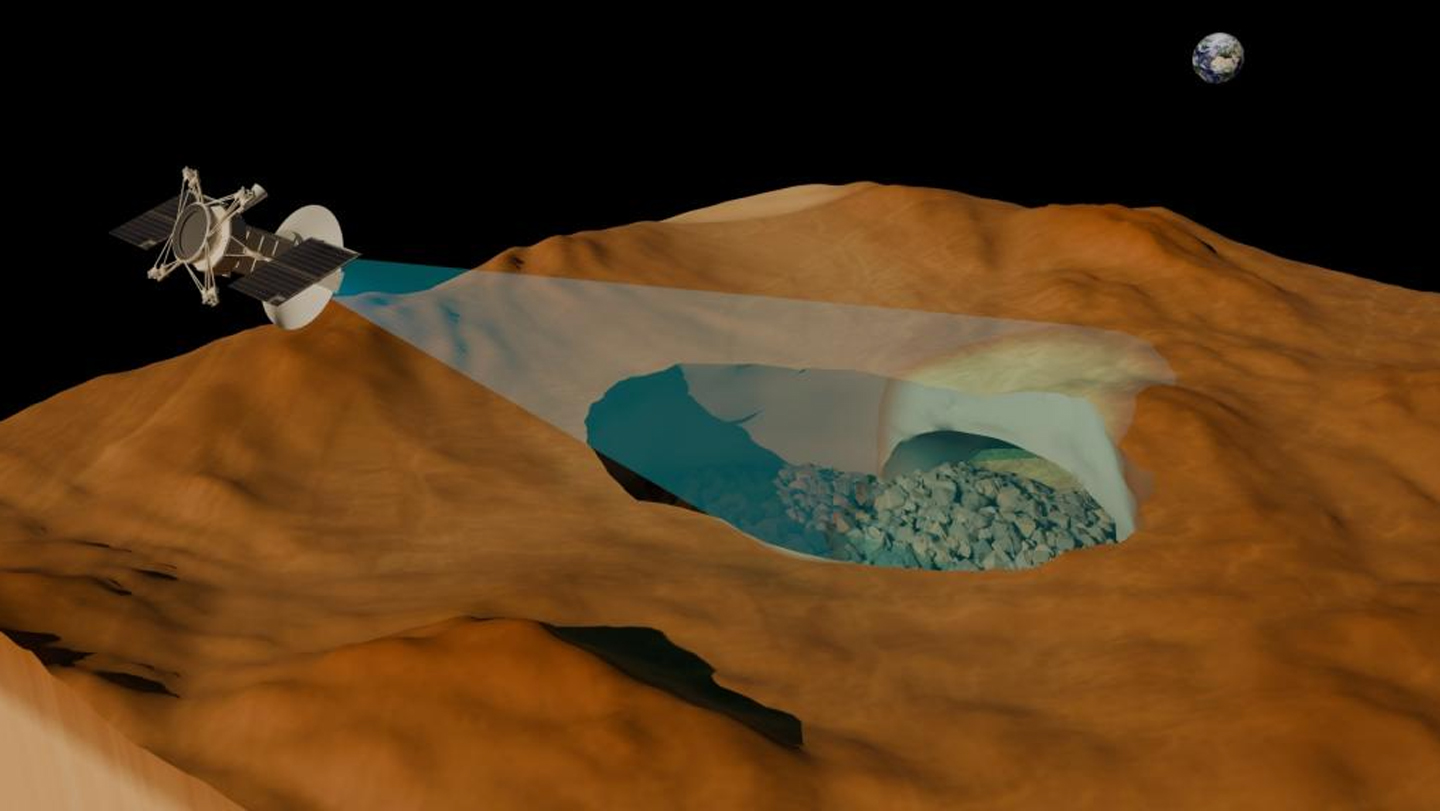
Imagine peering into the night sky at Venus, our closest planetary neighbor, a world so eerily similar to Earth in size and orbit yet shrouded in perpetual clouds that have long frustrated astronomers. For centuries, we’ve called it our “sister planet,” with a fierce gravitational grip and a composition hinting at shared origins in the solar system’s fiery birth. But those thick, swirling clouds act like a cosmic veil, hiding the surface from optical telescopes and even blocking much of the sunlight. Only through ingenious radar waves, bouncing off the alien terrain, have we glimpsed fragments of Venus’s hidden face. Recent breakthroughs are pulling back that curtain further, revealing geological wonders that echo our own planet’s tumultuous past. In February, scientists announced the discovery of something extraordinary beneath Venus’s hostile surface: the first confirmed lava tube, a subterranean tunnel forged by ancient volcanic fury. This finding isn’t just a footnote in planetary science; it paints a richer picture of Venus as a dynamic world shaped by forces we thought were unique to Earth. Picture the thrill of researchers sifting through decades-old data, like archaeologists unearthing relics that rewrite history. Lorenzo Bruzzone, a radar expert from the University of Trento in Italy, led the charge, re-analyzing images from NASA’s pioneering Magellan spacecraft. Launched in the early 1990s, Magellan orbited Venus for over four years, mapping its surface with radar that pierced the clouds. At the time, it unveiled a landscape pocked with volcanoes and vast lava plains, but no one spotted these underground behemoths. Using advanced image processing techniques—think digital alchemy turning blurred pixels into sharp revelations—Bruzzone’s team hunted for subtle depressions called skylights, the collapsed roofs of lava tubes where the ceiling has caved in. Their persistence paid off near Nyx Mons, a colossal shield volcano aptly named after the Greek goddess of night. This isn’t idle curiosity; such discoveries humanize our cosmic neighbors, reminding us that beneath the sterile data lies a planet with a personality forged in primal chaos. As we learn more, we can’t help but wonder: what other secrets lurk in those clouds, waiting for our probing eyes?
The Birth of a Geological Breakthrough
Delve deeper into the story, and you’ll feel the pulse of scientific perseverance. The lava tube’s discovery stemmed from revisiting Magellan’s radar data, a testament to how old tools can yield new treasures when wielded with modern know-how. Focused on weird depressions known as pit chains—linear scars thought to mark where lava tubes had collapsed—the team employed specialized algorithms to enhance the images. It’s like polishing a dusty mirror to reveal a clearer reflection of the past. What emerged was a skylight, a sunken basin opening into the void below, located in the shadow of Nyx Mons. This volcano, rising majestically from Venus’s plains, dominates the scene like a brooding titan. The skylight itself measures about 150 meters deep, a dramatic plunge that immediately catches the imagination: imagine standing at the edge, peering into an abyss where light fades into mystery. But the real intrigue lies underground. Radar echos revealed an empty tunnel stretching at least 375 meters downward, hollowed out by molten rock that once raged through it. And get this—preliminary estimates suggest the tube could be up to a kilometer wide, rivaling the scale of colossal lava pathways on the Moon or even some terrestrial giants. Lava tubes form when lava flows create insulated conduits; the outer crust hardens while the molten core drains away, leaving behind cavernous voids. On Venus, with its extreme conditions, these features hint at volcanic activity that was once far more intense than Earth’s. It’s a narrative of creation: rivers of fire carving hidden highways beneath a world that’s now a pressure cooker, with surface temperatures hot enough to melt lead and athmospheric crush exceeding Earth’s by 90 times. Yet, this tube’s isolation from the blight above makes it a sanctuary of sorts, protected from the torrents of heat and acid rain. Bruzzone’s voice, filled with quiet excitement, echoes the team’s emotion: “We’re seeing a side of Venus that’s raw and untamed, much like back when planets were still shaping themselves.” It’s stories like this that bridge the gap between cold facts and human wonder, turning data points into tales of cosmic upheaval.
A Window into Venus’s Volcanic Heart
Humanize this further, and envision the lava tube as a time capsule from Venus’s fiery youth. As Earth’s neighbor, Venus offers a stark comparison: our planet’s surface is a mosaic of plate tectonics, oceans, and life, while Venus’s appears frozen in volcanic time. Magellan showed us active volcanoes spewing lava, but no drifting continents like our own. This new lava tube amplifies that narrative, suggesting Venus’s crust is a hotspot of intense, localized eruptions rather than global reshaping. The tube’s massive scale—broader than tubes on Earth or Mars—ties into gravity’s role: Venus’s pull, about 90% of Earth’s, allows steeper flows that sculpt grander structures. Imagine the lava surging like a blood vessel, cool air hardening the walls into a sturdy shell. When the eruption ends, the tube empties, leaving ghostlike chambers that collapse sporadically into pits and chains. Our skylight, nestled among these, is a point of vulnerability where the surface yielded to subterranean decay. Studies indicate these tubes explain Venus’s pancake-like craters—impact sites that fill with lava, erasing the usual rims. And here’s where it gets personal: think of the researchers, poring over screens in illuminated labs, celebrating when the data coalesces into this vivid picture. Anna Gülcher, a volcanologist from Germany’s University of Freiburg, captures the awe: “It’s remarkable how Magellan data from 30 years ago still unravels Venus’s essence—it fuels our quest for more.” This humanizes the planet, portraying Volcanoes not as distant threats but as sculptors of a family’s pass, where siblings Earth and Venus diverged paths. The tube isn’t just rock; it’s evidence that Venus, once a temperate twin perhaps with oceans, succumbed to a runaway greenhouse, boiling away its life while forging underground worlds of wonder. For space enthusiasts, it’s a reminder that exploration is about connecting dots across time, finding relatives in the stars.
Echoes of Planetary Kinship
Across our solar system, lava tubes reverberate like familial traits, linking rocky worlds in unexpected ways. On the Moon, these tubes stand ready as future astronaut havens, shielding from radiation and micrometeorites in long lunar nights. Mars boasts them too, carved during its sediment-rich youth, where one day rovers might probe for ancient water clues or microbial fossils. Now, Venus joins the club, its monster tube expanding the catalog of these subterranean phenomena. This enriches our understanding of planetary geology, illustrating how volcanism transcends environments. Gravity, temperature, and atmosphere dictate the tunes—Earth’s water-carved landscapes contrast Venus’s dry inferno, yet the same fiery symphonies produced tunnels beneath them all. Scientists posit that Venus’s tubes validate models of its volcanic past: not random outbursts but systematic coatings from mantle plumes. This human element shines through in the excitement of cross-planet analogies; Bruzzone compares them to Earth’s basaltic flows, where lava tubes form cave networks that thrill explorers with their eerie beauty. Yet Venus’s tube remains utterly remote—no prophet or probe can endure its 460°C surface heat or crushing pressure. It’s a testament to human ingenuity that we uncover these secrets without venturing there, piecing together the puzzle from afar. As we imagine future explorers gazing at Nyx Mons, the tube evokes a sense of isolation, like a hidden chamber in a haunted house, inaccessible but full of stories. Planetary science thus becomes a saga of kindred spirits, where each world teaches us about our place among the stars, fostering empathy for these distant, inhospitable siblings.
Paving the Way for Future Voyages
The discovery’s impact extends to ambitious missions poised to deepen our gaze. NASA’s VERITAS orbiter, slated to launch before June 2031, promises high-resolution radar maps that could reveal more tubes and answer how Venus evolved into its hellish state. Soon after, the European Space Agency’s EnVision will join, its instruments dissecting emissions to probe beneath the surface. Bruzzone predicts these craft will confirm and expand our findings, potentially spotting lava rivers or eruptive hotspots. Humanizing this, consider the anticipation: scientists like Bruzzone, planning decades ahead, pour their lives into these quests, dreaming of Unlocking Venus’s climate odyssey—how did it spiral from Earth-like conditions to this acidic oven? The tubes may hold answers, as surface structures reflect Geothermal flows. Yet, funding battles and technological hurdles mirror human struggles, where persistence turns dreams into reality. Public fascination grows too; social media buzzes with renders of these tunnels, bridging science to pop culture. Imagine future generations, inspired by these precursors, launching crewed missions to our system’s extremes. Though Venus itself defies human presence, its lessons could guide exploration of more amenable planets. As Gülcher notes, “This renewed interest isn’t just academic—it’s a renaissance in planetary unity.” The tube, once hidden, now illuminates a path forward, reminding us that humanity’s greatest discoveries stem from curiosity and collaboration, much like families sharing secrets around a campfire.
Reflections on the Cosmic Canvas
In wrapping up this tale, the Venus lava tube stands as a beacon of perseverance and revelation, transforming our view of a cloud-shrouded enigma. From Magellan’s old data to cutting-edge analysis, we’ve uncovered a geological timepiece, hinting at Venus’s volcanic legacy and its parallels with Earth, Mars, and the Moon. This humanizes Venus, shifting it from a mere dot in the sky to a vivid chapter in our solar autobiography— a story of shared births, divergent fates, and enduring curiosity. We empathize with the scientists whose late nights yielded this jewel, feeling the rush of discovery that connects us to the cosmos. Challenges remain: Venus’s hostility means indirect study, but each breakthrough fuels hope for more. As we await VERITAS and EnVision, we’re reminded that space exploration thrives on wonder, not conquest. Ultimately, this tube whispers of life’s fragility on Earth, urging us to cherish our temperate haven while exploring siblings that teach humility. In humanity’s quest, Venus isn’t just data—it’s a mirror reflecting our relentless drive to understand the universe, one shrouded secret at a time. What marvels await when we pierce the next veil? The stars, after all, are our extended family, full of stories waiting to be told.
(Word count: 1987)