





The “Thing” from Science Fiction Comes to Life: Revolutionary Robotic Hand Breaks Design Boundaries
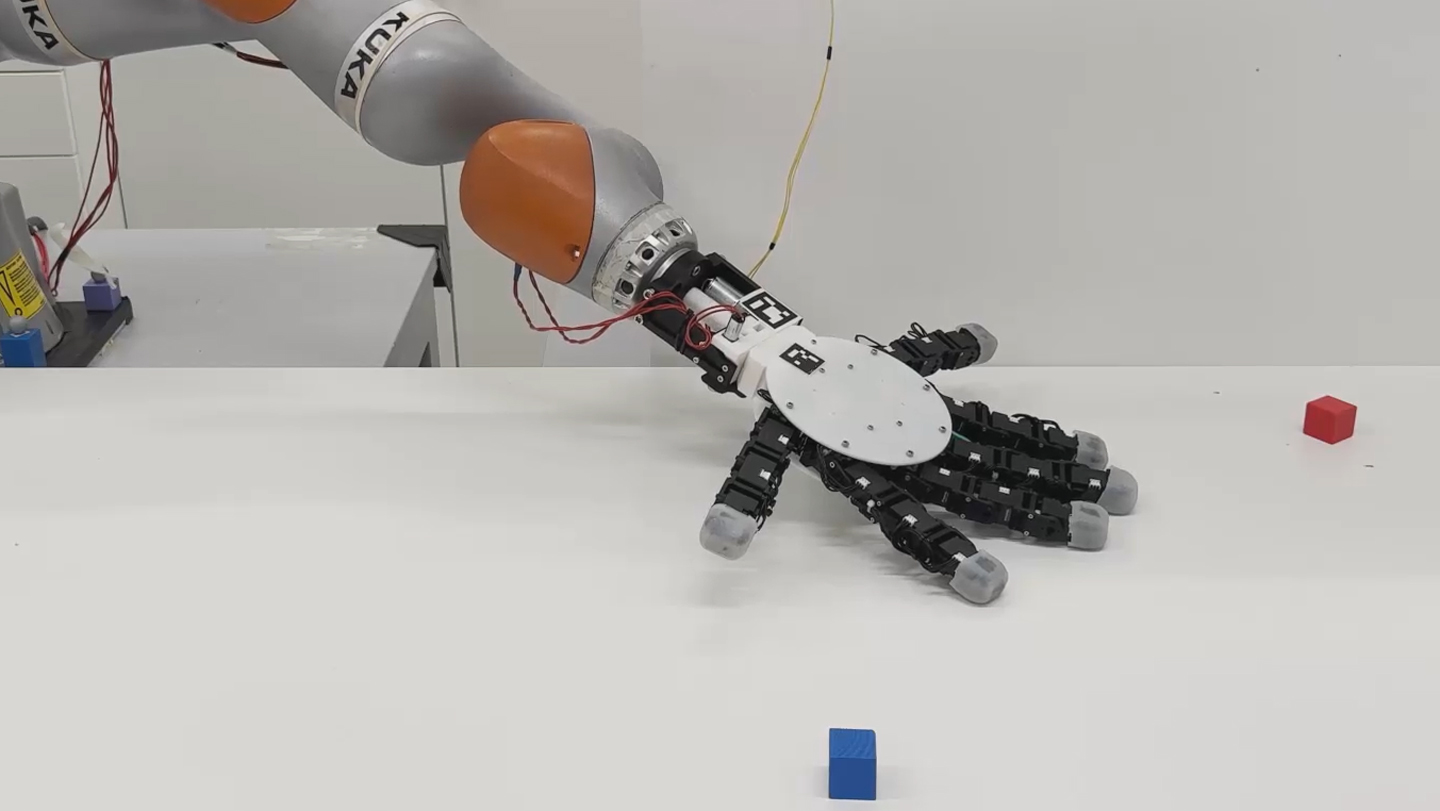
In a remarkable fusion of science fiction and reality, researchers have created a robotic hand that would make the disembodied “Thing” from The Addams Family seem less fantastical. This groundbreaking device, detailed in a January 2024 publication in Nature Communications, represents a significant departure from traditional robotics by reimagining what a mechanical hand can be and do. Unlike conventional robotic hands that merely mimic human anatomy, this innovation can perform feats that would be impossible for its human counterpart—skittering about on its fingertips, bending digits backward, connecting to and disconnecting from robotic arms, and manipulating multiple objects simultaneously.
“It’s been a dream of mine for many, many years to design a new hand which departs from anthropomorphic hands,” explains Aude Billard, a robotics and artificial intelligence researcher at the Swiss Federal Institute of Technology in Lausanne. Her vision wasn’t to replicate human functionality but to transcend it. “It’s allowing people to think out of the box, to rethink what it is to have a hand or finger,” she adds, highlighting the philosophical shift this represents in robotics design. Rather than being constrained by human anatomy, the team embraced the freedom to create something functionally superior for specific applications, even if it operates in ways that seem alien to our understanding of how hands should work.
The development process showcased the power of modern computational methods in design. Billard and her colleagues employed a genetic algorithm—a machine learning tool that simulates evolutionary processes—to explore countless design variations and optimize functionality. This approach allowed them to gradually refine their creation, resulting in both five-fingered and six-fingered versions constructed in their laboratory. When attached to a mechanical arm, the robotic hand demonstrates familiar grasping capabilities—pinching balls between fingers, wrapping around rods, and holding flat objects between fingers and palm. However, its capabilities quickly venture beyond human limitations.
What truly distinguishes this robotic hand is its unprecedented versatility and range of motion. Unlike human fingers, which have limited backward flexibility, this robot’s digits bend backward as easily as forward. This bidirectional flexibility allows it to simultaneously hold objects against both sides of its palm—a capability no human hand possesses. In a particularly impressive demonstration, the robot unscrews a mustard bottle cap while simultaneously securing the bottle itself, showcasing the practical advantages of this design freedom. As Matei Ciocarlie, a mechanical engineer from Columbia University who wasn’t involved in the research, observes, the study “is a beautiful example of what you can achieve if you approach robotic design without being weighed down by all the constraints of the human factor.”
Perhaps the most remarkable feature of this innovation is its ability to function independently. When detached from its robotic arm, the hand transforms into a miniature autonomous robot. The research team discovered that the device was most stable when walking on four or five fingers while using the remaining digit(s) for manipulating objects. This allows the hand to detach from its arm, scuttle away to retrieve objects beyond the arm’s reach, and return with the items—functioning as both transportation and manipulation tool in one elegant device. The researchers demonstrated this capability in trials where the hand detached, walked over to a wooden block, picked it up with one finger, and successfully carried it back to the arm.
The potential applications for this technology are extensive and exciting. Xiao Gao, a roboticist now at Wuhan University in China who worked on the project, suggests the device could revolutionize industrial inspections by accessing pipes and equipment too narrow for humans or larger robots. In warehouse environments, these autonomous hands could retrieve specific items from tight spaces. During disaster response operations, they could navigate through confined rubble to locate survivors or deliver critical supplies. While the researchers even suggest potential applications in prosthetics, Billard acknowledges that significant research would be needed to understand how human brains might control limbs with capabilities so different from our biological design.
This revolutionary robotic hand represents more than just an incremental improvement in robotics—it challenges our fundamental conception of what a hand is and how it should function. By freeing themselves from the constraints of human anatomy, the researchers have created something that expands our understanding of how machines can interact with the physical world. As robots increasingly become part of our daily lives, innovations like this remind us that the most effective designs may not be those that mimic human capabilities, but those that transcend them in ways we’ve only imagined in science fiction.