

A Young Dreamer’s Journey to Heal Innocent Lives
Daniel John, a bright-eyed medical student at the University of Michigan, slips his arms through the straps of his innovative baby carrier, a souped-up device that feels more like a love story than a medical gadget. Named BiliRoo, it’s designed to cradle newborns like a gentle hug while shielding them from a common foe: neonatal jaundice. As he adjusts the smoky blue–tinted window velcroed into the fabric, placing a doll inside for rehearsal, you can see the spark of hope in his eyes—a confidence that this wearable wonder might finally turn his long-gestating idea into a lifeline for families worldwide. Imagine being a parent holding your baby close, not just for comfort, but as part of the cure itself; that’s the human warmth Daniel envisions bringing to a condition that casts a shadow over countless beginnings.
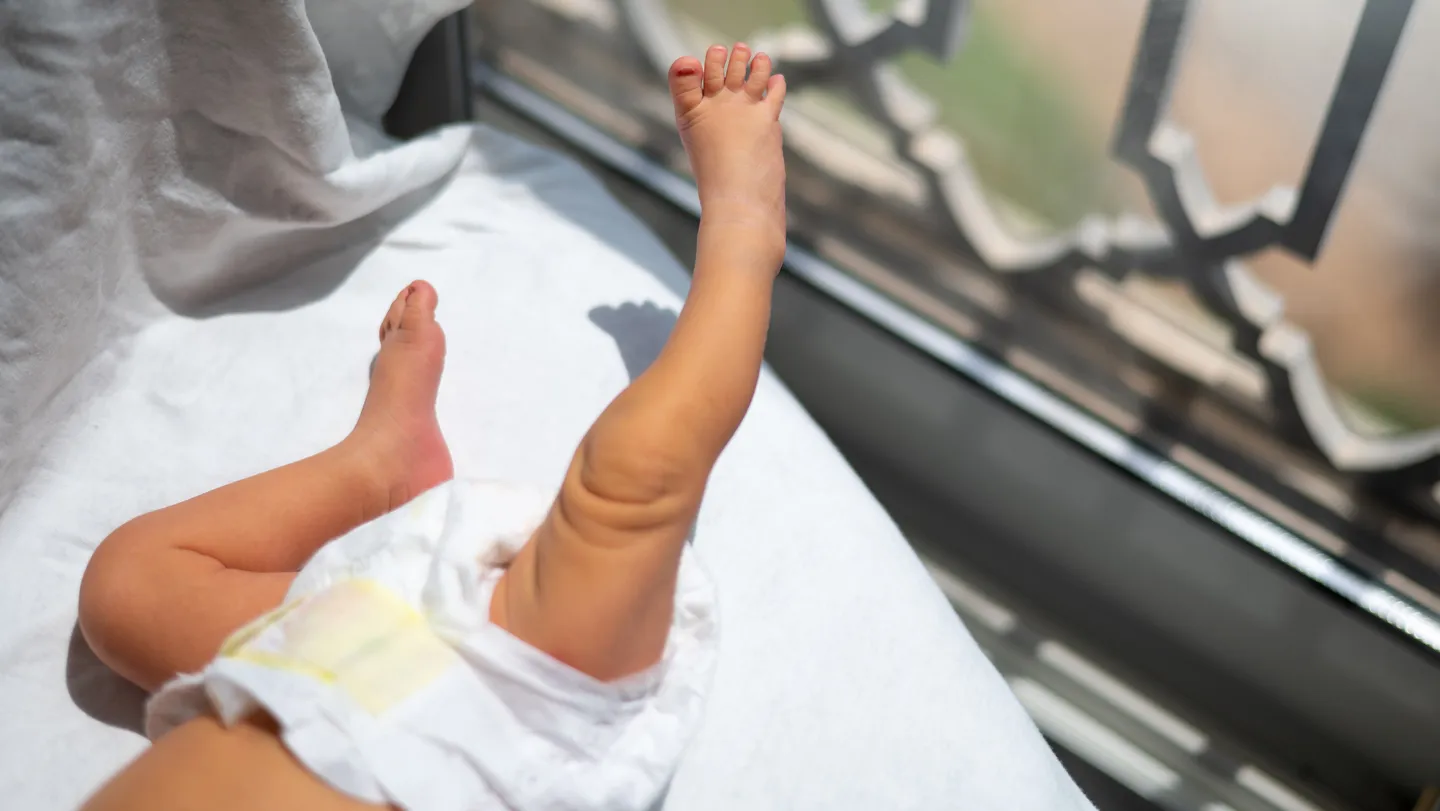
Neonatal jaundice isn’t some rare ailment buried in medical textbooks; it’s a everyday challenge that touches roughly 60% of newborns, soaring to 80% among premature infants. At its root lies bilirubin, a yellow pigment that builds up faster than a baby’s tiny body can clear it away. Most times, it fades like a passing storm, leaving just a bit of pigment on the skin. But in 5 to 10% of cases, bilirubin spikes dangerously high, sneaking into the brain and causing irreversible damage—turning what should be joyous first weeks into lifelong battles with disability. The global toll is staggering, with severe jaundice claiming over 100,000 lives annually, not to mention the untold suffering of survivors scarred by its wrath. In resource-rich hospitals, it’s treated swiftly under electric blue lamps that break down the bilirubin, but in impoverished corners of the world, access to such technology is a distant dream.
Picture the desperation in places where consistent electricity is a luxury, where hospital staff juggle overflowing wards with little support, and families scramble to keep their littlest ones safe. In many developing regions, sunlight becomes the makeshift hero—exposing babies to blue wavelengths that mimic phototherapy and help clear bilirubin. Yet, beneath that golden glow lurks a cruel twist: ultraviolet rays that burn delicate skin, harm fragile eyes, and whisper promises of cancer risks later in life. It’s a risky gamble motivated by necessity, one that leaves parents pleading with the sun to heal without harming. Daniel John, with his roots in Nepal’s unpredictable power grids, refuses to accept this compromise. His invention transforms the sun’s raw power into a gentle, filtered ally, delivering therapy through a transparent panel that blocks harm while welcoming healing light.
Worn like a sling, BiliRoo is lightweight and intuitive—no plugs, no machines—just a parent’s embrace enhanced with science. The heart of it is that smoky window over the baby’s back, a filter that mimics hospital-grade phototherapy by letting therapeutic blue light pass through while slamming the door on 99% of damaging ultraviolet rays. It’s not electric, making it perfect for off-grid villages like Daniel’s childhood home in the Nepalese foothills, where blackouts were as routine as morning tea. But beyond practicality, BiliRoo nurtures human connection; it lets parents carry their babies amidst daily chores, fostering “kangaroo care”—that precious skin-to-skin contact that soothes stress, stabilizes temperature, and weaves unbreakable bonds. In overextended clinics, this shift lightens the load on weary nurses, freeing them for other crises, while mothers and fathers feel empowered, not sidelined, in their role as protectors.
Daniel’s path to this invention is woven with personal threads of empathy and experience. Growing up in midwestern Nepal, watching his pediatrician father and engineer mother navigate chaos, he saw firsthand how fragile health care could be. Power outages crippled equipment, leaving vulnerable patients in limbo—lessons that shaped his engineering studies in the U.S. Driven by a yearning for equitable medicine, he sought advice from doctors in Nepal and sub-Saharan Africa, and jaundice kept echoing back as a silent epidemic crying for innovation. Dismantling baby carriers like a curious child with a toy, he fused optical filters into fabric, sewing his first prototype by hand. His brother Stephen, a physician and new dad, became the beta tester, cradling the device with his own child—a trial run that blended family love with scientific rigor. Testing under shifting courtyard angles, Daniel proved BiliRoo captured enough light to meet phototherapy standards, even in awkward tilts.
Yet, real-world hurdles linger, like shadows on a sunny day. Clouds can dim the sun’s bite, caregivers might duck indoors for shade, raising questions about consistent exposure—could babies miss vital doses mid-treatment? And despite blocking UV, the warmth might lead to overheating or dehydration in tender infants. Daniel, ever the optimist, tackles these with planned clinical trials in Nigeria’s Ogbomoso, where his first BiliRoos are being crafted in Nepalese factories. Collaborators like pediatrician Tina Slusher, who pioneered filtered sunlight methods there, see promise for mild-to-moderate jaundice, though severe cases may need more shielded skin. As Daniel prepares for these studies, he imagines a future where his device empowers millions, turning parental arms into shields of light. “I think it’s going to be a good device,” says Slusher, echoing the collective hope. For Daniel, it’s not just innovation—it’s a promise kept to the children of forgotten places, wrapped in a carrier that holds dreams as tenderly as a mother’s hug.
In the end, BiliRoo isn’t merely a tool; it’s a beacon for humanity’s overlooked heroes—the fathers sitting with newborns under filtered skies, the mothers balancing laundry and love while healing unfolds. Daniel’s story reminds us that breakthroughs often start with one person’s heartache, transformed into hope for many. As he patents his creation and readies for trials, you can’t help but feel the warmth of possibility: families reunited with safety, babies thriving in the glow of care that knows no borders. It’s a reminder that even in the face of global disparities, a young inventor’s perseverance can illuminate paths previously shrouded in risk and uncertainty. Through BiliRoo, Daniel isn’t just battling jaundice; he’s championing the raw power of parental love, amplified by simple science.
Wrapping up this tale of invention and resilience, it’s clear that Daniel John’s BiliRoo transcends medical gadgetry—it’s a symphony of human ingenuity meeting familial devotion. From his Nepalese roots to American labs, instabilities in power sparked not despair but creation. Now, as trials loom in Nigeria, the device symbolizes affordable miracles for jaundiced newborns, proving that with a dash of engineering empathy, sunlight itself can become a healer rather than a hazard. Parents worldwide, once hostage to flickering lights or perilous rays, might soon find solace in a wearable embrace that lets them nurture life while science mends it. In Daniel’s world, health care isn’t a privilege; it’s a right woven into the arms that hold our most fragile treasures. And as he smiles over his prototype, you sense the quiet triumph: a medical student-turned-maker, whose personal journey births hope on a global scale, one filtered light at a time.
Indeed, BiliRoo’s potential ripples far beyond its straps and filters—it’s about transforming tragedies into triumphs through accessible, affectionate care. Imagine stretching beyond trials to widespread adoption, where community health workers teach dewy-eyed parents to strap on safety beneath the sun. Experts like Bolajoko Olusanya, who championed filtered sunlight shelters in Nigeria, note the lingering need for training and adoption, yet Daniel’s portable twist sidesteps structural barriers. By empowering caregivers directly, BiliRoo fosters self-reliance, reducing hospital congestion and easing mental burdens on families in austere settings. It’s not just about lowering bilirubin; it’s about raising spirits, bridging the gap between high-tech labs and humble homes where love is the only constant. Daniel’s vision, once stitched from scraps, now stitches together lives, proving that innovation thrives when rooted in real human stories of struggle and strength. As he eyes commercialization through his company, BiliRoo stands as a testament to how one man’s childhood memories can spark solutions that nurture the world’s tiniest citizens, making every carry a step toward a healthier tomorrow.