





Ancient Pottery Reveals the Mathematical Mind of Early Civilizations
In a remarkable discovery that pushes back the timeline of mathematical thinking by millennia, archaeologists from the Hebrew University of Jerusalem have uncovered evidence of sophisticated numerical understanding in pottery created almost 8,000 years ago. The decorative flower patterns adorning ancient ceramics from northern Mesopotamia aren’t merely artistic expressions—they represent what might be humanity’s earliest documented mathematical system, predating previously known mathematical developments by over 1,500 years.
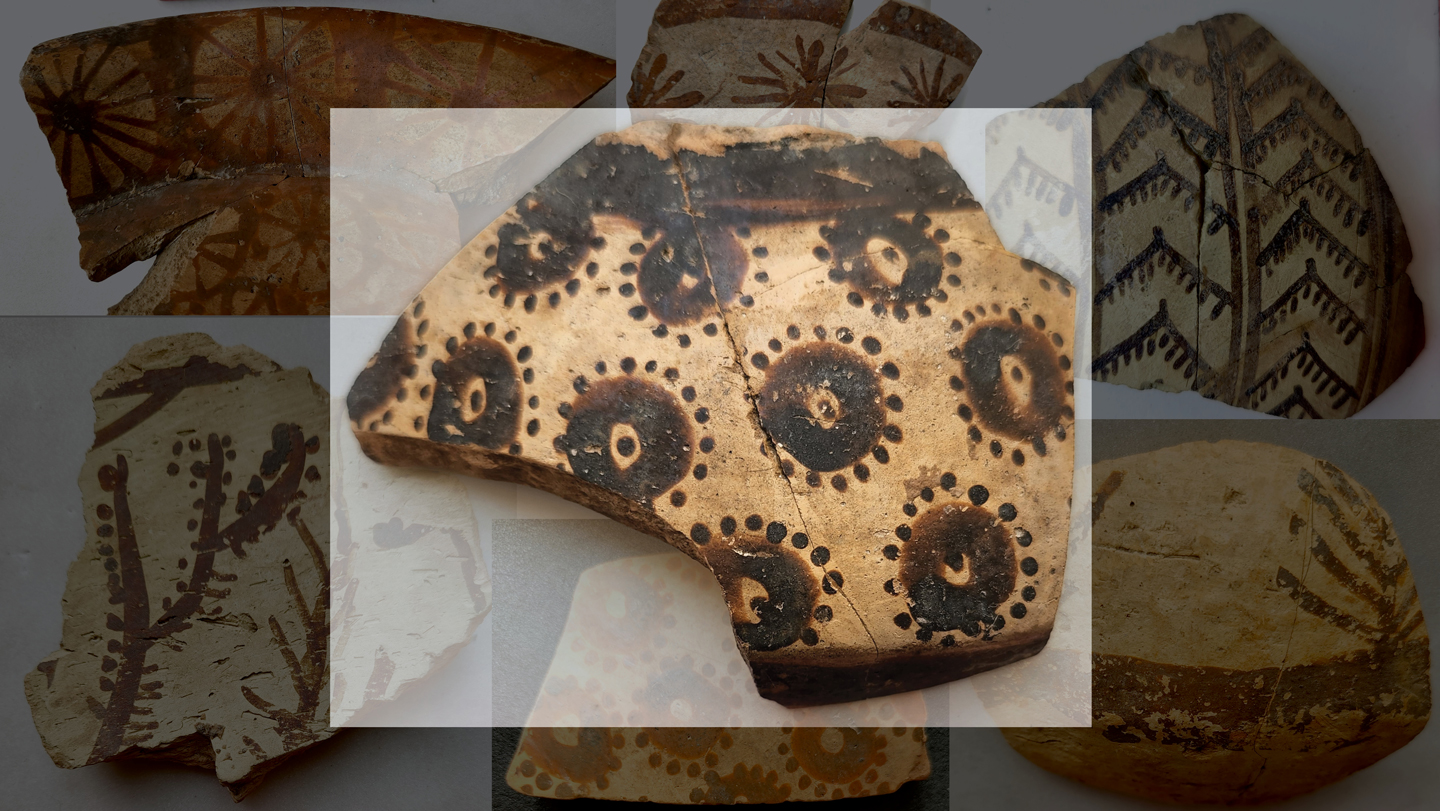
The Halafian culture, which flourished in Mesopotamia between 6200 and 5500 BC, left behind a rich legacy of pottery decorated with intricate designs. While early humans created cave drawings tens of thousands of years earlier, these rarely depicted plant life. In contrast, the Halafians extensively featured botanical motifs including trees, branches, shrubs, and most significantly—flowers with precisely calculated numbers of petals. This focus on floral imagery with mathematical properties sets their artwork apart from earlier artistic traditions and provides researchers with a unique window into their intellectual capabilities.
According to the study published in the Journal of World Prehistory, researchers Yosef Garfinkel and Sarah Krulwich meticulously analyzed thousands of pottery fragments excavated since the 1930s. Their examination revealed 375 pieces bearing flower designs with a striking mathematical pattern. The flowers almost invariably display 4, 8, 16, 32, or 64 petals—numbers that follow a geometric progression based on powers of two. This consistent doubling pattern strongly suggests these ancient artisans possessed a sophisticated understanding of numerical relationships that went far beyond simple counting.
The mathematical knowledge embedded in these pottery designs likely served practical purposes in the Halafian society. Garfinkel suggests this system of progressive doubling would have been particularly useful for dividing land or agricultural produce into equal shares. This practical application of mathematics would have been essential for maintaining fairness in resource distribution within their communities, indicating that mathematical thinking emerged from everyday needs rather than abstract theorizing.
What makes this discovery particularly significant is how it challenges our understanding of mathematical history. The system employed by the Halafians predates the better-known sexagesimal (base-60) mathematics of the Sumerians by more than 1,500 years. While the Sumerian system eventually influenced aspects of our modern world, particularly in timekeeping and certain geometric applications, the Halafian powers-of-two approach represents an entirely different mathematical tradition that developed independently and much earlier than previously thought.
Beyond their mathematical significance, these artifacts offer a glimpse into the aesthetic sensibilities of an ancient culture. Many of the fragments come from ornately painted bowls featuring stylized flowers nestled within geometric patterns such as checkerboards. The precision and consistency of these designs across hundreds of pottery pieces suggest not only mathematical understanding but also a shared cultural language of symbols and patterns that united the Halafian people across time and space, making these humble pottery fragments invaluable witnesses to humanity’s early intellectual achievements.