






Our Place in the Cosmos: 2025’s Most Awe-Inspiring Space Stories
The past year offered a remarkable journey through the cosmos, reminding us of both our significance and insignificance in the grand celestial theater. From rare visitors from beyond our solar system to groundbreaking discoveries on Mars, 2025 gave astronomers and space enthusiasts plenty to marvel at. Here’s a human perspective on the most fascinating space stories that captured our collective imagination.
A Wanderer from the Stars Drops By for a Brief Hello
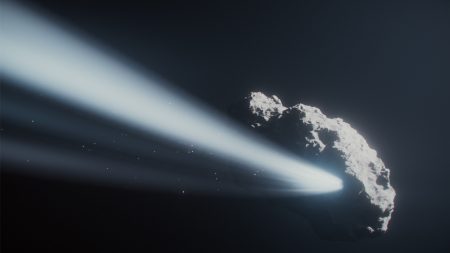
Our solar system received a rare interstellar visitor in 2025 – only the third confirmed one in human history. Comet 3I/ATLAS, spotted on July 1 by Chile’s ATLAS survey telescope, has been putting on quite a show as it speeds through our cosmic neighborhood at over 200,000 kilometers per hour. Since its discovery, this celestial traveler has sprouted a distinctive tail, shown signs of icy volcanism, and even sparked some fanciful speculation about alien spacecraft (which scientists quickly debunked). What makes this visitor so special is the window it provides into material from another star system – essentially giving us a sample of the universe beyond our solar neighborhood without leaving home. The comet’s journey continues to be tracked by spacecraft across the solar system, including from the Martian surface, offering unprecedented views of this interstellar wanderer. Though it made its closest approach to Earth on December 19 (still a comfortable 270 million kilometers away), skywatchers can continue enjoying this cosmic spectacle well into spring 2026 before it returns to the vast emptiness between stars.
The Sound of Electricity on the Red Planet
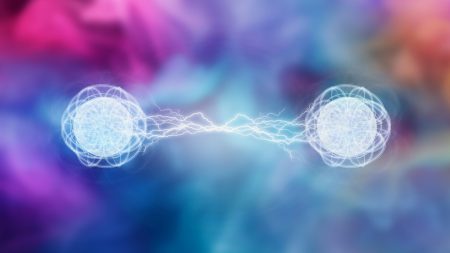
For years, scientists had theorized about the possibility of electricity in the thin Martian atmosphere, but 2025 brought the first concrete evidence when Perseverance’s microphone captured something extraordinary – the static crackle of “mini-lightning” on Mars. Initially dismissed as merely the sound of dust hitting the microphone, planetary scientists realized they were hearing something far more significant: triboelectricity. This phenomenon occurs when dust particles slide against or collide with each other in Martian dust devils, building up electric charges that discharge in sudden bolts. The discovery confirms long-held suspicions about electrical activity in the Martian atmosphere and adds another dimension to our understanding of weather patterns on our neighboring planet. These static discharges could potentially impact future human missions to Mars, affecting everything from equipment functionality to habitat design. More importantly, this revelation demonstrates how even subtle sounds captured by our robotic explorers can lead to profound scientific insights about alien worlds.
An Ancient Star’s Secret Companion Finally Revealed
Betelgeuse, the famous red supergiant that forms Orion’s shoulder, has long been suspected of having a stellar companion, but 2025 finally brought visual confirmation of this cosmic partnership. After years of indirect evidence suggesting a solar-mass star orbits Betelgeuse roughly every 2,000 days, astronomers captured an image revealing a faint blue smudge near the bright supergiant. While additional observations are needed for complete confirmation, scientists have already proposed naming this companion “Siwarha,” meaning “her bracelet,” a fitting name for a star that encircles the “hand of the giant.” The discovery, however, comes with a bittersweet realization – this smaller star’s orbit places it inside Betelgeuse’s outer atmosphere, sealing its fate. Within the next 10,000 years (a mere blink in cosmic timescales), Siwarha will be consumed by its massive companion. The finding not only enhances our understanding of stellar evolution but also reminds us of the dynamic and sometimes violent nature of cosmic relationships that play out over millennia.
Creating Eclipses on Demand to Unveil Solar Secrets
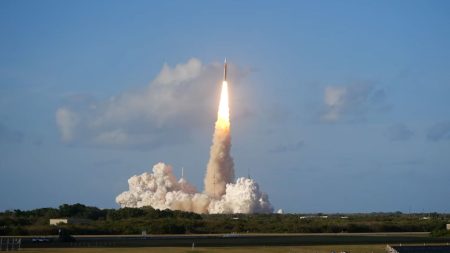
In perhaps one of the most elegant technological achievements of the year, the twin Proba-3 spacecraft demonstrated an extraordinary cosmic ballet by creating artificial solar eclipses on demand. Launched in December 2024, these spacecraft perform a precisely choreographed dance where one craft completely blocks the sun’s disk from the other’s view, allowing scientists unprecedented opportunities to study the sun’s elusive corona without waiting for rare natural eclipses. Since releasing their first eclipse images in June, the Proba-3 team has successfully created 51 artificial eclipses, with over 100 more planned for 2026. The mission fills a crucial observational gap, allowing scientists to track phenomena like coronal mass ejections all the way from the solar surface into interplanetary space. This continuous monitoring capability could revolutionize our understanding of solar dynamics and potentially improve space weather forecasting, which has significant implications for satellite operations and astronaut safety. The two-year mission represents a triumph of engineering precision and scientific vision, creating a new way to observe our star’s most mysterious features.
The Universe’s Greatest Movie Begins Filming
The Vera Rubin Observatory in Chile began its decade-long survey of the southern sky in 2025, effectively starting production on what could be called the greatest cosmic movie ever made. Perched on a high, dry mountaintop with exceptional viewing conditions, this observatory will take wide-field images covering the entire Southern Hemisphere’s night sky every couple of days. When played in sequence like a cosmic flipbook, these images will reveal how celestial phenomena change over time while capturing fleeting events like supernovas and tracking fast-moving objects such as asteroids. The observatory’s high-precision mapping of billions of galaxies and stars promises to transform our understanding of the Milky Way’s history, our solar system’s contents, and the nature of dark matter and dark energy. What makes this project so remarkable is its democratic approach to astronomy – the data will be accessible to scientists worldwide, enabling collaborative research on an unprecedented scale. The Vera Rubin Observatory represents not just a technological achievement but a new era in how we observe and understand cosmic change.
Rethinking Dark Energy and Our Cosmic Fate
Perhaps the most intellectually challenging discovery of 2025 came from the Dark Energy Spectroscopic Instrument (DESI), which continued to strengthen the case that dark energy – the mysterious force accelerating the universe’s expansion – might not be constant after all. Scientists had long assumed dark energy exerted the same outward influence throughout cosmic history, but three years of DESI data covering 14 million galaxies and quasars now suggests it could be “dynamical,” changing over time. This finding, which scientists initially expected to fade with more data but has instead grown stronger, could fundamentally alter our understanding of the universe’s fate. If dark energy changes, the universe’s expansion rate could eventually slow or even reverse, potentially leading to a “Big Crunch” rather than eternal expansion. Alternatively, if dark energy strengthens, it could accelerate cosmic expansion to the point where even atoms are torn apart in a “Big Rip.” This discovery reminds us how provisional our cosmic understanding remains, even as it opens exciting new avenues for theoretical physics. As we reconsider the universe’s ultimate destiny, we’re reminded that even our most established cosmic theories remain works in progress.