


The Ultimate Sacrifice: How Sick Baby Ants Signal for Their Own Destruction to Save the Colony
In a remarkable display of altruism, researchers have discovered that terminally ill ant pupae actively emit a chemical signal that essentially asks worker ants to kill them, thereby protecting the entire colony from deadly infections. This finding, published in Nature Communications by behavioral ecologist Sylvia Cremer and her team from the Institute of Science and Technology Austria, reveals the extraordinary lengths to which individual ants will go to preserve their collective society.
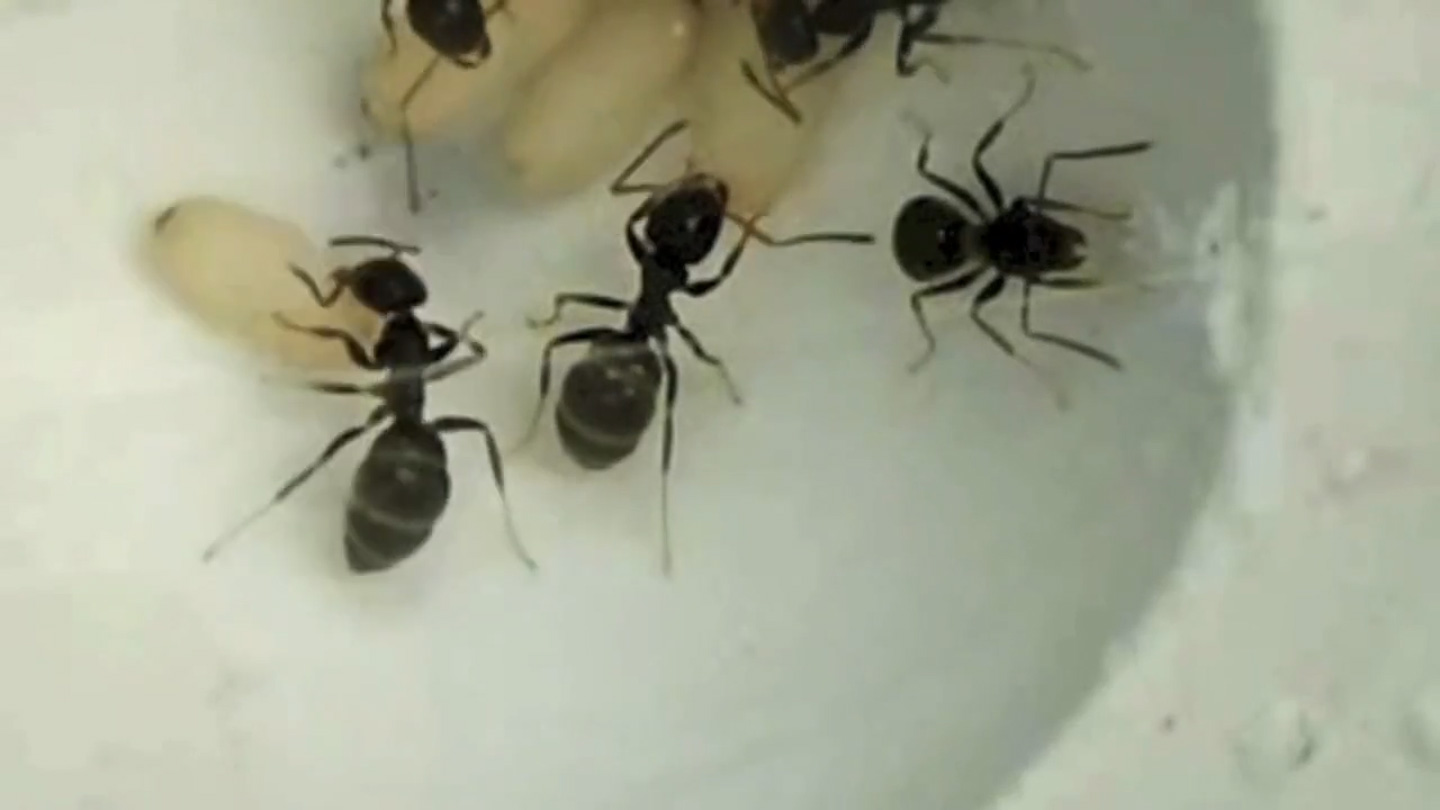
“Just as cells in a body coordinate to maintain the health of the whole organism, individual ants work collectively to protect the colony,” explains Cremer. This comparison to our own immune systems offers a fascinating perspective on how ant colonies function as superorganisms, where the welfare of the group trumps individual survival. When studying the ant species Lasius neglectus, the researchers found that worker ants can detect specific cuticular hydrocarbons—chemical signals emitted through the hard exteriors of infected pupae. Upon detection, these workers engage in what scientists call “destructive disinfection,” a process where they pry open cocoons, puncture the cuticles of infected pupae, and spray them with formic acid, effectively killing both the fungal infection and the infected young ant.
What makes this discovery particularly intriguing is the intentional nature of the distress signal. The researchers found that infected pupae only release these chemical cues when worker ants are present, suggesting they’re actively communicating rather than passively emitting signals as a byproduct of infection. “We were fascinated to discover that pupae can sense their surroundings and adjust their chemical signals based on whether workers are present,” says study co-author Erika Dawson. Additionally, the research team observed that the intensity of the signal doesn’t increase with higher infection loads, further supporting the idea that this is a deliberate, controlled communication strategy rather than simply a symptom of illness.
Interestingly, not all members of the colony behave the same way when infected. Queen pupae, which are vital for reproduction and thus more valuable to the colony’s future, don’t emit the self-sacrificial signal. The researchers discovered this is because queen pupae possess more advanced immune systems that can effectively fight off infections before they become severe enough to threaten the colony. This distinction highlights the complex social structure within ant colonies, where different castes have evolved specialized traits that promote the overall success of the group.
This self-sacrifice of worker pupae exemplifies how ant colonies function as unified entities, where individuals act more like cells in a larger organism than as independent beings. Erik Frank, an animal ecologist at the University of Würzburg, explains the fundamental difference between human and ant behavior: “Humans are very much interested in individual fitness; because we can all reproduce, we want to maximize our own genes, while social insects, all of them [except the queen] are sterile, and they can only really benefit by helping the queen reproduce as much as possible.” In this context, the sacrificial behavior makes perfect evolutionary sense—the infected pupae, unable to reproduce themselves, contribute more to the colony’s genetic success by preventing the spread of disease than by attempting to survive.
While adult ants have various strategies to deal with pathogens, including social distancing or leaving the nest when terminally ill, pupae confined within their cocoons have limited options. Their evolved solution—signaling for their own destruction—represents an extraordinary example of altruism that ensures the survival of their relatives and the colony as a whole. Cremer and her team continue to investigate this phenomenon, questioning whether pupae with less severe infections might behave differently if recovery were possible. “Our expectation is that the ants should not take that risk,” she suggests, emphasizing how even a single overlooked infected pupa “can have devastating effects for the colony” by releasing fungal spores that could lead to widespread disease.