



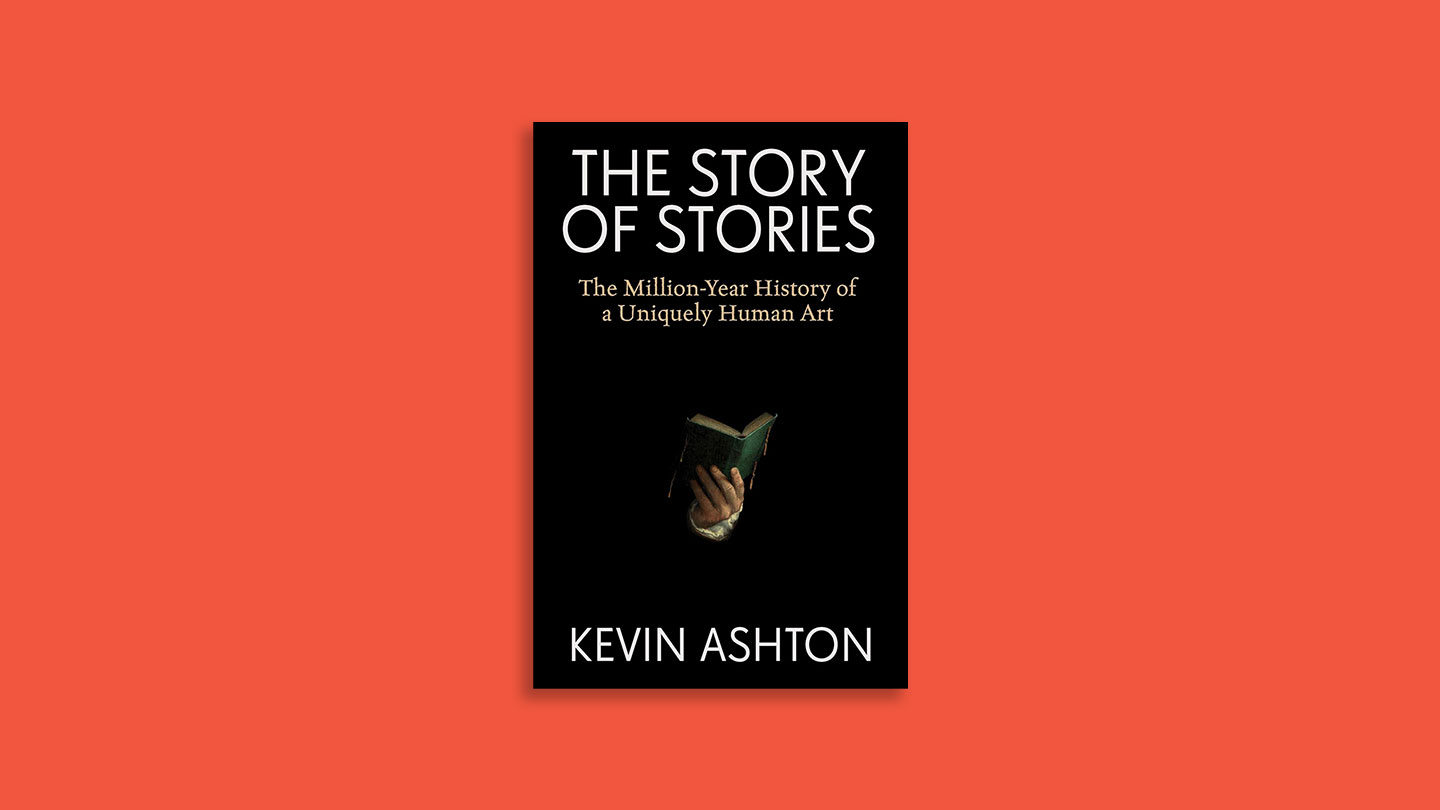
You know, there’s something almost magical about how our minds work when it comes to stories. Picture this: back in 1944, some clever psychologists ran a simple experiment. They showed a group of people a short film—nothing fancy, just geometric shapes, a triangle, a circle, and a rectangle in motion. One shape would glide in and out of the other, creating patterns that were, by all accounts, pretty mundane. Yet, when asked to describe what they’d seen, most viewers wove intricate narratives filled with romance, betrayal, and drama. Lovers reuniting after a long separation, mysterious figures bringing violence or abandonment—it was as if their brains couldn’t help but turn those abstract movements into gripping tales. Isn’t that fascinating? It shows how deeply wired storytelling is in us humans. We’re not just observers; we’re creators, spinning yarns from the simplest stimuli. Kevin Ashton’s book, “The Story of Stories: The Million-Year History of a Uniquely Human Art,” published by Harper for $32, dives right into this idea. He argues that our brains are hardwired to find stories everywhere, turning the world into a tapestry of narratives that connect us across time and space. As a tech-savvy author himself, Ashton’s passion for this topic shines through; he’s not just recounting facts but inviting readers to ponder why stories are so essential to our humanity. It’s the kind of book that makes you pause and think about the everyday movies playing in your head, whether it’s a chance encounter on the street or the way a sunset reminds you of a childhood memory. Reading it feels like sitting down with an old friend who’s spent years collecting tales from around the world—historical, scientific, and personal—and wants to share them over coffee. The stories Ashton tells aren’t just data points; they’re windows into what makes us tick, reminding us that in a world full of chaos, a good story can make everything clearer, more meaningful. And let’s be honest, who hasn’t ever seen shapes in clouds or heard whispers in the wind? Ashton’s opening emphasizes this innate ability, setting the stage for a journey through time where stories evolve alongside us, shaping cultures and societies in ways we often overlook. It’s a reminder that storytelling isn’t just entertainment; it’s a fundamental part of being human, helping us navigate life’s uncertainties by giving them structure and purpose.
Delving deeper, Ashton kicks off his narrative by taking us back to the very beginnings of storytelling—around the ancient fires that our ancestors gathered around at night. Imagine these early humans, after a hard day’s hunt or foraging, settling down as the flames crackled and flickered. With the day’s practical concerns fading into the shadows, they began to share tales—memories of real events, blended with imagined adventures from distant lands and forgotten times. Ashton paints this scene vividly, describing how the warmth and safety of the fire stripped away the urgencies of survival, allowing minds to wander into the realm of the extraordinary. It’s in this cozy glow that storytelling was born, not as a deliberate art form, but as a natural instinct to communicate, to connect, and to make sense of the world. From these humble origins, Ashton traces how stories became tools for passing knowledge, fostering community bonds, and even preserving cultural identities across generations. Think about it: before writing, everything revolved around oral traditions, where bards or elders would recount heroic deeds or mythical quests, their voices rising and falling with dramatic flair to keep listeners enthralled. And it’s not just about the tales themselves; it’s about the act of gathering, the social fabric that weaves us together. In today’s fast-paced world, where we often stare at screens alone, Ashton’s depiction of those fireside sessions evokes a longing for simpler times—a warmth that transcends the digital divide. He shares anecdotes from anthropology and history, like how Indigenous cultures used stories to teach survival skills or to explain the universe’s mysteries, such as the stars’ patterns or animal behaviors. It’s heartwarming to realize that even in prehistory, stories were democratizing knowledge, making it accessible to everyone around the fire. Ashton avoids dry recitation; instead, he infuses these early chapters with a sense of wonder, as if he’s rediscovering lost treasures. You can almost feel the smoke in the air and hear the distant howls of the night, pulling you into that primal environment where storytelling wasn’t just a pastime—it was survival, education, and pure human expression. And as Ashton explains, this foundation laid the groundwork for everything that followed, from epic poems etched in memory to the global narratives we consume today. It’s a beautiful arc, showing how our storytelling impulse has remained constant through millennia, adapting to new contexts but never losing its core purpose: to bridge the gap between what is and what could be.
As the book progresses, Ashton shifts gears to explore the technological milestones that revolutionized storytelling, turning solitary fireside chats into mass-shared experiences. He chronicles the journey from handwritten manuscripts to the explosive impact of the printing press, invented by Johannes Gutenberg in the 15th century. Picture the first printed books rolling off presses—suddenly, stories weren’t confined to a single bard’s voice or a small tribe; they could travel across kingdoms, igniting minds and sparking revolutions. Ashton doesn’t just list dates and inventions; he brings them to life with colorful details, like how the printing press enabled the spread of the Bible to millions, democratizing access to sacred texts and fueling reforms like the Protestant Reformation. But he also acknowledges the flip side: with wider reach came censorship and control, as authorities tried to limit what stories could be told. Then comes electricity, transforming storytelling yet again—think of early radio broadcasts bringing voices into homes, or cinemas flickering with silent films that relied on imagination alone. Ashton frames these developments not as cold technical progress but as human milestones, driven by our endless desire to share experiences. He personalizes it too, recalling how his own grandmother would gather the family around the radio for programs, turning solitary listening into communal enchantment. By the time we reach modern tech like television and the internet, Ashton’s tone is one of awe mixed with caution; each advancement amplified stories, making them more immediate, but also more susceptible to misuse. It’s fascinating how he connects the dots, showing how technologies didn’t just facilitate stories—they shaped their very nature, from intimate oral tales to viral social media posts. And in our own lives, we see this evolution: from flipping through family albums to scrolling endlessly on TikTok, stories have become effortless to create and consume. Ashton reminds us that these innovations aren’t neutral; they’re extensions of our human spirit, echoing that primal urge to narrate our world. Yet, as he builds toward the present, there’s an undercurrent of reflection—how have these tools changed us, for better or worse? It’s like watching a family tree grow: each branch adds complexity, but the roots remain the same deep need to connect and understand.
One of Ashton’s strengths is his knack for uncovering quirky, surprising anecdotes that make history come alive, pulling readers in with a storyteller’s flair. Take, for example, his tidbit from the mid-1800s in America, when paper was scarce and made from whatever rags could be scavenged. Some of those rags, Ashton reveals with a mix of humor and horror, were clipped from ancient Egyptian mummies. These desiccated strips, smuggled into mills, produced paper that not only hinted at forgotten civilizations but also emitted a pungent odor—think musty tombs and decay. Some paper manufacturers kept that a secret, fearing they’d offend squeamish buyers who might envision ghostly pharaohs lurking in their pages. It’s the kind of detail that sticks with you, adding a layer of irony: stories about the dead were literally being written on the remains of the dead. Ashton uses these flourishes to illustrate broader points about how technologies evolved through ingenuity—and often desperation—laying the groundwork for modern storytelling mediums. He dives into other oddities, like the psychological studies on why people anthropomorphize everything, from teapots to traffic lights, turning them into characters in our personal narratives. Or consider how ancient cave paintings weren’t just art but early attempts to capture stories through images, preserving hunts and rituals for future generations. Ashton’s prose feels personal here, as if he’s sharing discoveries from his own explorations, maybe pausing to chuckle at the mummy paper or to ponder a cave drawing’s hidden meanings. These anecdotes aren’t mere asides; they build connections, showing how storytelling has always been inventive, blending the mundane with the macabre to capture human experience. In our digital era, it’s a reminder not to take for granted how far we’ve come—from pulpy, smelly paper to glossy screens—yet how the essence of curiosity remains. You can’t help but empathize with those early innovators, cobbling together tools from whatever was at hand, driven by the same impulse that fuels today’s viral memes or AI-generated fictions. Ashton’s storytelling makes history feel intimate, like a conversation with someone who’s unearthed forgotten artifacts, urging you to see the threads linking past oddities to present realities.
But as Ashton propels us into the digital age, the tone shifts to a more urgent, reflective meditation on the perils and possibilities of ubiquitous storytelling. With smartphones in every pocket, we’ve entered a world where “everyone can tell stories to everyone,” a radical departure from the selective elites of old. Ashton describes this as empowering, giving voice to the voiceless and amplifying diverse perspectives—from grassroots activists sharing injustices to families connecting across oceans via video calls. Yet, he doesn’t shy away from the dark side: the proliferation of misinformation during the COVID-19 pandemic, where false narratives about vaccines led to unnecessary suffering and deaths. He paints a stark picture of how digital lies spread faster than truth, exploiting our brains’ susceptibility to compelling tales, even when they’re fabrications. It’s a grim reality check, especially as generative AI evolves, creating hyper-realistic fake images, videos, and voices that blur fact and fiction. Ashton warns of a future where powerful figures might “rewind time,” rewriting histories by altering records or speeches, eroding trust in shared realities. In this context, platforms like social media aren’t just tools; they’re shapers of existence itself, influencing elections, cultures, and personal beliefs. Ashton humanizes this by sharing hypothetical scenarios—imagine a doctored video of a world leader admitting something they never said, veering public opinion or sparking unrest. It’s anxiety-inducing, yet grounded in real examples, like how deepfakes have already been used in scams or political smears. He encourages readers to reflect on their own consumption habits: how many times have you shared a story without checking its source, or believed a viral tale because it felt true? This chapter resonates deeply, evoking a sense of personal responsibility in an information overload. Yet, Ashton balances critique with hope, noting that while AI manipulates, it can also inspire, democratizing creativity as never before. It’s a double-edged sword, demanding we sharpen our discernment to navigate the floods of narratives washing over us.
Ultimately, Ashton leaves us with a call to action that’s both sobering and inspiring, emphasizing that escaping this tangled web of stories requires embracing our minds’ vulnerabilities. He argues that gullibility isn’t a flaw—it’s a feature of being human, wired for connection through narratives. The antidote? Vigilance, doubt, and humility—questioning every tale, cross-referencing sources, and admitting when we’re swayed by emotion over evidence. It’s a practical philosophy for the digital era, urging us to become critical thinkers rather than passive consumers. But Ashton doesn’t end on a bleak note; he zooms out to history’s grand arc, portraying today’s online vitriol and hatred not as the pinnacle, but as a reactionary phase—a backlash from those fearing the loss of control. He draws parallels to past upheavals, like the printing press era’s cultural shockwaves, reminding us that progress often meets resistance before flourishing. In our heterogeneous world of stories, Ashton sees potential for unity, celebrating how narratives can reveal “the beauty and glory of all humanity,” fostering empathy across divides. It’s empowering to think that amidst the noise, powerful stories—those of resilience, love, and justice—can counteract the destructive ones. Ashton wraps up by urging readers to harness this potential, whether by crafting their own tales or amplifying untold voices. Reading his conclusion feels like a gentle nudge, a reminder that stories have always been the glue of society, and in our hands, they can build a better future. If his book accomplishes one thing, it’s reigniting our appreciation for storytelling as both art and tool, leaving you eager to participate in the human tapestry he’s so vividly laid out. For anyone wrestling with the chaos of modern narratives, “The Story of Stories” offers not just insights, but a pathway to reclaiming our agency in a story-driven world.