






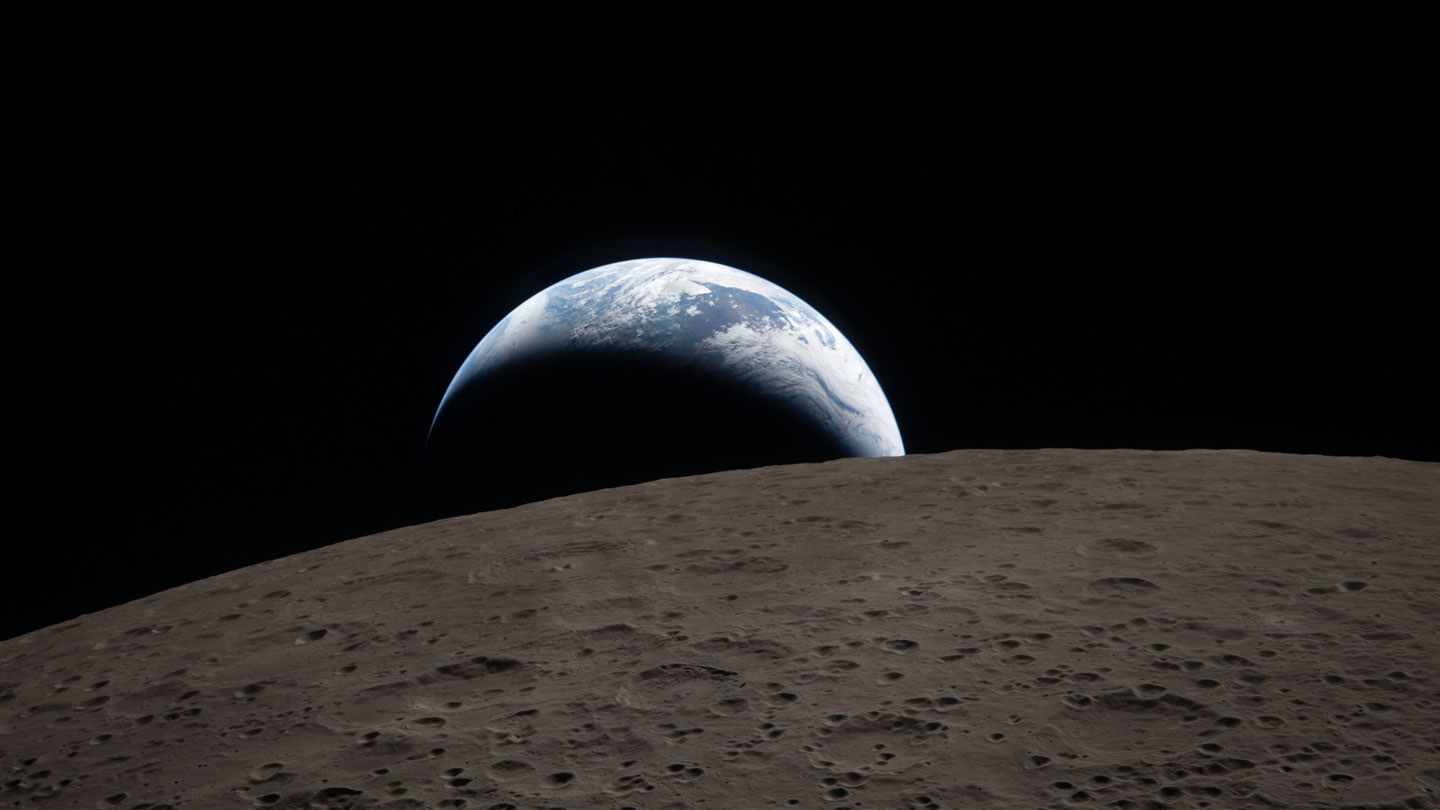
As a kid, I used to lie in the grass at night, staring up at the stars and imagining what it would be like to float above our fragile blue world. That sense of awe hit me again when I saw the photo from the Artemis II mission—taken on April 6, just before the astronauts temporarily lost contact with Earth. It’s not just a picture; it’s a bittersweet goodbye, a moment of cosmic perspective that reminds us how precious our planet is. The astronauts captured Earth setting behind the moon, a deliberate echo of the iconic “Earthrise” image from 1968. While that Apollo 8 shot was a spontaneous thrill, grabbed by astronaut William Anders as he scrambled to a window in surprise, this one was planned, a rehearsal for future lunar landings under the Artemis program. There’s something deeply human about these views from space: they spark wonder, but also a pang of homesickness, making us reflect on our place in the universe. This new image isn’t just repeating history; it’s building on it, showcasing how far we’ve come in space exploration while grounding us in the same existential themes—our only home, hanging in the void, small and vulnerable yet filled with life.
I love how the photo plays with light and shadow, a feat of planning that feels almost poetic. Earth appears as a delicate crescent in the darkness, with swirling clouds dancing over Australia and Oceania on the illuminated sliver, hinting at the storms, deserts, and oceans below. The moon’s rugged surface stretches out like a wrinkled canvas, its craters standing in stark relief against the black expanse of space. This “Earthset” isn’t about surprise; it’s about intention, captured as the Artemis II astronauts orbited the moon during their seven-hour flyby. It stirs emotions—joy at the beauty, fear at the isolation. I’ve always been fascinated by how these images shift our mindset, turning global concerns into personal reflections. Remembering Anders’ words during Apollo 8, he called Earth “a grand oasis in the vastness of space.” The Artemis shot builds on that, reminding us that amidst technological marvels, we’re still creatures driven by curiosity and connection. It’s a visual reminder that while we push boundaries, we must never forget the cradle we’ve left behind, even if just for a moment.
The astronauts’ reactions add a layer of humanity to this cosmic ballet. During their flyby, they commented on the unexpected colors painting the lunar landscape. One noted, “The more I look at the moon, the browner and browner it looks,” a testament to how different things appear without Earth’s atmosphere filtering the light. It’s not just gray dust and shadows; it’s a palette of warm hues emerging from the craters and plains. I can imagine them huddled in the Orion spacecraft, cameras ready, whispering about the wonders beyond the porthole. This isn’t cold science—it’s about experiencing the moon anew, with eyes uncolored by decades of robotic probes. Growing up, I devoured books about the Apollo missions, and stories like these make me nostalgic for the era’s optimism. Yet, with Artemis, we’re blending that spirit with modern tech, like the Space Launch System rocket that carried them there. The astronauts’ observations aren’t mere data points; they’re joyous discoveries, reminding me of how exploration ignites our sense of wonder, turning what could be mundane into profound.
About an hour after snapping this photo, the astronauts reemerged from the moon’s far side to begin their journey home. It’s a transition from shadow to light, mirroring the image’s theme. But the crew’s reflections linger, making the moment feel stolen from a larger narrative. Astronaut Christina Koch summed it up beautifully: “Ultimately, we will always choose Earth. We will always choose each other.” Those words hit hard—they’re not just about space travel but about humanity’s core values. In a world divided by differences, this distant view unites us, underscoring our shared fragility. I’ve always believed space doesn’t divide us; it brings us together, forcing us to confront our interdependencies. Koch’s quote, spoken from the threshold of the unknown, evokes the profound emotional weight of these missions. It’s about sacrifice, community, and the pull of home. As they powered through the void, I picture them reflecting on loved ones below, the photo a postcard of sorts, a silent promise to return wiser and more grateful.
To truly appreciate the depth, consider the sequence of images leading to this iconic moment. Thirty-six minutes before Earthset, the crew gazed at Earth and the moon together, two orbs in harmonious orbit, a cosmic duet against the stars. Six minutes later, as the moon edged closer, it began to eclipse our planet from their viewpoint, amplifying the drama. Finally, at Earthset, the craters etched in stark relief, the lunar far side revealed in all its glory—features seen by human eyes for the first time since Artemis II. It’s a visual journey that unfolds like a storyboard, each frame building emotional intensity. NASA captions these shots with reverence: “Here is the Artemis II crew’s view,” “The moon and Earth edged closer,” “As Earth set, the moon’s craters are etched.” This isn’t passive observation; it’s active storytelling, capturing the raw beauty and isolation. I’ve watched similar videos, where Earth dips below the horizon like “Goodnight, Earth.” It stirs a childlike wonder in me, blending science with storytelling, much like the first humans pondering constellations. These images prove that exploration isn’t just about discovery—it’s about reconnecting with our origins.
In the end, this “Earthset” photo transcends its pixels; it’s a mirror for our times. Science News highlights it as a breakthrough, a testament to the week’s advancements in space. With climate challenges looming, supporting science journalism feels urgent—it’s how we stay informed and inspired. Please consider subscribing to Science News, adding just $16 to fuel environmental literacy and evidence-based responses to change. As Lisa Grossman, the astronomy writer, notes in her credits, a degree in astronomy and a passion for science writing are perfectly suited for these tales. Her work, lived in Minneapolis with roots from Cornell and UC Santa Cruz, underscores the human element in cosmic narratives. Ultimately, Artemis II isn’t just about the moon—it’s about us, reminding us to choose Earth, each other, and a future where wonder drives progress, not division. From that distant orbit, the message is clear: our planet is finite, our bonds infinite. Let’s honor it with care.