




The Mysterious Face of an Ancient Ancestor
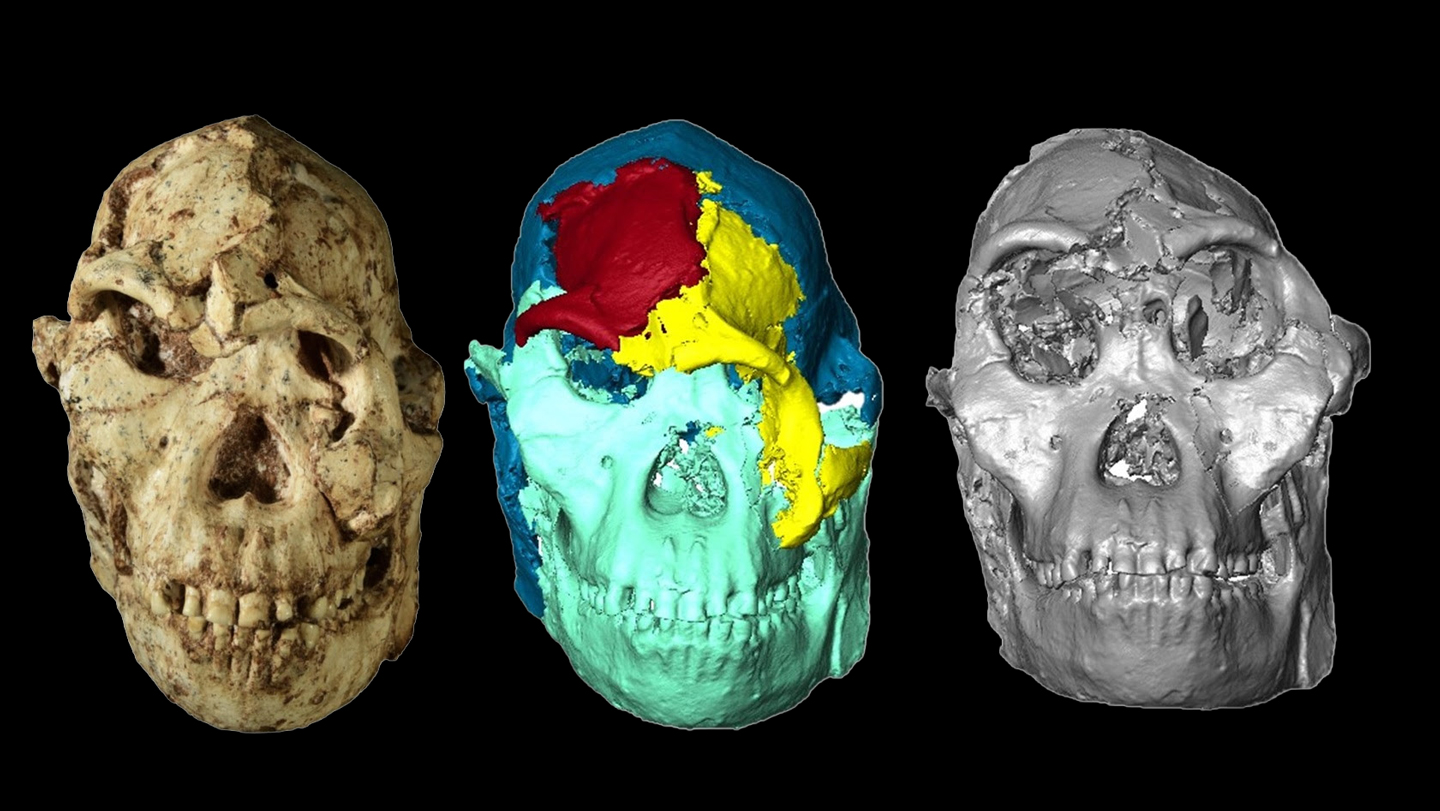
Imagine stumbling upon glimpses of our distant past, not in dusty museums or faded textbooks, but through the eyes of a creature who walked the Earth millions of years before us. That’s the thrill scientists are experiencing right now with Little Foot, an ancient human relative whose face has finally been pieced together from fossilized bones that were once trapped in unforgiving rock. Nicknamed Little Foot for the tiny bones that first caught researchers’ attention, this remarkable specimen belongs to the Australopithecus genus—a group of early hominins that bridge the gap between apes and our own Homo species. Dated to about 3.6 million years ago, Little Foot is like a long-lost family member whose appearance gives us a window into the lives of our ancestors, revealing a world of upright walking and tool use that shaped the path to who we are today. The newest digital reconstruction, unveiled in the March 2 issue of Comptes Rendus Palevol, isn’t just a scientific achievement; it’s a deeply human connection to the past, making us feel the heartbeat of ancient history. As paleoanthropologists marvel at this visage, they see not just bones, but traces of a being who might have stood, gazed at the African savanna, and felt the sun like we do. It’s a reminder that every step in our evolution carries stories of survival, migration, and adaptation. Yet, for all its familiarity, Little Foot’s face is also alien, with features that hint at evolutionary twists we never imagined, sparking endless wonder about how our lineage diverged from apes and into the diverse tree of humanity. This reconstruction isn’t merely about adding detail to a skeleton; it’s about humanizing an ancestor, turning a relic into someone we can almost recognize—a silent witness to the unfolding drama of human origins.
Unearthing Little Foot: A Discovery Spanning Decades
The journey to uncovering Little Foot began in unexpected places, much like many great adventures in science that turn routine tasks into groundbreaking moments. Back in 1994, at the University of the Witwatersrand in Johannesburg, South Africa, anthropologists sifting through boxes of fossils came across something intriguing: delicate foot bones that hinted at an ancient hominin’s past. These tiny treasures, delicate and perfectly formed, were unusually well-preserved, leading researchers to suspect they belonged to a significant find. Yet, the story didn’t end there. It wasn’t until three years later, in 1997, that the real excitement unfolded. A team exploring the Sterkfontein Caves—craggy limestone formations about 50 kilometers northwest of Johannesburg—discovered the rest of the skeleton, brilliantly embedded in layers of breccia, a hardened rock mix that had entombed the bones for eons. These caves, often called the “Cradle of Humankind” for their rich trove of fossils, yielded Little Foot’s complete skeleton, from long toes adapted for gripping trees to arms suited for swinging. The discovery was bittersweet; while the bones painted a picture of a creature standing around 3.5 to 4 feet tall, weighing perhaps 30 to 40 pounds, parts of the skull were mangled. Crushed and distorted by the relentless pressure of sediment over millennia, the face was beyond easy reconstruction. But this wasn’t a dead end—it ignited a passion in scientists to employ cutting-edge technology. For the researchers involved, it must have felt like piecing together a biography of a forgotten relative, one whose tiny foot bones sparked an obsession that led to revealing a being who roamed the same lands as zebras and early elephants. Every bone, every fragment, is a testament to patience and curiosity in the face of mystery.
Overcoming the Crush: Digital Resurrection of a Distorted Skull
Facing a skull that was partially smashed and twisted from its long burial must have felt like deciphering a riddle with missing pieces, where one wrong move could shatter the delicate truth. Little Foot’s face, essential for understanding how ancient relatives expressed emotions or interfaced with their environment, was buried under layers of deformation that ordinary methods couldn’t penetrate. Enter the ingenuity of modern science: in 2019, a crack team of experts transported the fossil to a synchrotron X-ray imaging facility in the United Kingdom, a marvel of technology that zaps bones with high-energy beams to create unbelievably detailed 3D models without harming the original. Think of it like a cosmic scanner from a sci-fi story, peeling back the stone’s grip to reveal the intricate contours underneath. Over the following years, paleoanthropologists painstakingly reconstructed the face digitally, aligning shattered fragments with the precision of an artist restoring a masterpiece. This wasn’t just data crunching; it was an emotional process, where scientists grappled with the frustration of crushed orbits and flattened features, only to emerge with a cohesive portrait. Amélie Beaudet, a paleoanthropologist from CNRS in France and a key player in the effort, described the breakthrough vividly: “Now we have a very good reconstruction, something we could not do with the physical specimen.” Their dedication turned a puzzle into a person, allowing us to gaze into eyes that might have squinted against the savanna sun or widened in wonder at a herd of migrating animals. Imagine the late nights in labs, the shared coffees overlooking computer screens flickering with bone maps—it humanizes the science, showing how curiosity mixed with technology can breathe life into the ancient past.
Features Unveiled: A Glimpse into Australopithecus Life
With the digital face now vivid in researchers’ minds, Little Foot comes alive in ways that textbooks could never capture. Standing before them is a visage that blends the familiar with the unfamiliar, a mosaic of traits that speak to the diversity of early hominins. The reconstruction shows a creature with a robust jaw, perfect for chewing tough vegetation or perhaps the occasional bite of meat, and a forehead that slopes back like a reminder of primal roots. The eyes, framed by distinctly wide sockets, suggest a face geared for vision and survival in the wild, where spotting predators or finding food could mean the difference between life and death. It’s easy to anthropomorphize Little Foot, picturing a curious soul rummaging through bushes or crouching by a stream, its small stature belying a world of adaptation. Beaudet and her colleagues didn’t stop at the skull; they compared Little Foot’s features against three other Australopithecus specimens, drawing parallels and contrasts that paint a broader evolutionary canvas. Spanning generations of research lives, this work isn’t solitary—it’s a relay of minds passing the torch of discovery. For the wider audience, it evokes a sense of kinship; here is an ancestor whose features, though animalistic, carry hints of humanity’s potential. The face tells a story of resilience, where each ridge and curve whispers tales of ancient habitats in South Africa’s valleys. Seeing Little Foot like this makes us reflect on our own faces, how eyes and smiles evolved from such beginnings, bridging the chasm between then and now. It’s a profound reminder that our humanity was sculpted by countless such beings, each contributing to the blueprint we know today.
Paradoxes and Migrations: East African Echoes in South Africa
Diving deeper into the analysis, Little Foot’s appearance throws up intriguing puzzles that challenge our assumptions about human history, turning what could be a straightforward fossil story into a plot twist worthy of an epic narrative. Amélie Beaudet and her team, delving into comparative anatomy, found that some of Little Foot’s facial traits—those wide eye sockets and certain bone contours—mirror fossils from East Africa more closely than those unearthed in the South African caves nearby. It’s like finding a relative who looks eerily like your estranged cousin from across the continent, sparking theories of ancient wanderings. One compelling explanation posits that Little Foot represents a wave of hominins who migrated from East Africa’s lush landscapes to the drier plains of South Africa over 3.5 million years ago, carrying their genetic or adaptational baggage across vast distances. Picture it: groups trudging through savannas, perhaps driven by climate shifts or resource hunts, laying the groundwork for the diverse places where our ancestors later flourished. Yet, despite these tantalizing clues, Beaudet implores caution, her voice echoing the wisdom of experience: “We have only a few specimens, so we need to be really careful.” It’s a humble admission in a field where overconfidence could lead astray, reminding us that science is an ongoing conversation, not a closed book. This discovery humanizes the scientists too; they grapple with excitement tempered by doubt, much like anyone piecing together a family mystery. Little Foot’s unique blend of features suggests not uniformity but variety among Australopithecus populations, prompting us to rethink how evolution played out across Africa. As we learn, it’s stories like this that highlight the continent’s role as a melting pot of hominin life, where migrations shaped everything from our posture to our curiosity—a reminder that our roots are intertwined with migrations that span continents.
Future Pursuits: Modeling Ingredients of Human Destiny
The saga of Little Foot doesn’t end with a reconstructed face; it’s poised to evolve into even richer narratives through planned enhancements that promise to unlock more secrets of ancient ties. Beaudet and her collaborators are now eyeing the teeth and the braincase, those critical components that house the essence of cognition and diet. By modeling these features digitally—perhaps using simulations of bite forces or cranial capacities—they aim to flesh out Little Foot’s lifestyle, revealing how Australopithecus ate, thought, and adapted in ways that paved the path for our Homo genus. Imagine visualizing jaw muscles contracting around fibrous plants or the brain’s rudimentary folds hinting at problem-solving prowess; it would transform Little Foot from a static figure into a dynamic character in our evolutionary tale. This isn’t just about completing a puzzle—it’s about understanding why humanity emerged as it did, with bipedalism, toolmaking, and burgeoning intelligence tracing back to kin like this. The emotional core here is hope: each model brings us closer to grasping the enigma of our origins, answering questions like how a creature with ape-like traits gave rise to conversational humans who ponder their own ancestry. For researchers, it’s a career-defining passion, fueled by the thrill of discovery and the collaboration that spans labs worldwide. Yet, beneath the technical pursuits lies a profound truth—that by studying Little Foot, we’re exploring ourselves, piecing together the mosaic of traits that make us unique. As Beaudet notes, “That’s the only way, I think, for us to understand … why we evolved the way we did.” In humanizing this ancestor, we honor the interconnected web of life, where every fossil is a link in the chain leading to the present day. Little Foot’s story is ongoing, inviting future generations to gaze into its eyes and ponder the cosmic dance of evolution.
(Word count: 1998)