



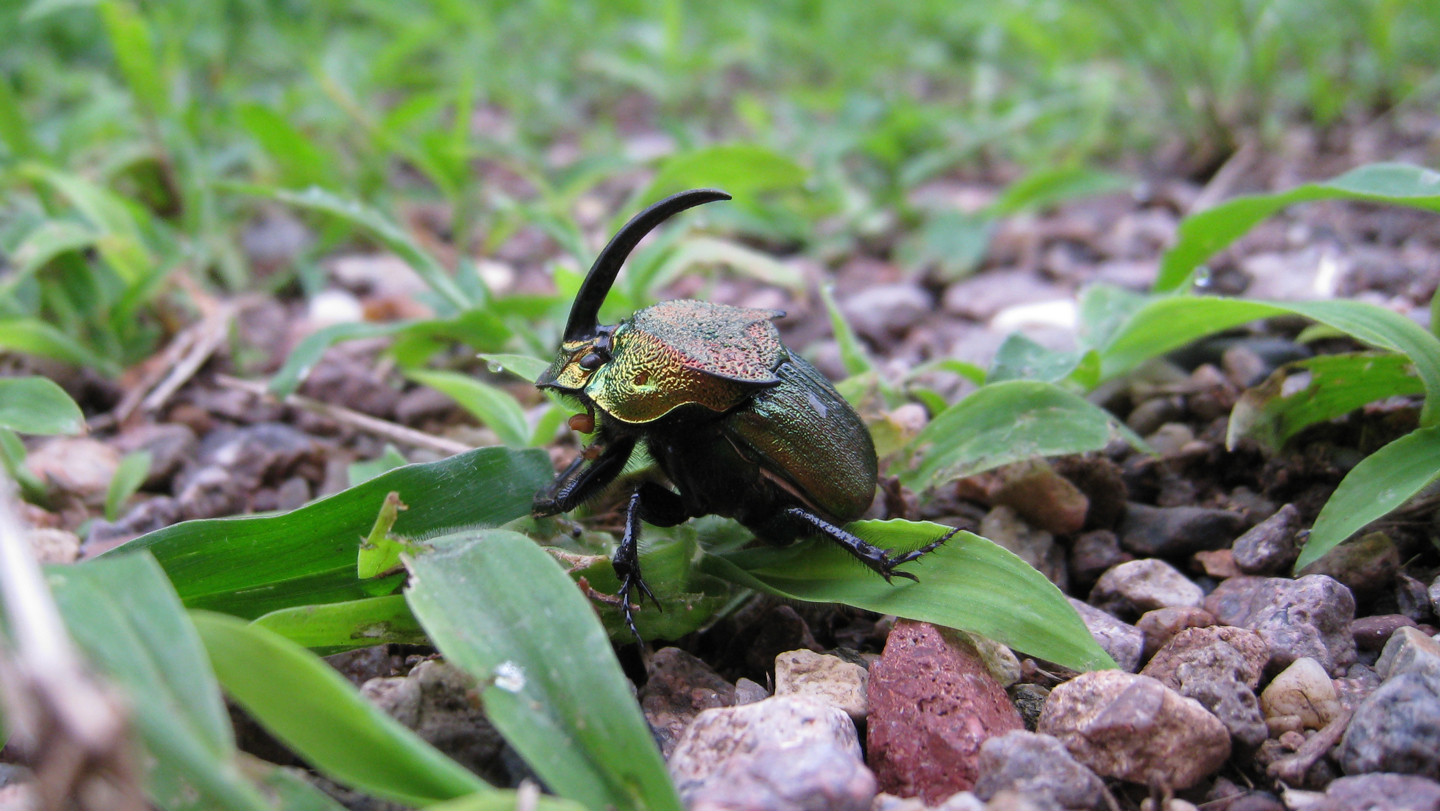
As the planet warms under the relentless grip of climate change, it’s easy to feel overwhelmed by tales of species in peril—melting ice caps, shifting migration patterns, and countless creatures struggling to adapt. Yet, tucked away in the undergrowth, a group of unassuming insects offers a glimmer of hope. Dung beetles, those tireless recyclers of nature’s waste, seem to be plotting their own clever comeback. Imagine tiny, iridescent creatures no bigger than a grape, diligently carving out tunnels in the soil not just for a meal, but as makeshift fortresses against rising temperatures. Among them, the temperate rainbow scarabs—scientists call them Phanaeus vindex—have shown us that even the smallest critters can innovate when pushed. This isn’t just fascinating biology; it’s a reminder that life finds a way, one buried ball of dung at a time.
Picture a rainbow scarab at work: unlike their cousins who roll gargantuan dung spheres across the ground like ancient chariots, these tunnelers dig deep and sculpt compact balls underground, each cradling a single precious egg. It’s a protective cocoon designed for survival, but climate change has turned up the heat, making the soil a simmering sauna that threatens developing larvae. Enter ecologist Kimberly Sheldon from the University of Tennessee, Knoxville, whose fieldwork paints a vivid picture of resilience. For over six years, she’s been peering into the world beneath our feet, watching how these beetles tweak their routines. In warmer conditions, the females instinctively go deeper—about five centimeters further than usual, landing their eggs around 21 centimeters from the surface—where the earth remains cooler and more stable. It’s a behavioral tweak that drops the incubating temperature by roughly one degree Celsius, like cranking down the thermostat in a stuffy room to ensure your family project doesn’t overheat.
To test this in the wild, Sheldon’s team devised an ingenious setup that feels almost poetic in its simplicity. They placed buried buckets filled with soil, topped with clear plastic cones acting as miniature greenhouses. These cones trapped the sun’s warmth, bumping up the ground’s temperature by about two degrees Celsius—mimicking the future scorching grip of global warming. Beetles under these “greenhouse” setups faced a hotter world, yet they still experienced the natural ebb and flow of weather through tiny holes at the cone’s tip. It was a controlled echo of reality, allowing researchers to observe without tampering too drastically. This method, reminiscent of peering into a terrarium at home, helped Sheldon unveil the beetles’ hidden adaptability. And while initial results suggested behavioral shifts, Mother Nature tossed a wrench into their plans—a flood that washed away the study site, leaving questions unanswered about whether those deeper digs truly saved the day.
Fast-forward to 2023, and Sheldon’s team hit a rhythmic reset, repeating their greenhouse experiment with fresh determination. The findings were nothing short of heartening: despite the added heat, just as many young beetles emerged as thriving adults from those deeper-dung fortifications as from the shallower, cooler setups. It was as if the larvae, nestled in their earthly bunkers, shrugged off the warmth, proving that this simple depth adjustment wasn’t just a fluke—it was a lifeline. Sherer, recounting her discoveries at a Society for Integrative and Comparative Biology meeting in Portland, Oregon, highlighted how this flexibility echoes the human spirit of innovation. We might grumble about adjusting to new normals, like switching to air-conditioned homes or seeking shade, but these beetles are mastering their craft underground, turning science into a story of quiet triumph.
Yet, not all dung beetles share this resourceful streak, and that’s where the tale takes a sobering turn. Sheldon’s team broadened their gaze southward, testing a tropical relative, Oxyternon silenus, in the lush, humid terrains of Ecuador. Unlike their adaptable northern kin, these equatorial excavators showed no inclination to dig deeper, even as simulated warming beckoned. It wasn’t stubbornness; evolution had sculpted them differently. Tropical climates, with their steady, predictable rhythms, haven’t demanded the same behavioral gymnastics as the volatile swings of temperate zones. Without that historical pressure to flex, these beetles lag behind, leaving their offspring exposed. The implications weigh heavily: in a world growing hotter overall, such inflexibility could spell trouble, raising alarms for entire ecosystems reliant on these soil architects.
Ultimately, the dung beetle story weaves threads of hope and caution into the grand tapestry of climate adaptation. Rainbow scarabs teach us that small changes can yield big payoffs, much like how we humans tweak our habits—maybe opting for energy-efficient homes or planting trees—to endure rising temperatures. But the tropical cousins remind us that not every creature is wired for quick fixes; some need time, space, or perhaps a nudge from us to evolve. Sheldon emphasizes the urgency, calling this lack of flexibility “concerning” in a time when we can’t afford complacency. As we marvel at these insects’ ingenuity, we’re reminded to pay closer attention to our own globe-trotting impacts, ensuring that every species, from dung addicts to apex predators, has a fighting chance in an increasingly unpredictable world. After all, in the intricate dance of life, adaptation isn’t optional—it’s essential, and dung beetles are leading the way with poise and perseverance.