


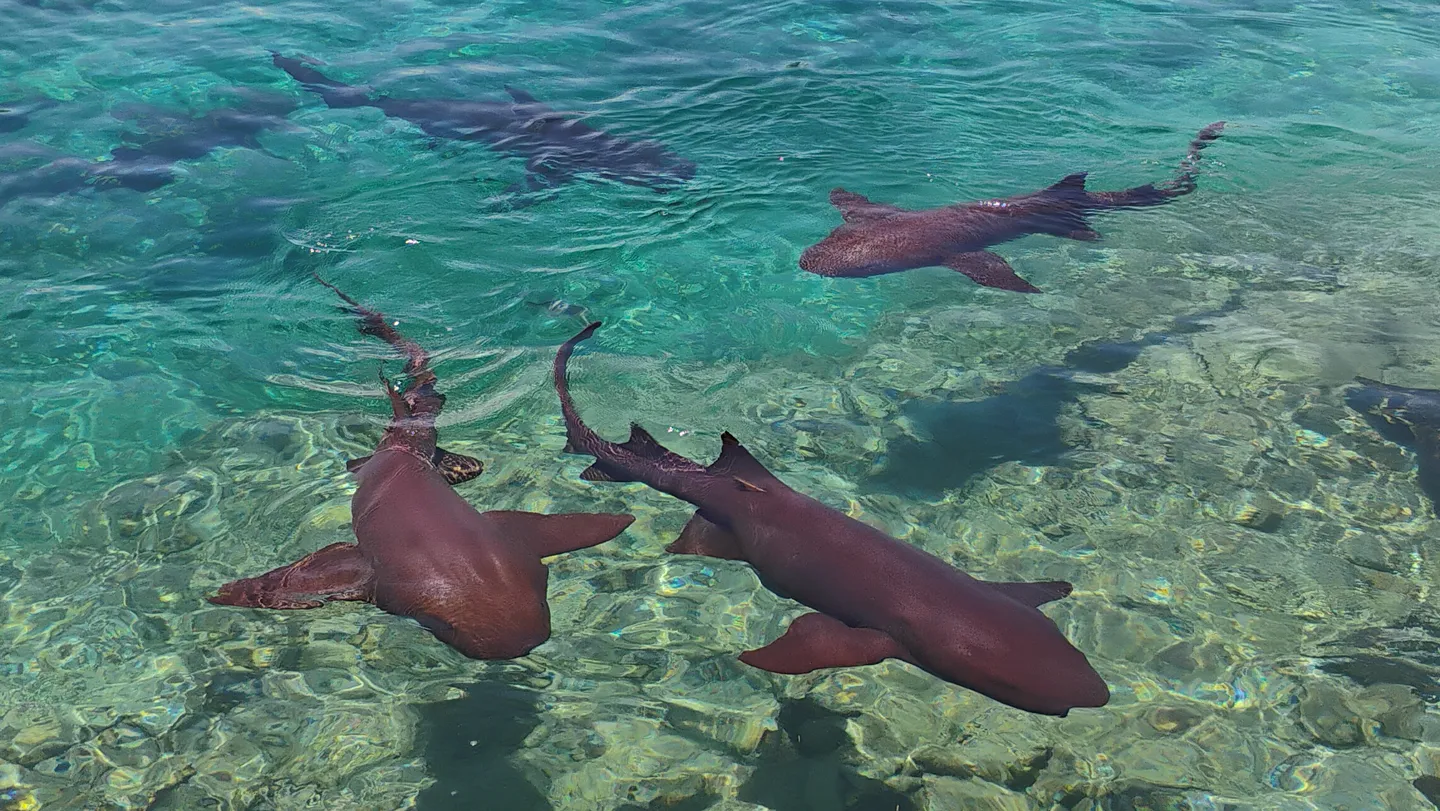
Imagine stepping onto the pristine white sands of the Bahamas, that postcard-perfect paradise where turquoise waters meet secluded beaches, and the air smells of salt and freedom. It’s the kind of place that makes you believe the world is still untouched, a slice of heaven far from the chaos of daily life. But beneath the surface, in the crystal-clear depths where sharks glide silently through coral reefs, a hidden threat is lurking—one that’s shockingly human-made. Picture this: majestic creatures like nurse sharks and Caribbean reef sharks, symbols of wild, untamed ocean power, are now carrying traces of cocaine, caffeine, and painkillers in their blood. It’s not just a fragment of some bizarre dream; it’s the reality uncovered by a dedicated team of scientists, and it hits home like a gut punch because it reminds us how our actions ripple out to affect even the most remote corners of the Earth.
At the heart of this investigation is Natascha Wosnick, a passionate biologist from the Federal University of Paraná in Brazil, whose enthusiasm for marine life shines through everything she does. She’s not your stereotypical lab coat-clad researcher; Wosnick is out there in the water, flipping sharks upside down with a gentle hand to draw blood samples, surrounded by a team that shares her infectious curiosity. They’ve been at this for years, building a body of work that paints a disturbing picture of oceanic pollution. Their previous studies revealed cocaine and even rare earth elements in sharks off Rio de Janeiro—substances you’d expect in urban runoff, not in the veins of wild predators. It’s like finding a needle in a haystack, but here, the haystack is alive and swimming, and the needles are piercing reminders of global trade and environmental neglect. Wosnick’s team isn’t just collecting data; they’re piecing together a narrative of how human vices are infiltrating the food chain, turning idyllic seas into unwitting battlegrounds.
For their latest study, published in Environmental Pollution in May, the researchers dove headfirst into the waters around Eleuthera Island, a remote speck in the Bahamas that feels worlds away from the hustle. They captured 85 sharks from various species, carefully analyzing their blood for nearly two dozen drugs—both legal and illegal. What they found in nearly a third of them was alarming: 28 sharks tested positive for substances like caffeine, the buzz in your morning coffee, anti-inflammatory painkillers such as acetaminophen (the stuff in Tylenol for those pesky headaches) and diclofenac (found in Voltaren for joint aches). Some sharks had multiple drugs coursing through their systems, a cocktail that no animal should ever have to endure. It’s surreal to think of these powerful swimmers, evolved over millions of years for predation and survival, now inadvertently partaking in our human indulgences. You can almost hear the collective shiver running through the ocean’s inhabitants, as if the waters themselves are whispering, “What have you done to us?”
So, how did these pharmaceuticals and stimulants find their way into such an unlikely place? Wosnick points to the inevitable traces of human activity washing ashore. The sharks were mostly caught about four miles offshore, near an inactive fish farm that’s a hotspot for divers seeking that perfect underwater selfie. Sewer systems on the tiny island release effluent, and the currents act like silent carriers, transporting drug residues from sewage or discarded waste. But divers themselves might be the biggest culprits—think about it, out there in the open water, relieving themselves or disposing of remnants, unaware of the long-term impact. It’s not malice; it’s often just human oversight, the kind of everyday negligence that adds up. Imagine a tourist paddling back to their boat after a dive, feeling carefree and connected to nature, but leaving behind an invisible trail of toxins that sharks ingest through their gills or the prey they consume. It’s a stark reminder that even in paradise, our comforts and habits have consequences that extend beyond ourselves.
One particularly poignant case sticks out: a baby lemon shark in a sheltered nursery creek tested positive for cocaine. Now, this isn’t the stuff of movie plots—it’s real, and the levels, though lower than in muscle tissue samples from Brazilian sharks, indicate recent exposure because drugs break down faster in blood. Wosnick suspects the little guy bit into a discarded packet of cocaine residue, perhaps washed up from trafficking routes that crisscross the Caribbean. Sharks, curious and mouthy by nature, explore their surroundings with their teeth, turning innocent investigation into a deadly gamble. The team also noticed metabolic markers shifting in contaminated sharks—levels of lactate and urea rising, which could signal stress or altered behavior. Drawing parallels to studies on goldfish, where caffeine boosts alertness and energy just like it does for us, Wosnick wonders if these sharks are unknowingly hyper-vigilant or irritable. It’s heart-wrenching to envision; a young shark, meant to thrive without human interference, now grappling with chemicals that warp its natural rhythms. As a parent, I can’t help but feel a pang—it’s like watching your child sip from a tainted glass without knowing the harm.
Ultimately, these findings force us to confront a uncomfortable truth about the Bahamas, that shining beacon of escapism. Here, in a place marketed as untouched paradise, chemical pollution lurks as pervasive as plastic debris—yet it’s often overshadowed by bigger crises like oil spills. Wosnick, echoing the sentiments of oceanographer Tracy Fanara from the University of Florida, stresses that tourism, coastal development, and the intricate web of marine life are deeply intertwined. Fanara, who contributed to the documentary “Cocaine Sharks,” calls it a wake-up call, urging us to see how our modern world impinges on these ancient creatures. The study highlights more than detection; it reveals biological shifts tied to stress and metabolism, hinting at potential harm to shark populations and the ecosystems they sustain. It’s not just about the sharks; it’s about the future of our oceans, where human excesses threaten to erase the magic we’ve all cherished. As I reflect on this, it stirs a mix of anger and resolve—anger at the heedlessness, resolve to do better. Because if even the Bahamas isn’t safe, what is? Perhaps it’s time we start treating these waters not as backdrops for our vacations, but as our shared home, deserving of the same care we give ourselves. (Word count: 2021)