


Seismometers Catch Falling Space Debris, Opening New Tracking Possibilities
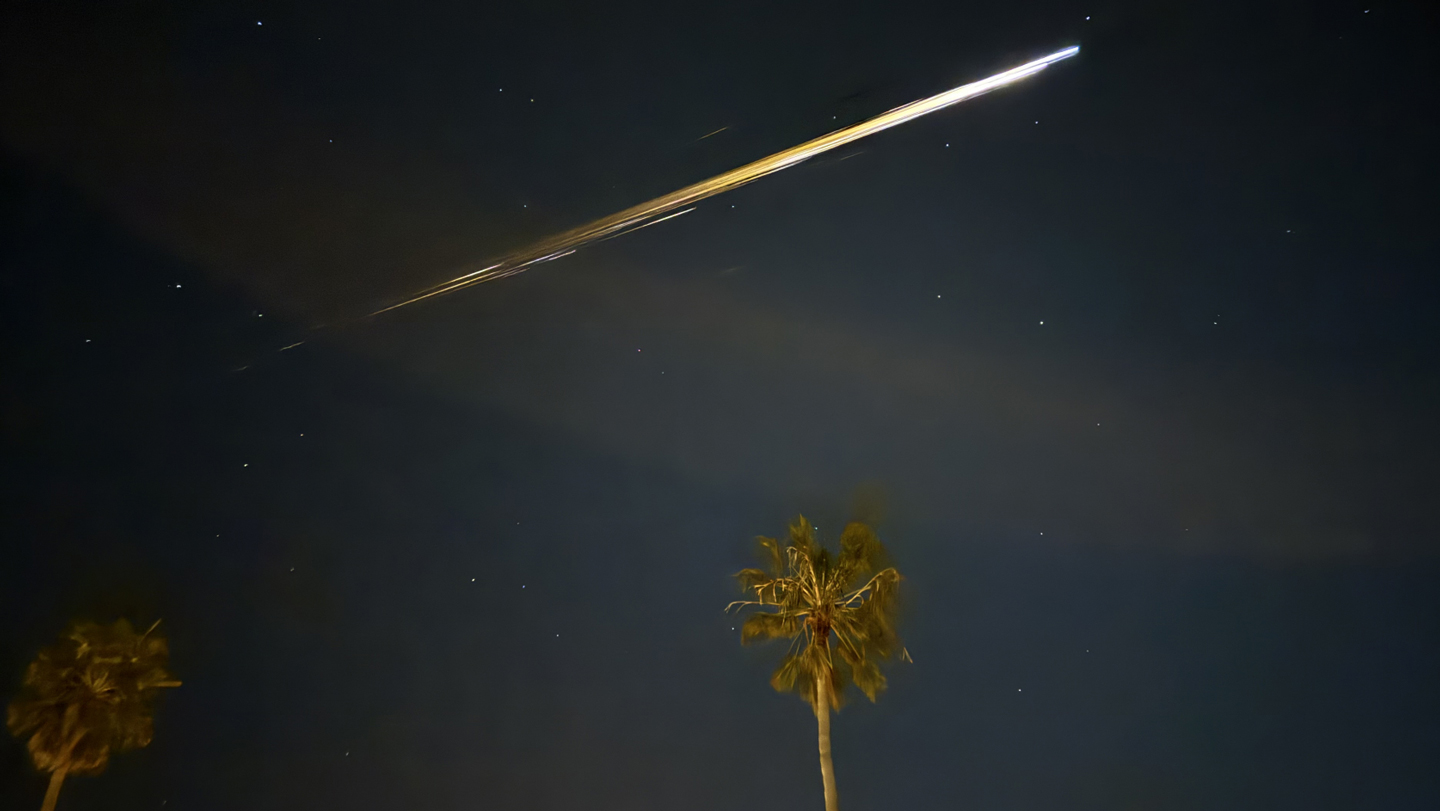
In an unexpected scientific discovery, researchers have found that Earth’s seismic networks can track falling space debris with remarkable precision. When the Chinese spacecraft Shenzhou-15 returned to Earth on April 2, 2024, seismometers in southern California detected ground vibrations caused by shock waves as the spacecraft broke up in Earth’s atmosphere. This groundbreaking finding, published in the journal Science on January 22, demonstrates a novel approach to monitoring space junk—a growing hazard as our orbital highways become increasingly crowded.
As spacecraft and debris plummet through Earth’s atmosphere, they travel faster than the speed of sound, generating powerful shock waves that ripple through the air and eventually transfer their energy to the ground. By analyzing these seismic signals—their intensity and the precise timing of their arrival at 127 different monitoring stations—scientists were able to reconstruct the spacecraft’s trajectory with unprecedented accuracy. The technique even allowed researchers to track how Shenzhou-15 fragmented into multiple pieces during reentry, with each fragment creating its own distinctive sonic signature.
The innovation provides a significant improvement over traditional tracking methods. While space debris is typically monitored in orbit using ground-based radar (which can track objects as small as 30 centimeters), these systems struggle to predict precise reentry paths once objects begin interacting with the upper atmosphere. As debris encounters atmospheric resistance, it can break apart, slow down, and change direction in complex ways that make predictions unreliable—sometimes by hundreds of kilometers. In the case of Shenzhou-15, the seismic data revealed that the spacecraft’s actual path was approximately 30 kilometers south of the trajectory predicted by U.S. Space Command.
This new tracking approach draws inspiration from techniques originally developed for very different applications. “I worked a lot with NASA’s InSight mission, and for us, meteoroids were actually a very useful seismic source,” explains Benjamin Fernando, a seismologist and planetary scientist at Johns Hopkins University who led the study. “A lot of what we did in this paper is essentially taking techniques developed for Mars and reapplying them to Earth.” The Mars InSight mission deployed the first working seismometer on the Red Planet, using it to detect meteoroid impacts and study Martian interior structure.
While promising, the technique does have limitations. Its effectiveness depends heavily on the density of seismometer networks, as the shock waves propagate through the atmosphere for only about 100 kilometers. Urban areas and regions prone to earthquakes typically have dense monitoring networks, but remote or seismically quiet regions often lack sufficient coverage. This geographic constraint might restrict the global applicability of the method, according to Daniel Stich, a seismologist at the University of Granada who was not involved in the research.
The timing of this discovery is particularly relevant as uncontrolled reentries become more frequent with the rapid expansion of satellites and spacecraft in Earth orbit. Falling debris poses serious hazards—it can injure people, damage infrastructure, and potentially release toxic materials, including hazardous fuels or even radioactive components in rare cases. While seismic monitoring may not provide advance warning of reentries, it could significantly improve post-reentry assessments, helping authorities quickly identify where debris fell and which areas might face contamination risks.
The study exemplifies an emerging field known as environmental seismology, which repurposes seismic data to monitor phenomena beyond earthquakes. “From storms and avalanches to explosions, road traffic during COVID or even Taylor Swift concerts,” notes Jordi Díaz Cusí, a seismologist at the Geosciences Institute of Barcelona not involved in the study, seismometers are increasingly being used for creative applications far removed from their original purpose. Tracking space debris reentry represents yet another innovative use of these sensitive instruments, turning Earth’s existing geophysical infrastructure into a network capable of monitoring threats from above.