





The Allure of Robotic Nails: How Human Inspiration is Revolutionizing Robot Hands
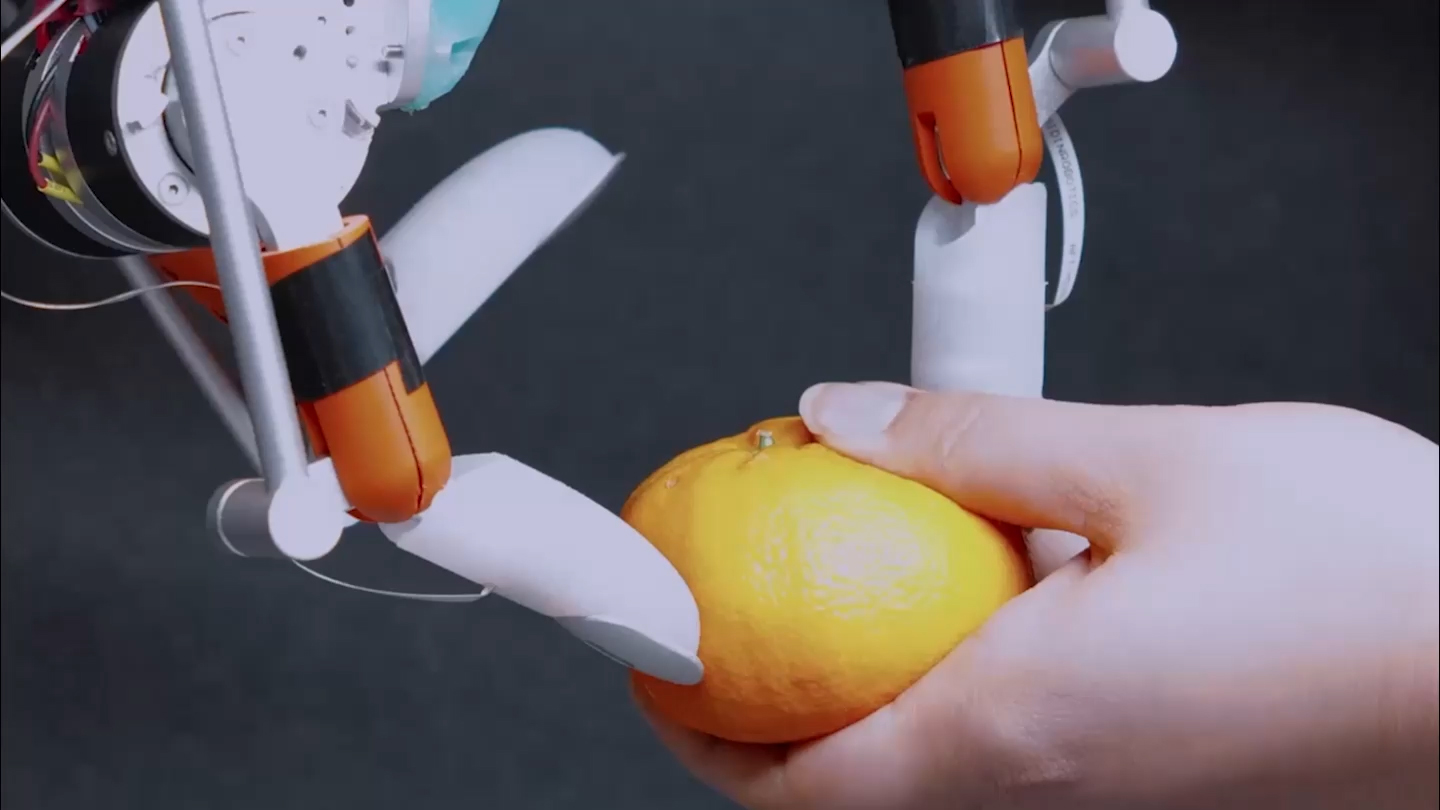
Picture this: you’re in your kitchen, and instead of struggling with stubborn jar lids or slipping while peeling a tricky orange, a robotic hand glides through the tasks with ease. Sounds like science fiction? It’s closer to reality thanks to innovative researchers at the University of Texas at Austin. They’ve created a three-fingered robotic hand where the fingertips boast rigid “nail” structures embedded in soft, flexible material. This isn’t just about aesthetics—it’s about mimicking the human touch to tackle everyday challenges. Imagine a robot lending a hand with chores like opening sealed containers or picking up flat, delicate items that often baffle their mechanical counterparts. It’s a breakthrough that bridges the gap between clumsy automatons and dexterous helpers, offering glimpses into a future where robots handle real-world tasks seamlessly. The team shared their findings on arXiv.org in early February, sparking excitement about how this could transform industrial handling and domestic robotics alike. By drawing inspiration from our own nails, which keep our fingertips stiffened and precise, these robotic tips could make machines feel almost lifelike. As someone who’s always fascinated by how technology echoes nature, I can’t help but marvel at how a simple feature like a fingernail could upend robotics. It reminds me of those childhood dreams of robots that act like friends—now, we’re inching closer with designs that adapt and grasp just like we do.
Conventional robotic hands have come a long way, but they often fall short in flexibility. Typically, their fingertips feature a soft pad glued onto a rigid framework, resulting in a boxy, square shape that’s great for direct, head-on forces but crumples under twisting or side pressures. This limitation makes them less versatile for tasks requiring nuanced manipulation, like turning a doorknob or cradling a fragile object without crushing it. Soft-only fingertips might adapt to various surfaces, but they sacrifice precision, leading to poor contact and weaker grips. Enter the new design: by wrapping soft material around the finger’s “skeleton” and topping it with a rigid nail-like element, the tip morphs into an oval shape reminiscent of human fingers. This hybrid approach allows the finger to flex and bend while maintaining stiffness where it counts. It’s like giving the robot a manicure that enhances durability without losing sensitivity. Mechanical engineer Dong Ho Kang highlights how this shape handles multidirectional forces better, enabling smoother interactions with the environment. In my experience, thinking about engineering often circles back to ergonomics—how we as humans interact with tools. This innovation feels intuitive because it borrows directly from biology, potentially reducing the frustration of dealing with robots that feel awkward or unreliable. Just as our nails protect and extend our grip, these robotic nails could make machines more intuitive to work with, blending soft adaptability with rigid precision in ways traditional designs couldn’t imagine.
What makes this robotic hand tick is its clever mimicry of human anatomy. Our fingertips combine softness for tactility with the rigidity of nails to focus pressure and prevent squishing. Kang’s team replicated this by integrating a hard “nail” on top of pliable material, creating an oval fingertip that conforms to objects while resisting deformation. Tests revealed stark improvements: during simulations where objects were grasped and pulled upward, the nailed fingertips exerted stronger forces, securing holds on flat, concave, and convex items alike. Without nails, soft fingers compressed easily, leading to unstable grips especially on curved surfaces. It’s a testament to evolutionary design—our nails didn’t evolve by accident; they empower fine motor skills. Drawing parallels to real life, I’ve always appreciated how nail polish adds both function and flair, but here, it’s about pure utility. This robotic nail isn’t cosmetic; it’s transformative. By focusing pressure at the tip, it enhances precision, allowing robots to “sense” edges and apply just the right amount of force. As someone who juggles gadgets daily, I see parallels in how adaptive tech like this could make devices more forgiving for human operators. The oval shape also aids in directional flexibility, handling twists and slides that square tips fumble. It’s a small tweak with big impacts, proving that sometimes the best innovations come from emulating nature’s millennia of trial and error. This design could pave the way for robots that interact with us more naturally, reducing the cognitive load on users who must compensate for robotic clumsiness.
The experiments conducted by the researchers painted a vivid picture of capability, testing the robotic hand in dual setups—one with nails, one without—to quantify differences. Using three motorized fingers (index, middle, and thumb), they evaluated grasping under upward tension across diverse objects. Nailed fingertips consistently outperformed, demonstrating superior grip strength and stability. For instance, on curved or bulging items, the nails prevented deformation, maintaining contact where soft-only tips slipped. This robustness shines through in practical scenarios: imagine peeling a banana or orange—the nailed hand slices through the task with clean, precise force, avoiding the mushy slips of softer counterparts. It’s not just about power; it’s about finesse. I recall fumbling with fruit in my own kitchen and thinking how a helper like this could change daily routines. The results posted to arXiv.org emphasized how human-inspired features translate directly to robotic success, with nails acting as a stabilizing factor. Beyond mere function, this echoes how we’ve learned from biology to solve engineering puzzles—much like how velcro mimicked burrs or airplanes drew from birds. By humanizing their creation, the team highlighted adaptability that goes beyond lab simulations, hinting at broader applications in manufacturing or assistive tech. It makes me ponder: if robots can grasp like we do, how might that reshape industries reliant on delicate handling? This isn’t futuristic fantasy; it’s grounded science, with quantitative data backing claims of enhanced performance. As robotics evolves, such bio-inspired tweaks could make machines less alien and more ally-like in our lives.
Specific tasks highlighted the robotic hand’s newfound prowess, revealing its potential for mundane yet essential activities. Peeling fruit becomes effortless, as the nails anchor and guide the fingers without bruising produce. Opening lidded containers, like jars or tins, succeeded with reliable torque, while soft fingertips failed to engage lids even partially. Thinner items, traditionally robot nemeses, succumbed to mastery: picking up coins, cards, or paper sheets from stacks without crumpling. Flipping cards or extracting single sheets demonstrated dexterity that echoes human sleight of hand. Without nails, these tasks were hit-or-miss, often resulting in misses due to poor edge contact. Kang’s next phase involves scaling this to a full five-fingered hand, expanding possibilities. Reflecting personally, I’ve dealt with robotic vacuums that bump around helplessly— this design promises smarter, more capable companions. It democratizes robotics, making advanced tech accessible for tasks we take for granted. Imagine elderly assistance or hazardous material handling with hands that adapt intuitively. The implications ripple out: industrial pick-and-place operations could benefit from safer, surer grasps, reducing errors in warehouses. In healthcare, prosthetic inspired by this might offer better sensory feedback. This work isn’t isolated; it builds on decades of soft robotics research, but the nail addition is the game-changer. By excelling where others falter, it validates bio-mimicry as a path forward. I feel optimistic—soon, robots won’t just assist; they’ll emulate human skill, fostering trust and efficiency in equal measure.
Looking ahead, this robotic nail evolution signals a renaissance in human-robot collaboration, with far-reaching societal ripple effects. As robots infiltrate homes, factories, and even service industries, designs like this ensure they blend seamlessly, reducing the steep learning curve for users. Supporting science journalism, as seen in outlets like Science News, becomes crucial to spread these breakthroughs and guide ethical development. With our help, publications can amplify voices like freelancer Ananya Mandal, who covers robotics with passion and precision. By subscribing and contributing, we fuel literacy in AI and robotics, ensuring decisions shape a tech-savvy society. This work reminds us that innovation flourishes with community backing—much like how open forums like arXiv democratize research. In a world grappling with automation’s rise, empowering consumers with knowledge prevents misuse. Personally, I’m excited for a future where tech echoes empathy, starting with designs that honor human form. Your support bridges gaps between lab discoveries and everyday impact, transforming curiosity into collective benefit. Whether through donations or subscriptions, let’s champion science that humanizes machines, making our shared world a little more intuitive and inclusive. As we stand at this critical juncture, backing informed journalism isn’t just nice—it’s essential for a brighter, more equitable technological landscape.