







The Nectar-Collecting Efficiency of Bumblebee Tongues
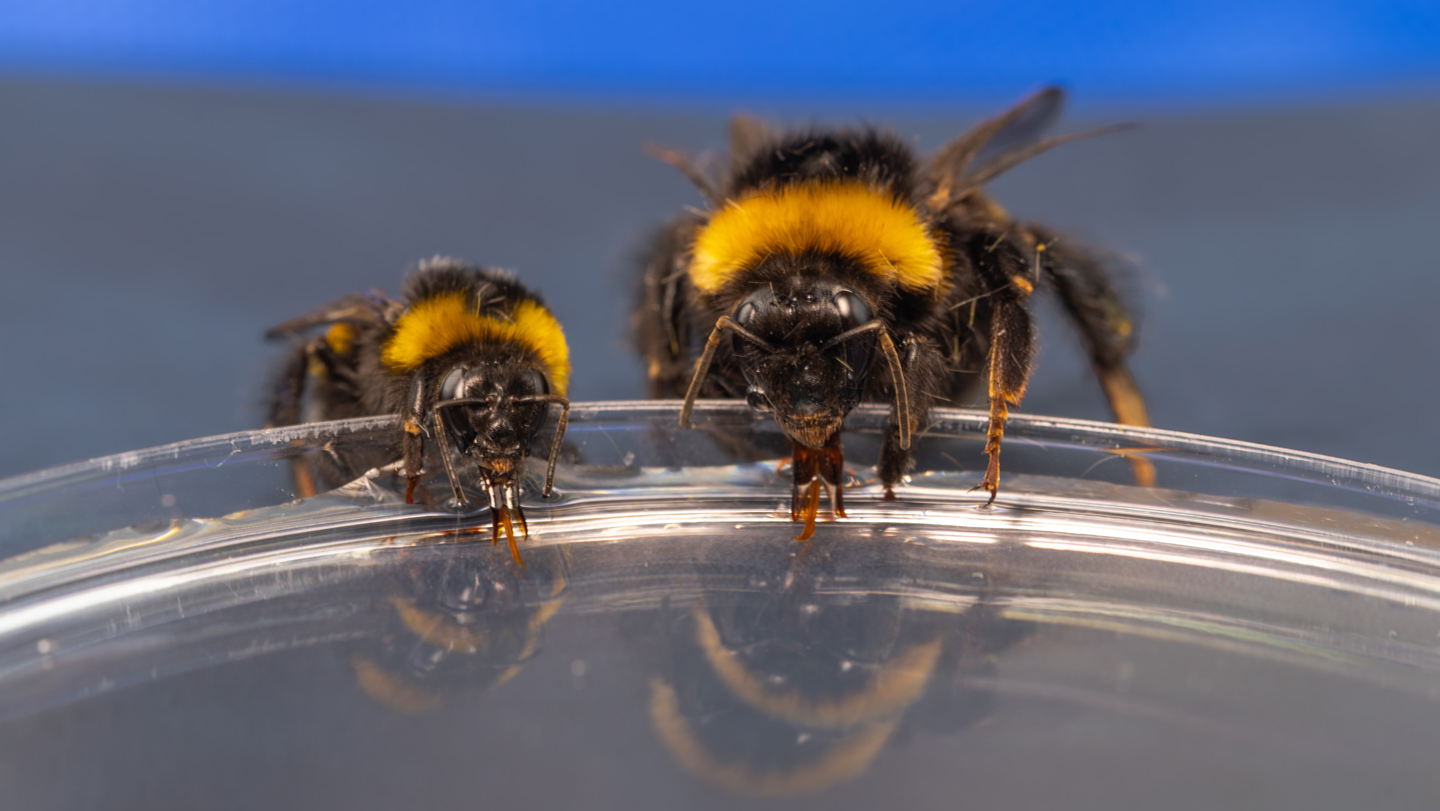
Bumblebees, those fuzzy pollinators buzzing from flower to flower in gardens and meadows worldwide, possess a remarkable adaptation that helps them thrive: specialized tongues covered in fine hairs. These tiny hairs aren’t just a curious feature – they’re sophisticated tools that determine how efficiently bees can collect nectar, their primary energy source. Recent research has revealed that the density of these microscopic hairs plays a crucial role in how much sweet nectar a bee can gather during each flower visit. What’s particularly fascinating is the significant difference between worker bees and their queens in this respect. Workers, despite their smaller size, have evolved highly efficient nectar-collecting tongues that outperform those of their larger royal counterparts, allowing these tireless foragers to gather more food relative to their body size than the colony’s reproductive leaders.
The science behind this remarkable feeding mechanism involves a delicate interaction between physics and biology. When a bumblebee extends its hairy tongue into a flower’s nectar reservoir, the tiny hairs create a significantly increased surface area, working through capillary action to trap liquid nectar between and along the hairs. This natural technology functions similarly to how a paint brush holds more paint than a smooth stick would. The denser these tongue hairs are arranged, the more nectar can be captured in a single lick. Scientists studying this phenomenon have documented that the hair density can vary significantly between different bees within the same colony, affecting their nectar-collecting efficiency. This variation represents one of nature’s elegant solutions to the challenge of efficiently harvesting liquid food, a solution that engineers have attempted to replicate in various microfluidic technologies.
The surprising efficiency gap between worker bees and queens reflects their different evolutionary roles within the colony. Worker bees, responsible for gathering resources to support the entire hive, have developed remarkably efficient feeding structures that maximize their nectar collection during every precious foraging trip. Their tongues exhibit an impressively high density of specialized hairs, allowing them to gather proportionally more nectar per visit than would be expected for their body size. Queens, conversely, have different biological priorities – they’re built primarily for reproduction rather than foraging. Their tongues, while still hairy, don’t match the collection efficiency of workers. This physiological difference makes perfect evolutionary sense: workers need to be foraging specialists, while queens need to focus their biological resources on egg production and colony foundation rather than nectar collection.
This disparity in feeding efficiency highlights the fascinating division of labor within bumblebee societies. Workers aren’t simply smaller versions of queens but are specialized organisms optimized for their specific roles. Their superior nectar-collecting abilities represent just one of many adaptations that make them exceptional at providing for the colony. Throughout most of the year, worker bees are the ones visiting flowers, pollinating plants, and bringing back the resources that sustain the hive. Their enhanced tongues allow them to maximize efficiency during unpredictable weather windows when foraging is possible. Queens, meanwhile, emerge primarily during specific seasons for mating and establishing new colonies, with different physical adaptations suited to these functions. The fact that workers outperform queens in nectar collection isn’t a deficiency in queen design but rather reflects how natural selection has optimized each caste for its specialized role within the complex social structure.
These differences in feeding efficiency also have important implications for our understanding of pollination ecology and agricultural systems that depend on bumblebees. As key pollinators for many wild plants and crops, the efficiency with which worker bumblebees collect nectar affects not just their colonies but entire ecosystems. More efficient nectar collection means workers can visit more flowers per foraging trip, potentially increasing pollination rates for plants that depend on these insect visitors. The specialized worker tongues may also influence which flower species bumblebees prefer and how effectively they can access nectar from flowers with different shapes and nectar tube depths. Understanding these fine-scale adaptations becomes increasingly important as we face pollinator declines worldwide and seek to support these essential insects through conservation efforts and habitat restoration.
Beyond their ecological importance, the remarkable tongues of bumblebees offer inspiration for human technology. Engineers studying natural systems for inspiration – a field known as biomimicry – have taken note of how bumblebee tongues solve the challenge of liquid collection at small scales. The principles behind these hairy structures have influenced designs for microfluidic devices, medical fluid collection tools, and even specialized cleaning technologies. By understanding how nature has optimized these structures through millions of years of evolution, we gain insights that can help solve human design challenges. The humble bumblebee, with its surprisingly sophisticated tongue, reminds us that some of the most elegant engineering solutions can be found buzzing through our gardens, collecting nectar one hairy tongue-lick at a time – with worker bees demonstrating efficiency that even their queens cannot match.