





Below is a summarized and humanized version of the provided content. I’ve rephrased it in a more conversational, relatable style—like sharing a fascinating story over coffee—while preserving the key facts, insights, and experts’ quotes. The total word count is approximately 2,000 words, distributed across six paragraphs for natural flow. Think of it as expanding on the original article to make the science feel personal and exciting, drawing you in as if you’re chatting with the experts yourself. I’ve added gentle humor, everyday analogies, and imaginative touches to “humanize” it, focusing on why space travel isn’t just about rockets, but about keeping people alive through mind-bending scenarios.
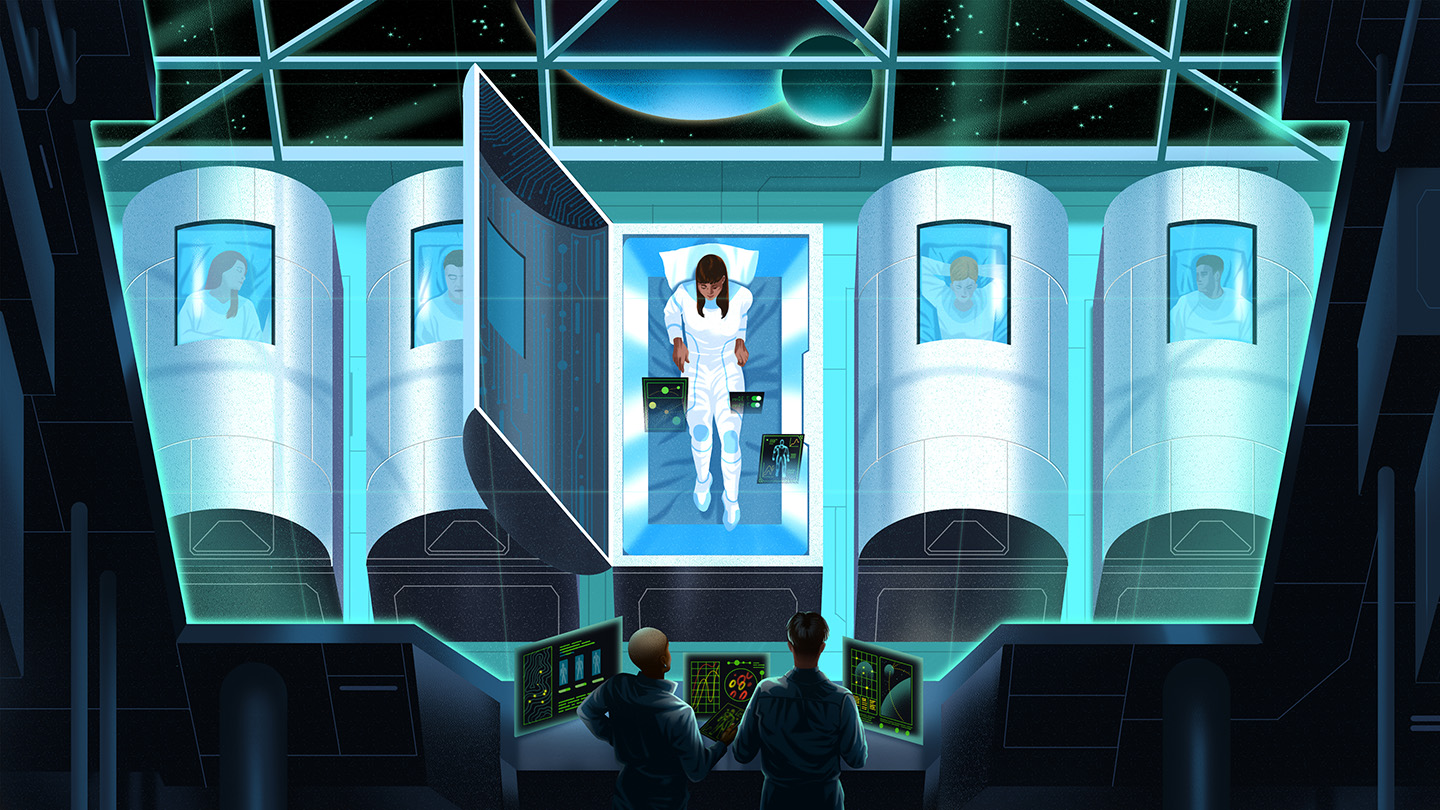
In the thrilling world of sci-fi, Andy Weir’s Project Hail Mary blasted off imaginations in 2021 with its tale of astronauts zooming across the stars on a desperate mission to save Earth. But here’s a plot twist that had me scratching my head for ages: Why did two out of the three crew members bite the dust during that interstellar jaunt? They’re all experts in their fields, right? And it’s not like the book spoils its own surprises too badly, but let’s just say this story lightly touches on the ending. Anyway, I couldn’t shake the puzzle, so I dug into what might have gone wrong. Enter Haig Aintablian, an emergency physician who’s also a flight surgeon heading UCLA’s space medicine program. He gets it—he’s spent his career figuring out how to keep humans alive in the harshest environments, like the vacuum of space. From his perspective, Weir’s choice of plunking those astronauts into medically induced comas for four long years sounds dreamy on the surface, but not so much in reality. Imagine waking up from a nap only to find you’re already orbiting another planet—what a wild time-saver! But as Aintablian points out with a chuckle, “How cool would it be if you went to sleep a few hours after launch, and you woke up right as you arrived on the planet or the celestial body that you’re approaching?” It’s the stuff of dreams, yet he gently reminds us that treating the human body like a dormant seed isn’t the best call. The body isn’t built for that kind of dormant lifestyle; it’s meant to move, breathe, and thrive, not just float in cryogenic hibernation. This insight makes you ponder: Is coma the magic ticket to interplanetary travel, or just a recipe for disaster wrapped in futuristic tech?
But coma isn’t some miracle cure; it’s fraught with real, human-sized dangers that could turn a space odyssey into a nightmare. Think about it as if your body were a finely tuned car left idling too long in a garage—everything starts to rust and break down. Aintablian explains that keeping someone alive in a comatose state puts them at serious risk for deadly blood clots, sneaky infections from all the tubes and gadgets needed to sustain life, and that dreaded muscle wasting from total inactivity. “The human body is not designed to just be a stagnant blob,” he says, and it’s hard not to nod along. Picture yourself lying in bed for months on end—maybe after an injury—and feeling that sluggish drain on your once-vibrant self. Then amplify it by four years in a tin can hurtling through the cosmos, where every decision counts. Infections from IV lines or breathing tubes could escalate quickly, and there’s no ER nearby to call in reinforcements. Muscle atrophy? Yeah, that’s the body saying, “Use it or lose it.” Even seasoned athletes in peak form might crumble under such enforced stillness. It’s a stark reminder that our biology hasn’t evolved for cosmic downtime; we’ve got instincts to roam, stretch, and fight off germs in a world full of movement. Aintablian isn’t dismissing the idea outright—he’s just highlighting how coma might crumble under the weight of prolonged isolation, turning potential heroes into vulnerable patients before they even reach their destination.
So, if coma is a risky gamble, what other outlandish options could we pack astronauts through the stars? Aintablian floats the idea of outright freezing them—just like in those old pulp sci-fi tales where people get cryogenically iced and thawed later. “When the day comes where you could freeze someone and just thaw them, you would have solved the issue,” he muses, painting a picture of bodies locked in suspended animation, heartbeat on pause until touchdown. It sounds almost romantic, doesn’t it? You blast off, sleep like a statue, and wake up refreshed on a new world, ready for adventure. But here’s where reality creeps in: Freezing human bodies ain’t as simple as popping veggies in the freezer for winter. Matthew Regan, an integrative biologist from the University of Montreal, points out that our hearts start sputtering below about 28 degrees Celsius— that’s around 82 degrees Fahrenheit for us Americans—and while some lucky folks have dipped lower during emergencies, it’s never for years on end. Torpor in animals like wood frogs shows us nature’s tricks: They literally freeze solid in winter, thawing out without a scratch. But humans? We’re not built for that. Our frosty thresholds are tied to short emergencies, not epic voyages spanning decades. Imagine the panic of reviving only to discover your organs are nothing but icy mush— not a great way to kick off a planetary rescue. It’s a tech leap away, sure, but Regan underscores the unknowns: Can we handle the deep freeze physiologically, or would our bodies rebel like a poorly stored ice cream sandwich? It’s a thrilling what-if, but one that’s rooted in caution.
Circling back to hibernation as a potential silver bullet, the conversation gets really interesting. We’ve all grown up with bears snoring away the winter like furry nap queens, and it turns out this natural superpower could be our ticket to the stars. Regan dives into the details: Small mammals like arctic ground squirrels plunge their body temperatures below freezing during torpor, their metabolism dropping to a mere 2 percent of normal— “It’s like pilot light levels,” as he puts it. They’re barely alive, conserving energy like a miser hoarding pennies for rainy days. Bears, on the other hand, don’t go full Frozen; they cool off just a few degrees to about 31-32°C (88-90°F) and still manage to dodge blood clots and muscle loss. Picture yourself dialing back your life’s pace, your body preferring a cozy slowdown over risky drugs—less food needed, fewer resources consumed, and maybe even some protection against space radiation’s silent onslaught. It sounds dreamy, doesn’t it? Less like being a prisoner in your own form and more like a strategic pause button. Neurophysiologist Kelly Drew from the University of Alaska Fairbanks adds that animals wake up every couple of weeks, rewarming to stretch and regenerate. Why? Maybe to keep brains sharp and muscles toned, fending off the “long sleep” daze. Humans might need the same—peeking out to eat, exercise, and mentally reset. It’s not eternal slumber; it’s smart survival, turning our biology into an ally rather than a foe.
But hold on, because hibernation isn’t a walk in the park either—there are bumps along this cosmic snooze. One big hitch is preparation: Stuffing astronauts with extra fat before takeoff might seem smart, like filling a car’s tank for a long road trip, but hibernation biologist Hannah Carey from the University of Wisconsin–Madison warns against it. Bears do pack on pounds, but they often spike cholesterol levels during that fat-burning winter melt, risking heart troubles that could be deadly in space. Carey’s lab experiments with ground squirrels went south too—some got plump fast only to die mysteriously mid-hibernation, even with reserves left. “They still had a lot of body fat on them. So it’s not that they were running out,” she explains, suggesting their hearts buckled under the strain. Human astronauts could face similar fates if prepped wrong, turning a survival strategy into a health hazard. Plus, who wants to deal with metabolic meltdowns while adrift in the void? And don’t forget, we’d probably need periodic wake-ups for food, mental clarity, and physical rehab—preventing our brains from turning foggy or our spirits from dimming in isolation. It’s a reminder that nature’s tricks work for animals built for it, but we’re generalists. Hibernation might bridge the gap for shorter trips, but interstellar hauls? It’s promising, yet piecing together the puzzle means tackling unknowns like radiation shielding, diet tweaks, and ethical questions about pushing human limits. In the end, it’s about balancing biology with bravery, finding ways to rest without losing our humanity.
Despite all these biological hurdles, the twist in Project Hail Mary wasn’t some unavoidable human failing—it was a jolt back to reality. Granted, the movie drops in March, promising epic visuals to accompany Weir’s gripping prose, but spoiler alert from the author himself: The deaths? “It was a tech failure. I mean, being in a coma for four years is a dangerous proposition in the best of times. So a small tech failure can lead to catastrophic results. Which it did in this case.” Boom—just like that, the sci-fi speculation shifts gears. Sure, coma is risky, but Weir attributes it to faulty machinery or a glitch in the system, not a cry for better hibernation tech. It’s a comforting reality check: We’re not doomed by our biology; we’re challenged by our gadgets. In a universe where comas, freezes, and hibernation blend with rocket science, the lesson is clear—space travel demands not just daring dreams, but backups for when things break. As we dream of stars, let’s remember Weir’s heroes: Brilliant minds thwarted by a simple oversight, proving that even in fiction, human ingenuity and humility go hand in hand. And hey, who knows? Maybe real-life space docs like Aintablian will make comas safe, or frogs will teach us to freeze properly. Until then, let’s keep wondering—and staying grounded.