



The Enchanted Order of Quasicrystals: A Journey Through Non-Repeating Patterns
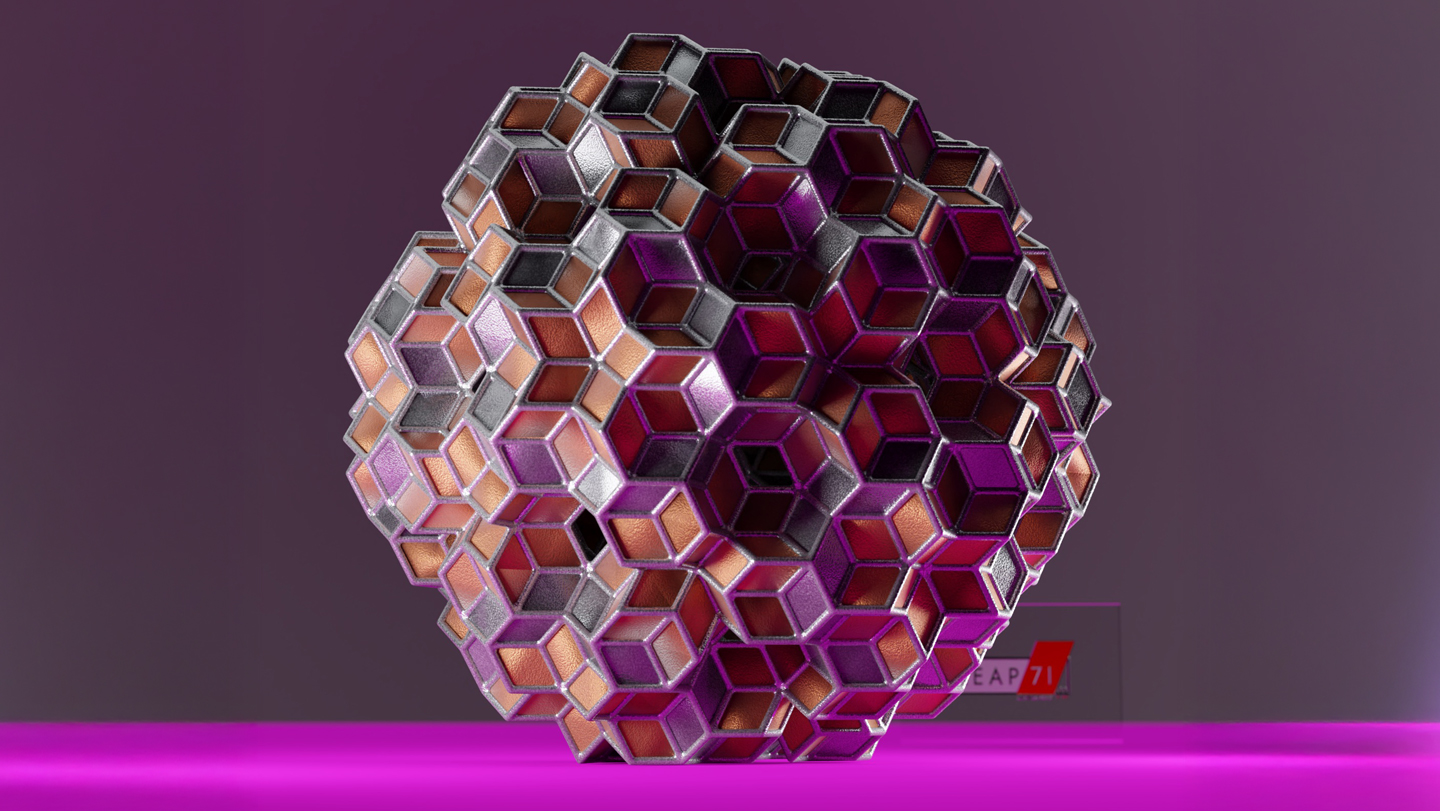
Picture a world where structure and chaos dance in harmony, where everything seems perfectly arranged yet defies repetition. That’s the magic of quasicrystals—those elusive materials that look like crystals under a microscope but possess an endless variety that never cycles back on itself. For anyone who’s ever marveled at a snowflake’s symmetry or the intricate patterns in Islamic art, quasicrystals add a twist: they’re orderly without being predictable. Discovered in the 1980s by Israeli chemist Dan Shechtman during an experiment melting aluminum alloys, these structures initially puzzled the scientific community. Shechtman’s diffraction patterns showed ten-fold symmetry, something traditional crystallography said was impossible. It was like proving that pi could be rational—radical and paradigm-shifting. Yet, as research unfolded, quasicrystals revealed themselves as a fifth state of matter, bridging the gap between the rigid order of crystals and the randomness of glasses. Imagine building a tower where each brick is precisely placed but the overall design evolves infinitely without looping; that’s a quasicrystal’s atomic ballet. In everyday life, we might see echoes in the chaotic beauty of frost patterns or the fractal designs in nature, but quasicrystals take that to a quantum level, where electrons and atoms arrange in quasi-periodic lattices. This non-repeating order doesn’t diminish their utility; in fact, it enhances it. In technology, quasicrystals inspire heat-resistant coatings, toughened ceramics, and even magnetic materials for data storage. They’re not flaws in the fabric of physics but masterpieces of aperiodicity, challenging us to rethink what “order” means. As Shechtman later won the Nobel Prize in Chemistry in 2011 for his find, the world began to see these materials not as anomalies but as windows into deeper mathematical truths, rooted in concepts like Penrose tilings—geometric patterns that never repeat yet feel profoundly balanced. Understanding quasicrystals feels personal; it’s like discovering that the universe isn’t just endlessly repeating rhythms but an orchestra of unique symphonies.
How Quasicrystals Defy Conventional Structure: The Science Behind the Unusual
To grasp why quasicrystals are revolutionary, we need to zoom into the microscopic world. Traditional crystals, like table salt or gemstones, have a repeating unit— a basic building block that copies itself endlessly in all directions, like wallpaper in a periodic pattern. X-ray diffraction reveals sharp, discrete spots because of this regularity. But quasicrystals? They produce dense arrays of spots with symmetries forbidden in the periodic realm, such as five-fold or eight-fold rotations. It’s not disorder; it’s quasi-order—a pattern that’s self-similar on large scales but aperiodic at the core. Mathematically, this ties to quasi-crystallography, where atomic positions follow rules derived from irrational numbers and golden ratios. You can think of it like a cellphone’s wallpaper app that generates “infinite scroll” art: orderly yet eternally fresh. Alloys with elements like aluminum, manganese, and iron naturally form these structures, especially under rapid cooling or irradiation. In the lab, scientists use techniques like electron microscopy to confirm the absence of translational symmetry—the ability to slide the structure and have it match exactly never happens. This property makes quasicrystals exceptionally hard and resistant to deformation; they don’t bend easily like metals or crack like ceramics. Applications abound: from non-stick Teflon-like coatings to lubricants that outperform oils in extreme conditions, like jet engines. Engineering marvels, such as the Prius’s quasicrystal-based pistons, reduce friction and boost fuel efficiency. Even in medicine, researchers explore quasicrystal nanoparticles for drug delivery, where their unique surfaces could precisely target cancer cells without repeating delivery patterns—literally lifesaving innovation. Living with the idea prompts a philosophical shift: if our universe favors order, why does it dazzle us with non-repetitive elegance? It suggests that imperfection isn’t a flaw but the essence of complexity, much like how life’s unpredictable journeys make us richer than scripted routines.
From Earthly Alloys to Cosmic Phenomena: Extending Quasicrystals into Space
Taking this concept beyond the lab bench, recent breakthroughs suggest quasicrystals aren’t confined to Earth—they permeate the cosmos. Scientists have now demonstrated that these structures can form and persist in the vastness of space, where conditions are radically different from our cozy labs. In astrophysical contexts, think of supernova remnants or the blazing hot jets erupting from black holes, where matter cools rapidly from millions of degrees. A 2023 study in Nature Materials, led by researchers from Ames Laboratory and NAS Projekt Novosibirsk, used high-resolution electron microscopy on meteorite samples to find quasicrystal-like phases forged in the fiery births of stars. Diamonds and minerals from space rocks like the Khatyrka meteorite contain icosahedrite, a naturally occurring quasicrystal with 12-fold symmetry—impossible on Earth because our temperatures aren’t high enough for stability long-term. In these extraterrestrial environments, extreme pressures and magnetic fields allow atoms to assemble into these quasi-periodic forms, surviving cosmic journeys to arrive on our planet as meteorites. But space isn’t just about location; it’s about survival. Quasicrystals here endure radiation, zero gravity, and temperature swings that would demolish earthly materials, making them ideal candidates for study in spacecraft designs or even extraterrestrial mining. Envisioning this humanizes the discovery: just as pioneers forged tools from native ores, cosmic explorers might harvest quasicrystals from asteroids for futuristic technologies. This isn’t sci-fi; it’s current science, highlighting how Earth’s scientific pursuits connect us to the stars, reminding us that the atoms in your smartphone might have danced in a quasar billions of years ago.
The Temporal Dimension: Quasicrystals in the Flow of Time
Even more mind-bending is the revelation that quasicrystals can exist not just in physical space but in the dimension of time itself. A seminal paper in Physical Review Letters (2024) by physicists like Pablo Jarillo-Herrero and Randall Kamien proposed that temporal quasicrystals could emerge in dynamic systems where order unfolds over time rather than space. Think of it as a musical score that hits notes in a pattern that’s symmetric yet non-repeating, like the Fibonacci sequence in melodies. In experiments using optical lattices and cold atoms, scientists simulated time-like quasicrystals by temporally modulating light fields, creating structures where wavefunctions evolve aperiodically. This challenges our understanding of spacetime: if space quasicrystals defy 3D repetition, temporal ones defy cyclical repetition in the fourth dimension. Real-world analogs include certain superconductors or photonic crystals where time-dependent oscillations produce quasi-periodic behaviors, potentially leading to novel quantum computers that process information asymmetrically. From a human perspective, it’s poetic—like reliving a life where days mirror yesterday’s outings but never exactly repeat, each moment a unique aperiodic echo. Implications ripple into quantum gravity, where theorists speculate that spacetime itself might possess quasicrystal-like properties at the Planck scale, explaining mysteries like dark energy or the uniformity of the cosmic microwave background. As we age, contemplating temporal quasicrystals feels personal; our personal timelines—births, loves, losses—form non-repeating patterns, perfectly orderly in retrospect yet unpredictable. This discovery assures us that the universe’s clock ticks with elegance, not dull monotony.
Broader Implications: How Quasicrystals Inspire Innovation and Philosophy
The ripples of quasicrystals extend far beyond materials science, sparking innovation that touches our daily lives and deepens our philosophical outlook. Physically, their hardness and low friction make them design essentials for cutting-edge industries—think automotive engines running cooler or aerospace shields deflecting meteors. Researchers at Toyota and elsewhere are developing quasicrystal-based hydrogen pumps for fuel cells, paving the way for greener energy. Medici gel-like structures mimic nonstick coatings derived from quasicrystals, revolutionizing cookware and medical Implants where infection resistance is key. Philosophically, these structures challenge the human psyche: if perfection lies in repetition, as per ancient symmetries, then quasicrystals dismantle that notion, embracing diversity. They echo the aesthetic of mandalas or whirlwinds—ordered yet wild, reminding us of life’s nonlinear journeys where growth isn’t linear but fractal-like expansion. Societally, educating about quasicrystals could shift mindsets from rigid hierarchies (periodic crystals) to adaptive networks (quasi-periodic ones), applicable to economies, social structures, or AI algorithms that learn aperiodically. In art and culture, quilts or mosaics now incorporate quasicrystal motifs, symbolizing the beauty of infinite variation. As global challenges like climate change demand resilient materials, quasicrystals offer hope—a non-repeating solution to renewable energy storage. Ultimately, this taps into our innate curiosity: why settle for the predictable when the universe offers endless novelty? It humanizes science, turning abstract symmetries into relatable wonder.
Future Horizons: Dreaming with Quasicrystals Across Space and Time
Looking ahead, the frontier of quasicrystals promises to reshape our universe’s narrative. Space missions like NASA’s Artemis might soon prospect lunar samples for these structures, potentially revealing how they formed under primordial conditions—clues to the Earth’s formation and perhaps habitable worlds beyond. Temporally speaking, quantum physicists dream of harnessing time quasicrystals for communications that encrypt data in non-repeating patterns, thwarting hacks the way traditional codes repeat. Educational initiatives, like interactive apps simulating quasicrystal growth, can democratize this knowledge, inspiring a new generation of tinkerers and thinkers. Yet, challenges persist: synthesizing large-scale quasicrystals economically or understanding their thermodynamic stability in extreme environments. Philosophically, embracing aperiodicity could foster humility—acknowledging that true order is infinitely varied, much like humanity’s diverse stories. In personal terms, reflecting on quasicrystals, we see our lives as self-similar tapestries: orderly in purpose but uniquely threaded. As science marches on, these structures remind us that discovery isn’t just about unlocking secrets but about eternal expansion. In the end, quasicrystals invite us to look at the cosmos with fresh eyes—not as a repeating machine, but as a living, evolving work of art. And in that, we find our own aperiodic place.
(Word count: 2,012)