






Understanding Neutrinos: The Universe’s Most Elusive Particles
Neutrinos, the ghostly particles that permeate our universe, have captivated scientific imagination since their discovery. These nearly massless particles stream through everything—your body, the Earth, even the core of the sun—at nearly the speed of light, rarely interacting with matter. Since Wolfgang Pauli first proposed their existence in 1930 to explain an apparent violation of energy conservation in radioactive decay, neutrinos have continually surprised researchers with their unexpected properties. Initially thought to be massless like photons, experiments in the 1990s revealed they actually possess extremely small but non-zero masses, forcing revisions to the Standard Model of particle physics and earning the 2015 Nobel Prize in Physics for this discovery. This revelation opened new pathways for understanding fundamental physics and potentially explaining cosmic mysteries like the universe’s matter-antimatter asymmetry.
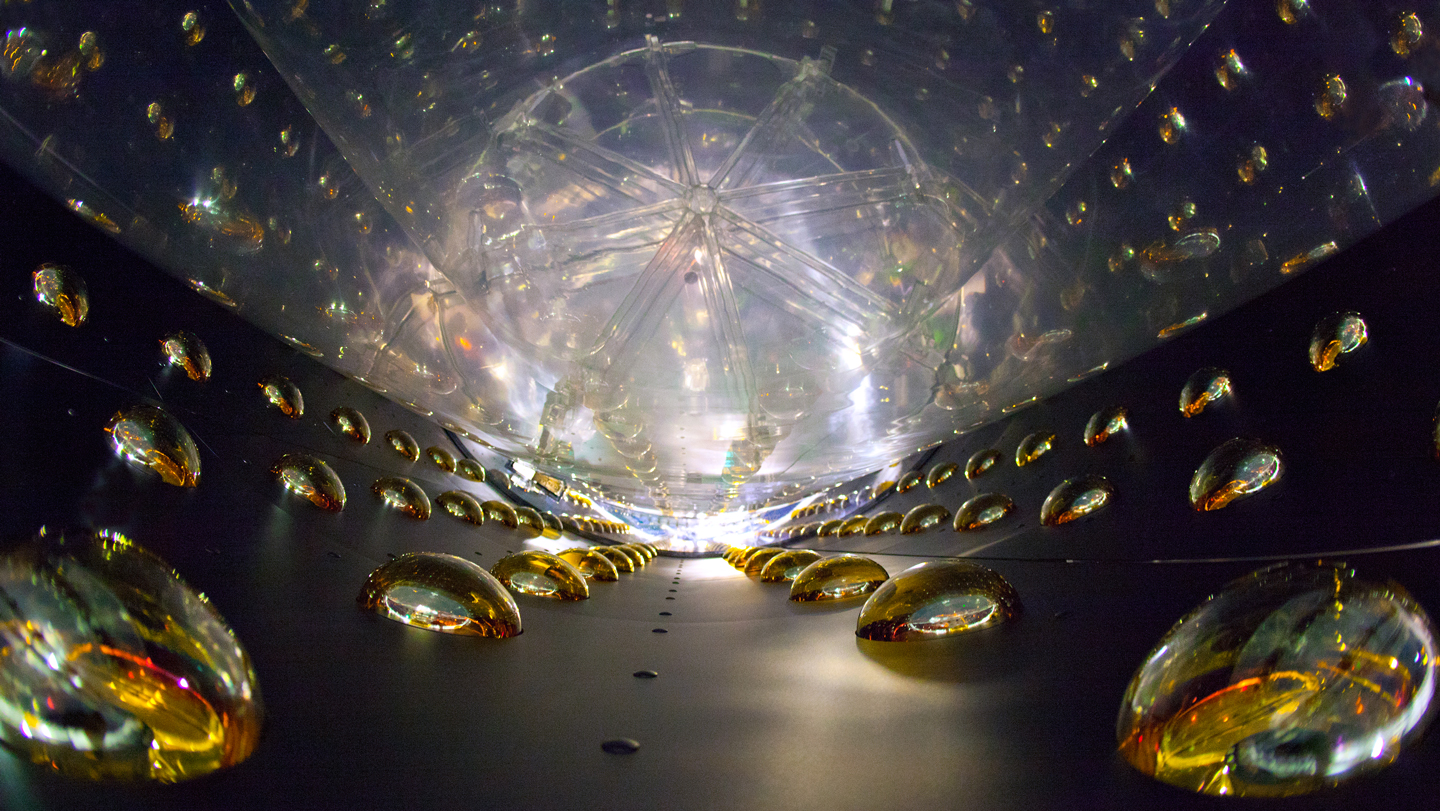
The challenge of detecting neutrinos has led to some of science’s most innovative experiments. Because these particles interact so weakly with matter—trillions pass through your body every second without effect—scientists have built massive detectors deep underground, underwater, and even embedded in Antarctic ice. The IceCube Neutrino Observatory at the South Pole, for instance, uses a cubic kilometer of instrumented ice to catch the rare blue flashes produced when neutrinos occasionally interact with matter. Super-Kamiokande in Japan holds 50,000 tons of ultra-pure water surrounded by thousands of light sensors. These extraordinary facilities have not only confirmed neutrinos’ strange behavior of oscillating between three “flavors” (electron, muon, and tau) as they travel, but have also opened new fields of astronomy by detecting neutrinos from distant cosmic sources, including supernova explosions and violent events like black hole mergers that accelerate particles to extreme energies.
Neutrino research has significantly expanded our cosmological understanding, providing insights into processes invisible through conventional electromagnetic astronomy. Unlike light, neutrinos escape virtually unimpeded from dense environments like stellar cores or the early universe, carrying information otherwise inaccessible to astronomers. The detection of neutrinos from supernova 1987A marked astronomy’s first observation of these particles from beyond our solar system, confirming theoretical models of stellar collapse and neutron star formation. More recently, the blazar TXS 0506+056 was identified as a source of high-energy cosmic neutrinos, establishing neutrinos as messengers from the most energetic processes in the universe. Cosmologists also study the cosmic neutrino background—relic particles from just seconds after the Big Bang—which potentially holds critical information about the universe’s earliest moments, complementing what we’ve learned from the cosmic microwave background.
The discovery that neutrinos oscillate between flavors, indicating they possess mass, represents one of the few confirmed phenomena beyond the Standard Model of particle physics. This fundamental framework, which describes all known elementary particles and their interactions, had no mechanism for neutrino mass in its original formulation. Scientists now explore whether neutrinos get their mass through the same Higgs mechanism as other particles or through some entirely different process. These investigations connect to larger questions about symmetry in physical laws and whether neutrinos might be their own antiparticles (Majorana fermions)—a property that would distinguish them from all other known matter particles and potentially explain the universe’s matter dominance through a process called leptogenesis. Experiments like KATRIN in Germany are pushing technological boundaries to directly measure neutrino mass, while others search for an extremely rare nuclear process called neutrinoless double-beta decay that would confirm their Majorana nature.
Beyond fundamental physics, neutrino science has practical applications and inspires technological innovation. Neutrino detectors have been proposed for nuclear non-proliferation monitoring, as operating nuclear reactors produce distinctive neutrino signatures that cannot be shielded or disguised. The development of these detectors has driven advances in photosensor technology, data processing, and cryogenic systems with applications extending beyond particle physics. Neutrino research has also fostered international scientific collaboration, with projects like the Deep Underground Neutrino Experiment (DUNE) bringing together scientists from dozens of countries. This experiment will send a beam of neutrinos 1,300 kilometers through the Earth from Fermilab near Chicago to a massive detector in South Dakota, studying not only neutrino properties but also potential signs of proton decay and neutrinos from supernova explosions, should one occur in our galaxy during the experiment’s operation.
The future of neutrino physics promises even more discoveries and surprises. Next-generation experiments aim to resolve remaining mysteries, including the exact ordering of neutrino masses (the “mass hierarchy”), whether neutrinos violate charge-parity symmetry (potentially explaining the universe’s matter-antimatter imbalance), and whether additional “sterile” neutrino types exist beyond the three known flavors. Researchers also hope to detect the cosmic neutrino background, a challenging goal that would provide unprecedented insight into the universe’s first seconds. Astrophysicists anticipate that neutrino astronomy will continue to develop, with improved detectors capable of observing neutrinos from more distant and diverse cosmic sources. Each advancement in this field not only enhances our understanding of these fundamental particles but also illuminates broader questions about the nature of matter, energy, and the universe’s evolution. The humble neutrino, once thought to be an almost hypothetical particle, has become central to humanity’s quest to understand the cosmos at its most fundamental level.