


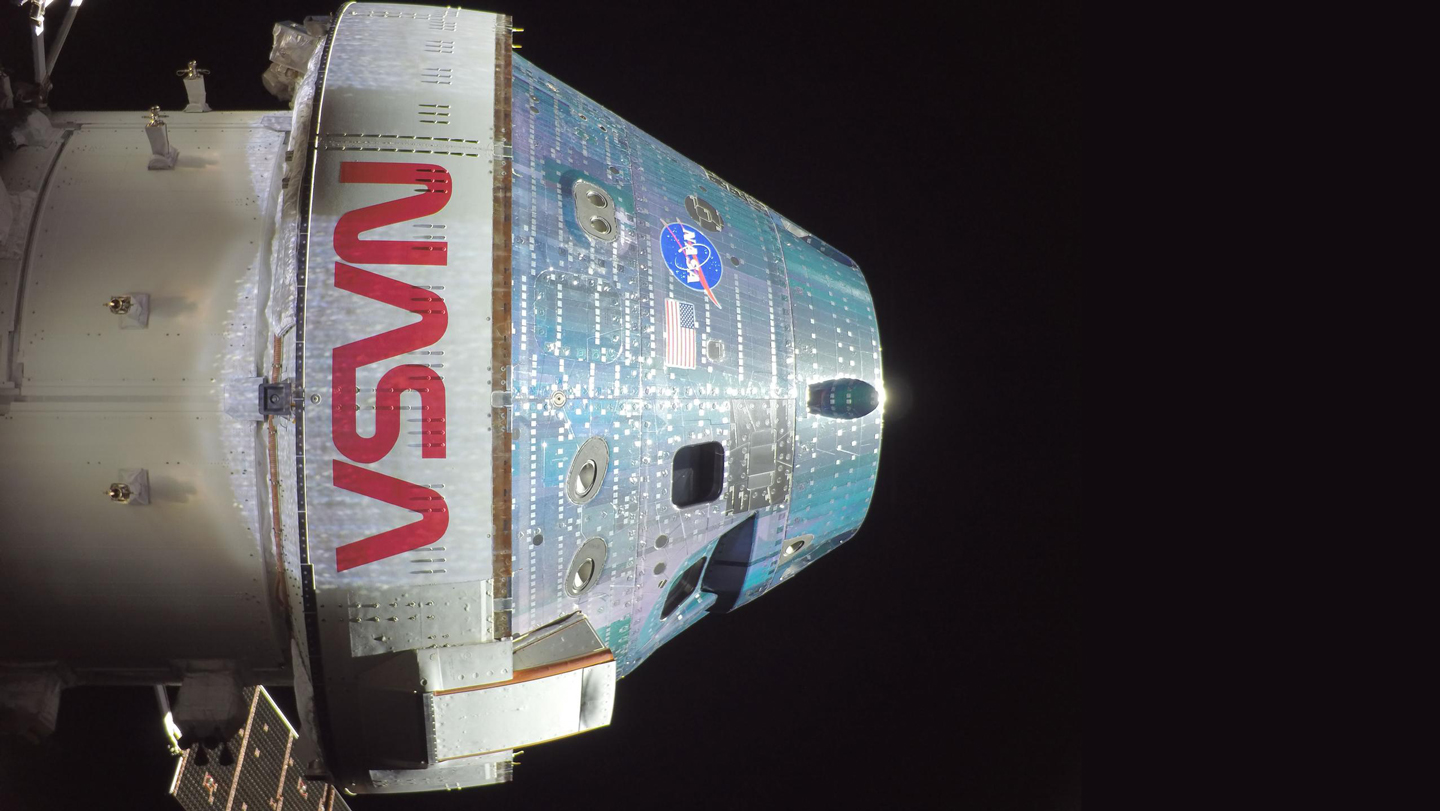
The excitement in the air at NASA’s Johnson Space Center in Houston was palpable, a mix of anticipation and awe that echoed the dreams of countless generations who gazed at the moon and wondered what lay beyond. Five days into their remarkable journey aboard the Orion spacecraft, four pioneering astronauts were on the cusp of a moment that humanity had waited over half a century to witness—the first human view of the moon’s enigmatic farside in such vivid detail. It wasn’t just a flyby; it was a testament to perseverance, blending the thrill of exploration with the quiet introspection of stepping into the unknown. Commander Reid Wiseman, with his seasoned astronaut eyes and a resume full of spacewalks, described the crew’s state of mind as a blend of professional focus and childlike wonder, much like kids crowding around a telescope during an eclipse. Pilot Victor Glover, NASA’s first Black astronaut to soar into deep space, reflected on the weight of history, recalling how his own dreams of space began in the pages of science fiction novels. Christina Koch, the record-holder for the longest spacewalk by a woman, shared how her training had prepared her for the emotional high of witnessing Earth’s lonely twin up close, a sphere that has captivated poets and scientists alike. Meanwhile, Canadian astronaut Jeremy Hansen, chosen from a pool of talented contenders, spoke with quiet pride about representing his nation’s renewed spirit of innovation. Together, they embodied the mosaic of human ingenuity that has turned moon landings from impossibility to near-reality once more.
As Orion edged into the lunar sphere of influence on this fateful day in November 2025, the gravitational dance between Earth and moon felt almost poetic, a celestial ballet that tugged at the spacecraft like an invisible thread. The team had trained for years—simulating every possible scenario in chambers that mimicked the cold vacuum of space—knowing that success hinged on not just technology, but trust in one another. Christina, with her background in geology and astronomy, had pored over lunar maps, anticipating the landmarks they’d glimpse. Her thoughts wandered to the early probes that had sent grainy images of the farside back to Earth, but nothing compared to the raw, unfiltered spectacle awaiting them. Reid, ever the strategist, focused on the mission’s logistics, ensuring every system hummed in harmony, while Victor drew parallels to his previous mission on the International Space Station, where he orbited Earth thousands of times. Yet, these experiences paled against the loneliness of deep space, where Earth shone brightly behind them like a distant home—one they might never see again if things went awry. The farside, shrouded in mystery, had always been off-limits to human eyes, photographed only by orbiters and marked by craters named after forgotten scholars. For Jeremy, this flyby was personal; it evoked memories of his childhood in Newfoundland, staring at the night sky and imagining himself among the stars.
The flyby itself, scheduled from 2:45 p.m. to 9:40 p.m. Eastern time, promised to be a symphony of wonder and precision, with the spacecraft looping around the moon’s hidden side. Lisa Grossman, a sharp astronomy reporter from Science News, chronicled the event from Houston, her laptop buzzing with updates as the crew prepared for their brief but intense observation window. Only about 20 percent of the farside would be bathed in sunlight during the flyby, yet the astronauts anticipated a clearer view than ever before, thanks to Orion’s trajectory that skimmed closer than most robotic probes. Veteran astronaut Reid Wiseman, leading the charge, likened it to flipping a mysterious picture frame to reveal hidden details—craters yawning like ancient scars, ridges twisting like forgotten roads. Christina, her heart racing, thought of the scientific treasure trove: lunar samples that could rewrite textbooks on the solar system’s formation. Victor, scanning instruments with practiced calm, dreamed of capturing images that might one day guide future landings, perhaps even permanent bases. Jeremy, peering through the perspective of his colleagues, felt the adrenaline of participating in a chapter of history that transcended borders.
Science permeated every moment, as the crew seized their few hours in the moon’s gravitational embrace to conduct observations that could unravel cosmic secrets. Trained extensively in geology and astronomy, Christina delighted in the prospect of identifying unique features like the Apollo 12 and 14 landing sites, scarred gently by earlier human footprints. The eclipse, where the moon eclipsed the Sun from Orion’s vantage, promised a breathtaking blackout, a reminder of the fragility of existence in space. Meteorite strikes, flashing like distant fireworks, added a touch of drama to this ballet of celestial bodies. Lisa Grossman noted how these glimpses might reveal volcanic ash deposits or water ice, fueling hopes for sustainable exploration. For the crew, it was more than data points; Reid shared how such views ignited personal reflections on humanity’s place in the universe, echoing the introspective musings of ancient philosophers. Victor, with his artistic eye, mused on photographing Earthrise-like scenes from behind the moon. Jeremy, drawing from his engineering background, marveled at the technological leaps that made this possible, from Apollo’s clunky modules to Orion’s sleek design.
The significance of Artemis II extended far beyond this single flyby, tying into a broader tapestry of human ambition and collaboration. After Apollo’s final steps in 1972, the moon had waited patiently—its craters silent witnesses to Earth’s frenzy. NASA’s Artemis program, named after Apollo’s twin sister in Greek mythology, aimed to return astronauts to the lunar surface and beyond, this time with diversity and sustainability in mind. Reid Wiseman, who had flown on the Space Shuttle before, saw it as a bridge to Mars, emphasizing how these incremental steps built the foundation for interplanetary journeys. Christina Koch’s story inspired countless girls; her path from a small-town dreamer to orbiting the farside underscored the power of perseverance. Victor Glover, part of NASA’s diverse astronaut class, carried the hopes of communities long underrepresented in space. Jeremy Hansen, with roots in Canadian aviation, highlighted international partnerships that turned solo acts into global symphonies. The mission’s success would kindled hope for future habitats on the moon, mining helium-3 or studying cosmic rays unfiltered by Earth’s magnetic field.
In the end, as Orion emerged from the lunar shadow and sunlight danced across its hull, the astronauts carried home not just data, but a profound sense of connection to the cosmos. Lily Grossman, from her vantage in Houston, captured the crew’s post-flyby reflections—tears mixed with laughter, exhaustion yielding to exhilaration. For Reid, it was a validation of dreams; Victor, a call to action for environmental stewardship on both worlds; Christina, a spark for scientific curiosity in young minds; Jeremy, a testament to peaceful exploration. This wasn’t merely a mission; it was a reflection of humanity’s indomitable spirit, urging us to look beyond our blue planet and dream anew. As science continues its march, supported by voices like those at Science News, we inch closer to the stars, our shared cosmic home.