


Nature’s Precision: How Mosquito Proboscises Are Revolutionizing 3D Printing
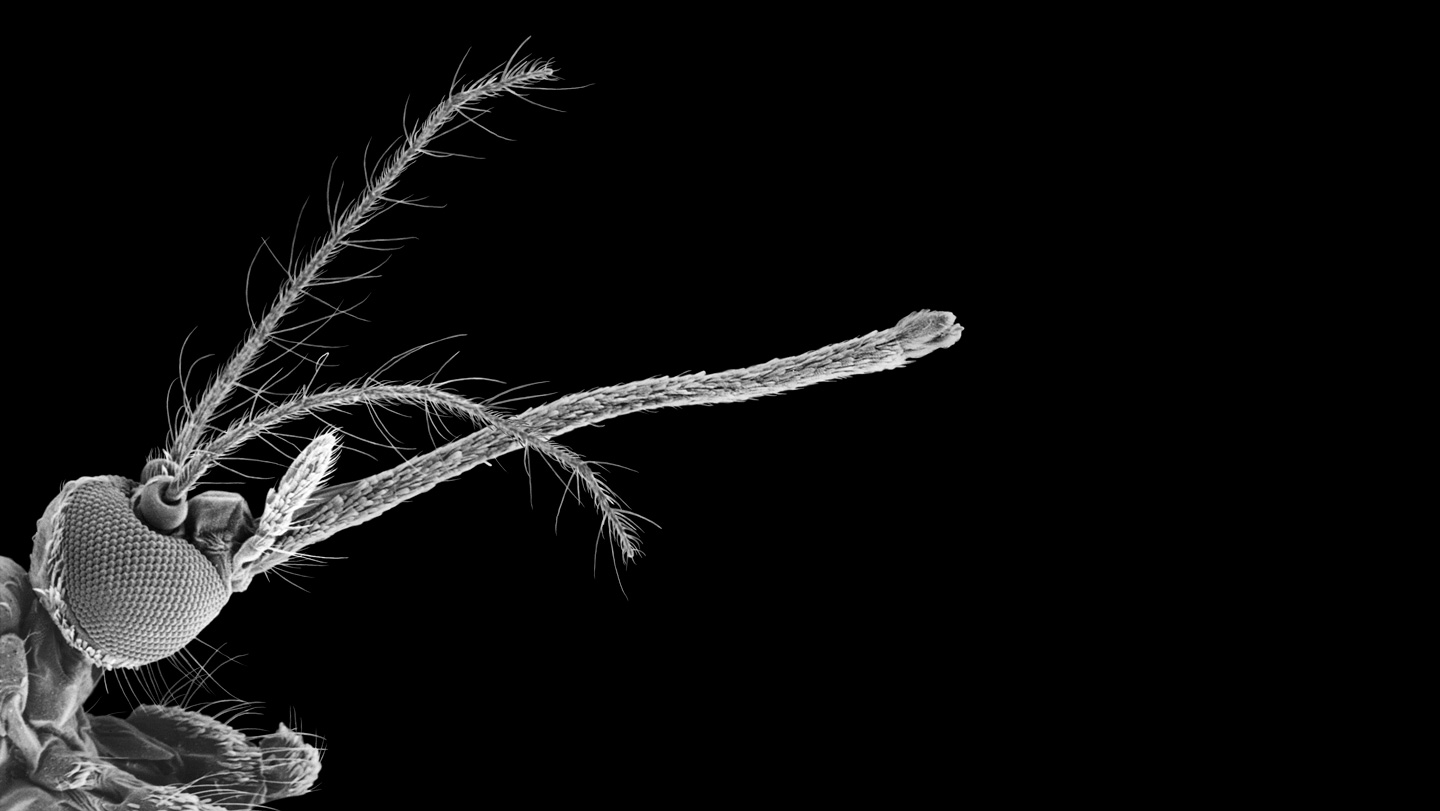
In a fascinating convergence of nature and technology, researchers have discovered that the humble mosquito—specifically the female Aedes aegypti—possesses a biological tool that outperforms modern engineering in precision manufacturing. The mosquito’s proboscis, that slender appendage responsible for many itchy summer evenings, has proven to be an exceptional nozzle for ultra-fine 3D printing. This innovative approach, detailed in the November 21 issue of Science Advances, represents a significant breakthrough in the emerging field of “necroprinting”—a term derived from necrobotics, which repurposes animal parts for technological applications. The research team, led by mechanical engineer Changhong Cao, has successfully utilized these biological nozzles to create intricate structures with line widths measuring just 20 micrometers—about half the width of a fine human hair and significantly finer than what conventional technology can achieve. This natural tool outperforms even the best commercially available dispense tips, which typically have inner diameters of 35-40 micrometers, making the mosquito proboscis an unparalleled instrument for microscale fabrication.
What makes the mosquito proboscis particularly suitable for this application is its unique structure and physical properties. After evaluating numerous biological candidates including stingers, fangs, and harpoons, researchers identified the female Aedes aegypti mosquito’s proboscis as ideal due to its relatively straight shape, narrow inner diameter of 10-20 micrometers, and remarkable pressure tolerance. These characteristics allow it to withstand the forces necessary to extrude printing materials while maintaining exceptional precision. The implementation wasn’t straightforward, however; the team initially planned to adapt the proboscis to existing commercial printers but discovered that standard equipment couldn’t generate sufficient pressure to push materials through such a fine channel. This challenge led them to design a custom printer specifically engineered around the mosquito proboscis, coating it with 3D resin for stability and creating an engineered tip that formed a continuous pathway for ink flow. This adaptation demonstrates not only the ingenuity of the research team but also highlights how biological structures can inspire entirely new approaches to engineering challenges.
To showcase the capabilities of this biological printing nozzle, the research team produced several demonstrative structures with remarkable precision. Using commercially available bioink, they printed a honeycomb shape, a delicate maple leaf outline, and perhaps most impressively, a scaffold designed to hold biological cell samples. The maple leaf structure particularly demonstrated the exceptional resolution of this technique, with each line measuring approximately 18 micrometers wide. According to Jianyu Li, a biomaterials engineer at McGill University and co-author of the study, “This biological, nature-derived sample is much better than engineered material.” The level of detail achievable with these biological nozzles opens new possibilities for applications requiring microscale precision, from creating tissue engineering scaffolds to manufacturing microelectronic components. The ability to work at this scale with relative ease could accelerate development across multiple high-tech fields that currently struggle with the limitations of conventional manufacturing methods.
Beyond the immediate technical advantages, this research represents a promising approach to sustainable manufacturing in advanced microengineering. Daniel Preston, a mechanical engineer at Rice University who wasn’t involved in the study, notes that conventional dispense tips can be both expensive and difficult to fabricate. By leveraging parts that nature has already perfected through millions of years of evolution, researchers can potentially “democratize” 3D printing by “lowering costs and removing barriers to entry.” This perspective highlights how biomimicry—the practice of emulating nature’s time-tested patterns and strategies—continues to offer elegant solutions to complex engineering problems. The study exemplifies a growing recognition that biological structures often achieve levels of efficiency and precision that human-engineered components struggle to match, despite our advanced manufacturing capabilities. As Preston observes, incorporating biotic materials into technological processes could enable entirely new capabilities while simultaneously reducing resource consumption and environmental impact.
The implications of this research extend far beyond creating slightly more precise 3D printers. The integration of biological components with advanced manufacturing techniques represents a philosophical shift in how we approach technology development. Rather than trying to replicate natural functions through complex engineering, this approach directly harnesses biological structures that have been refined through evolutionary processes. This concept of necrobotics has already shown promise in other applications, such as using spider legs as robotic grippers, suggesting a broader potential for incorporating biological components into technological systems. The mosquito proboscis printer demonstrates how relatively simple organisms possess sophisticated structures that can outperform purpose-built industrial components. This realization invites researchers to reconsider the boundaries between living and non-living systems in technology development, potentially leading to a new generation of hybrid bio-mechanical systems that combine the best aspects of both domains.
Looking toward the future, the research team envisions numerous applications for this technology, particularly in biomedicine. Jianyu Li’s lab is already exploring the use of the mosquito proboscis as a microneedle for drug delivery systems, leveraging its natural ability to penetrate surfaces with minimal damage. This application could potentially revolutionize targeted medication delivery, allowing for more precise administration with reduced side effects. Similarly, the exceptional resolution of necroprinting could enable the creation of sophisticated tissue engineering scaffolds that more accurately mimic natural cellular environments, potentially accelerating advances in regenerative medicine. As Preston notes, he’s “looking forward to seeing other biotic materials incorporated in the 3D printing process to enable new capabilities.” This anticipation reflects a growing recognition that the boundaries between technology and biology are increasingly blurred, with each domain offering valuable lessons to the other. By embracing nature’s solutions rather than trying to engineer around them, researchers may discover more efficient, sustainable pathways to technological advancement across numerous fields, from medicine and manufacturing to robotics and beyond.