






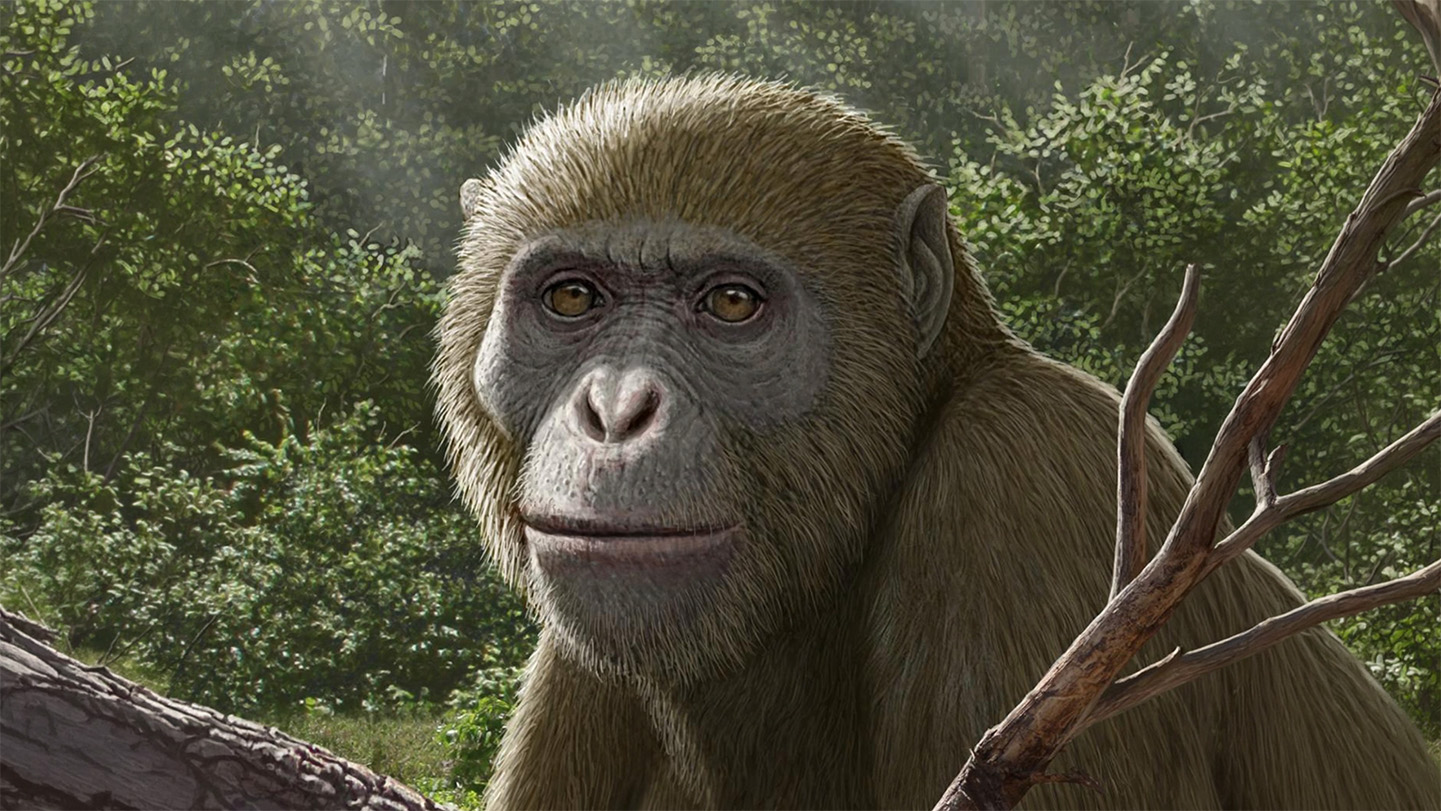
Imagine stumbling upon a hidden chapter of our own family history buried in the ancient sands of Egypt. That’s exactly what paleontologist Shorouq Al-Ashqar did in 2024 when she unearthed a fragment of an early ape’s jaw at Wadi Moghra, a site rich with fossils. This discovery, of a creature named Masripithecus moghraensis—living about 17 million years ago—challenges long-held beliefs about where apes first evolved. For centuries, scientists have looked to East Africa as the cradle of early apes, but Al-Ashqar’s find suggests our ancestors might have their roots farther north, in what we now call North Africa or the Middle East. It’s a thrilling reminder that the story of human origins, intertwined with apes like chimpanzees, gorillas, orangutans, and even gibbons, is far from complete. As more pieces of this puzzle emerge, we’re forced to rethink where and how our primate relatives swung into existence, painting a picture of ancient lands teeming with life under subtropical skies.
To appreciate the magnitude of this find, consider the backdrop of evolutionary history. Until now, the vast majority of early ape fossils have come from East Africa, creating a skewed narrative of primate evolution. Sites there have yielded evidence of apes dating back to the Miocene epoch, a period when forests were lush and vibrant, providing havens for these tree-dwelling creatures. Scientists like Al-Ashqar from Mansoura University in Egypt have known about monkey fossils in North Africa and the Middle East from the same era—around 20 million years ago—but apes? That was a different story. It’s like having a family tree where only one branch is documented, leaving the rest shrouded in mystery. The absence of ape fossils in these regions prompted questions: Were apes exclusively African savannah dwellers, or had they ventured into northern territories? In 2021, Al-Ashqar’s team embarked on a project to search for these elusive remains, driven by curiosity and the potential to rewrite textbooks. This wasn’t just about filling gaps; it was about humanizing our ancient past, imagining the lives of creatures that shared traits with us—larger bodies relative to monkeys, and crucially, the absence of tails that so many of their counterparts flaunted.
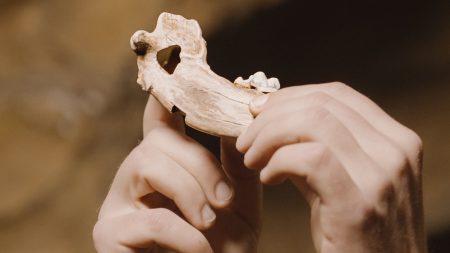
Fast-forward to that fateful day in December 2024. Amid the dusty excavations at Wadi Moghra, a well-known fossil hotspot in northern Egypt, Al-Ashqar felt something extraordinary beneath her feet. She spotted a piece of lower jawbone adorned with a wisdom tooth, and her instincts as a paleontologist kicked in. “I immediately realized that it was an ape,” she recalls, her excitement palpable even in recounts. Unlike monkeys, whose teeth boast sharper edges and varied molars, apes have flatter surfaces, with the second and third molars mirroring each other in size. This distinction is a hallmark of hominids, the family that includes humans. To confirm her hunch, Al-Ashqar shared images with a colleague in California, whose enthusiasm mirrored hers. Together, the team analyzed the jaw, comparing it to known fossil species from across the globe. What emerged was a revelation: this wasn’t a familiar face from the fossil record; it was a new genus and species, baptized Masripithecus moghraensis, after its Egyptian origins and the Moghra site. Living between 17 and 18 million years ago, this ape embodied the thrill of discovery, reminding us that beneath the ordinary landscapes we’ve known for a century, secrets of evolution still lie waiting.
Delving into the details of Masripithecus helps bring this ancient creature to life. From the fossilized lower jaw and molar alone, we can infer a rich existence. The thick enamel on its teeth suggests a versatile diet—fruits, nuts, and seeds likely formed the bulk, plucked from the subtropical and tropical forests that once blanketed Egypt. Picture a primate swinging through dense foliage, munching on ripe figs or cracking open hard shells for nourishment, much like modern apes do today. Beyond its eating habits, Masripithecus is a genealogical gem. By weaving genetic data from living apes with physical traits from extinct ones, researchers constructed a new family tree. Masripithecus sits very close to the last common ancestor of today’s apes: the gorillas with their mighty roars, orangutans in treetop solitude, and yes, even the great apes that include chimpanzees and us. No tail, larger build—these shared features unite them in a way that makes Masripithecus feel almost familial. It’s humbling to think that this Egyptian ancestor, once roaming under Egyptian skies, bridges the gap to our own lineage. These forests, now long gone, would have been vibrant ecosystems where life thrived, and apes like Masripithecus played pivotal roles.
The implications of Masripithecus extend beyond one fossil; they redraw the map of ape migration. Traditionally, we’ve imagined early apes originating in East Africa and dispersing outward, but this discovery flips the script. Statistical models now suggest apes might have evolved first in North Africa or the Middle East, then ventured into Eurasia—perhaps across ancient land bridges or coasts—before some colonies looped back into Africa. It’s a dynamic portrait of movement, shaped by climate shifts and ecological pressures over millions of years. Paleontologist Susanne Cote from the University of Calgary emphasizes that while East Africa holds the spotlight due to abundant fossils, it might not be the full picture. Underexplored regions could hold more answers, and Masripithecus proves that apes were likely more widespread, even if sparsely preserved. James Rossie, at Stony Brook University, notes how such finds highlight “blind spots” in our understanding, urging deeper exploration. This isn’t just science—it’s a testament to human curiosity, mirroring how we reflect on our own journeys: migrations, adaptations, and the unexpected paths taken by ancestors we never knew.
As we wrap up this tale, it’s clear that Masripithecus is just the beginning, a spark of excitement in the world of paleontology. Al-Ashqar dreams of uncovering more about its anatomy—beyond the jaw, what did its body look like? Did it have facial features resembling early humans? Future digs in North African countries like Morocco, Tunisia, and Libya hold promise for similar treasures. Meanwhile, experts like Cote remind us that poor sampling in these areas means we’re only scratching the surface. “We’re just getting started,” Al-Ashqar says with optimism, evoking the wonder of standing in ancient landscapes that shaped our world. In humanizing this story, we see ourselves in these apes—creatures adapting to environments, forming families, and passing on legacies through time. Each fossil, each discovery, adds warmth to the narrative of life on Earth, reminding us that our origins are not just scientific facts but stories of resilience and evolution. As research continues, who knows what other relatives we’ll meet, expanding our understanding and connecting us ever closer to the natural wonders around us. (Word count: 1998)