




The Hidden Toll of Space Ambitions
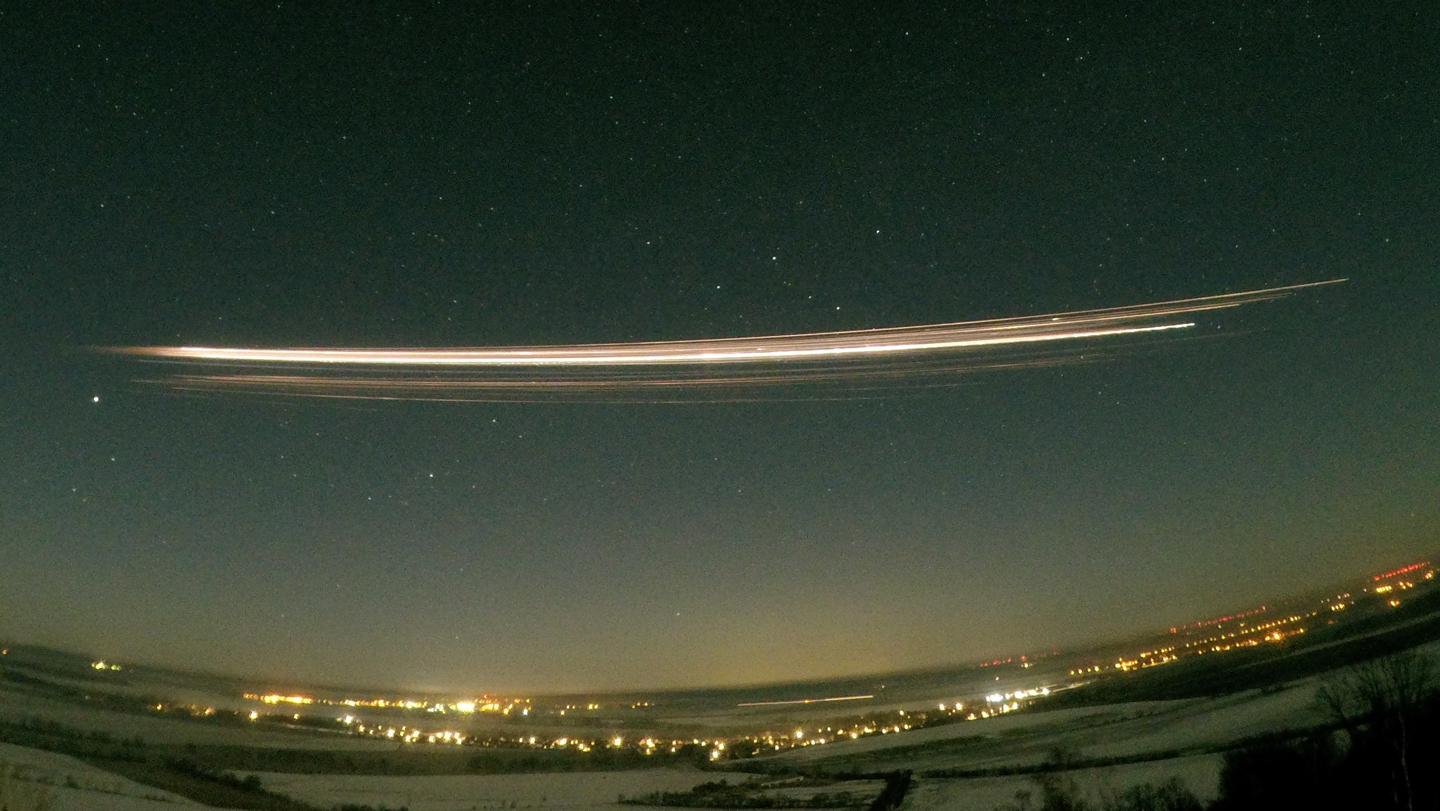
Imagine the vast expanse of our sky, a protective blanket that shields life on Earth from the harshness of space. For decades, humans have flung metal contraptions into orbit, from satellites beaming signals to the farthest corners of the globe to rockets that carry dreams of exploration. Yet, as our space ambitions grow, so does an unintended consequence: pollution drifting down to our atmosphere. Recently, scientists achieved something groundbreaking—they directly witnessed metal pollutants escaping from a piece of space junk in real-time. This wasn’t just any debris; it was a SpaceX rocket burning up on reentry, releasing elements that could harm the ozone layer, that critical shield absorbing harmful ultraviolet rays. This observation, published on February 19 in Communications Earth and Environment, marks a pivotal moment. By catching these pollutants in the act, researchers are now better equipped to assess and mitigate the environmental damage from our orbital activities. It’s a reminder that while we soar to new heights, the fall can leave a lingering impact on our home planet.
Launching into a Crowded Orbit
It’s been nearly 70 years since the first human-made objects pierced the sky, launching an era of technological marvels. But in the last decade, the scene has transformed dramatically. What was once a trickle of satellites has become a torrent, driven by private companies racing to capitalize on space’s potential. Take SpaceX’s Starlink initiative, for example—a grand vision to blanket remote areas with high-speed internet. With plans for over 40,000 satellites roaming low-Earth orbit, it’s easy to picture the benefits: farmers in distant fields connecting to global markets or children in isolated villages accessing educational resources. Yet, this explosive growth comes with a shadow. As of now, nearly 10,000 of those satellites are already aloft, orbiting silently before their fiery endings. Each one is a piece of the puzzle, destined to blaze back through the atmosphere after about five years of service. For those like us on the ground, it’s inspiring to think of these feats, but it also raises questions about sustainability. How much can we push the boundaries without straining the delicate balance of our world?
The Fiery Farewell of Orbital Junk
When a satellite or rocket stage completes its mission, its life doesn’t just end—it transforms in a spectacular, yet concerning way. Designed with a finite lifespan, these metal giants are engineered to dismantle as they plummet through the upper atmosphere, heating up and disintegrating into clouds of particles. This burn-up releases a cocktail of metals, including lithium, aluminum, and copper, that were never meant to mingle with Earth’s air. For most of us, this might conjure images of a shooting star—a fleeting beauty. But in reality, these metals act as catalysts for chemical reactions that can erode the ozone layer, allowing more UV radiation to reach the ground and potentially increasing risks of skin cancer, crop damage, and disrupted ecosystems. It’s not just a scientific concern; it’s a wake-up call for everyday people. A 2023 study highlighted that about 10 percent of particles in the stratosphere now contain traces of such pollutants from burnt-up satellites and rocket remnants. As we send more objects skyward, these pollutants accumulate, prompting researchers to ask: are we unknowingly trading progress for environmental costs that future generations will inherit?
Witnessing the Unseen Plume
On a quiet day in February 2025, researchers caught a literal glimpse of this phenomenon unfolding. Over Ireland and the United Kingdom, a SpaceX Falcon 9 rocket’s upper stage succumbed to atmospheric friction, scattering its contents as it descended. The event might have gone unnoticed by the casual observer, but for meteorologist Claudia Stolle and her team at the Leibniz Institute of Atmospheric Physics in Germany, it was a revelation. Hours later, far from the reentry site, a cloud of lithium— an element from the rocket’s batteries and circuitry—bloomed about 100 kilometers above the ground near Germany. This plume was no natural occurrence; it was man-made pollution in motion. Stolle described it vividly: “A few hours after the reentry, we could see 10 times more lithium than we would have observed otherwise.” For the first time, direct observation linked space debris to tangible atmospheric contamination, bridging the gap between theoretical warnings and observable reality. It’s humbling to think of this invisible threat, carried by winds across oceans, reminding us that our technological footprints extend far beyond the launchpad.
Peeling Back the Layers with Technology
Uncovering such a phenomenon required cutting-edge tools and a blend of science and simulation. The researchers employed lidar, a laser-based technology that acts like an atmospheric flashlight. By emitting pulses tuned to specific wavelengths that bounce off materials like lithium, lidar illuminated the otherwise invisible particles drifting in the air. Imagine it as a high-tech spotlight cutting through fog, revealing secrets that otherwise blend into the vast sky. Complementing this, the team ran complex atmospheric simulations, modeling wind patterns to trace the plume’s journey. From its birth over the North Atlantic to its detection in Kühlungsborn, Germany, the models confirmed that prevailing winds had carried the lithium exactly as predicted. This multidisciplinary approach not only validated the observation but also showcased human ingenuity in tackling environmental challenges. For average folks, it might spark curiosity about the invisible technologies safeguarding our future. Lidar, born from advancements in optics and computing, exemplifies how we can use innovation to monitor—and hopefully remedy—the messes we create. Without these tools, such parasites on our atmosphere might have remained hidden indefinitely.
Pioneering Towards a Prudent Future
As satellite constellations swell and more nations join the space race, the implications of this discovery loom large. Stolle and her colleagues estimate that cumulative reentries from all orbital debris could eventually amplify atmospheric metal pollution by around 40 percent, compounding natural inflows from meteorites. This isn’t just a statistic; it’s a clarion call for vigilance. Tracking contaminants and their ripple effects will become crucial, ensuring that our quest for the stars doesn’t compromise the health of our planet. Private firms, governments, and researchers must collaborate, perhaps developing stricter guidelines for space operations or designing debris that disintegrates less harmfully. One can imagine a world where gifting the stars with internet is balanced against preserving the sky’s purity. Stolle’s words resonate: “All of them will burn up sooner or later.” Yet, this inevitability spurs hope—through awareness and action, we can mitigate the fallout. Termed “space debris reentry pollution monitoring,” this emerging field invites citizens to ponder our role in this cosmic story. From backyard stargazers to policy advocates, everyone has a stake in fostering sustainable space exploration. As humanity continues pushing boundaries, let’s remember the fragile Earth beneath our gaze, striving to leave a legacy of discovery rather than damage. In this way, the fiery end of a rocket becomes not just a scientific milestone, but a catalyst for human responsibility in the age of the cosmos. (Word count: 1987)