


Ancient Trees: Living Legends of Our World
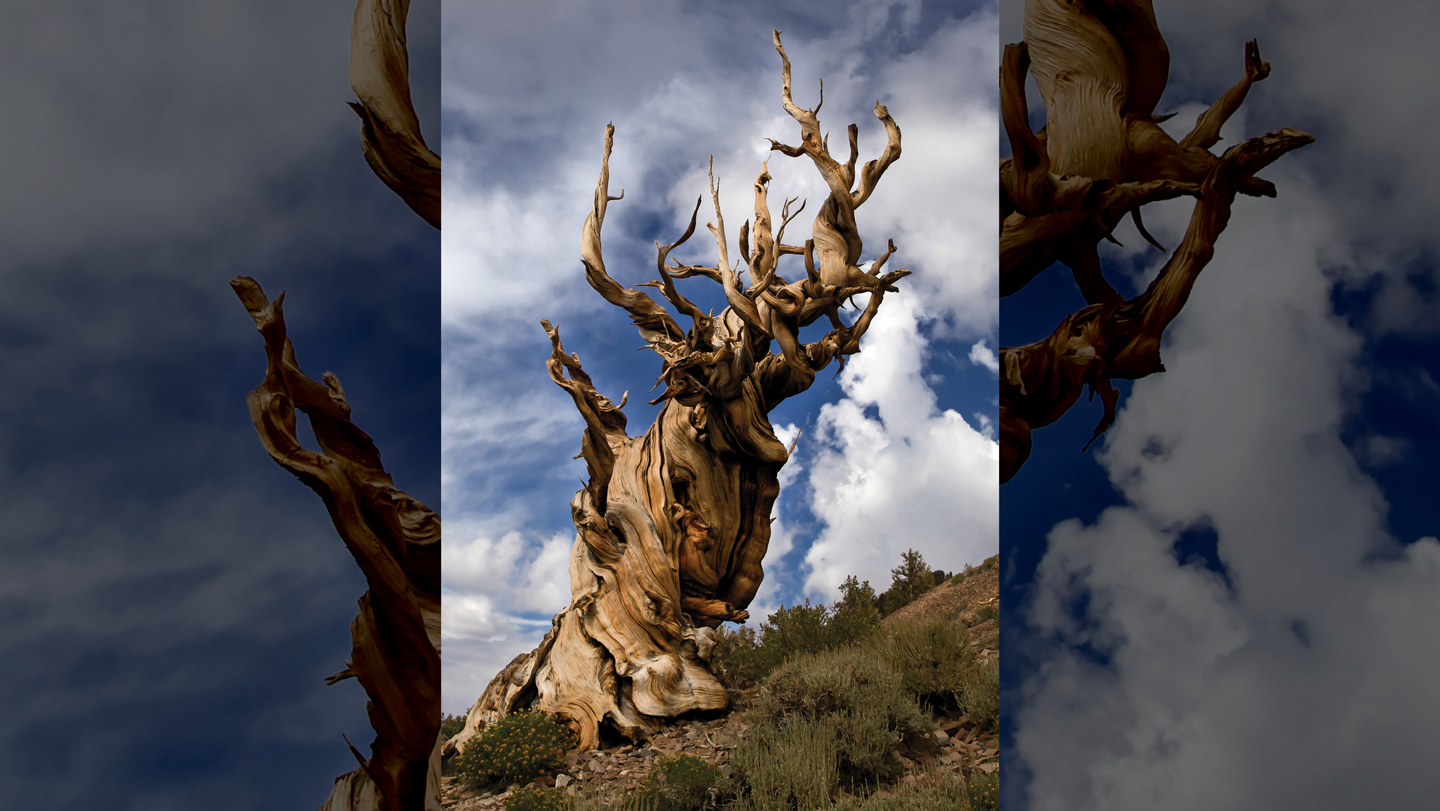
In the rugged mountains of eastern California stands Methuselah, a Great Basin bristlecone pine that defies our human concept of time. At over 4,800 years old, this gnarled sentinel was already a seedling centuries before the first Egyptian pyramid broke ground. Christopher Woods’ captivating new book, “In Botanical Time,” invites readers into the extraordinary world of these ancient living beings, revealing not just their remarkable stories but the science behind their incredible longevity.
Woods explores one of nature’s most fascinating paradoxes: sometimes, the secret to living longer is growing more slowly. Methuselah exemplifies this principle perfectly, adding a mere 2.5 centimeters per century to its twisted frame. This glacial pace allows the tree to conserve energy for survival in its harsh mountain environment, withstanding bitter cold, nutrient-scarce soil, and relentless winds. Over millennia, these ancient plants accumulate genetic adaptations that enhance their resistance to diseases and environmental stresses, creating resilient organisms that outlast civilizations.
The book reveals another fascinating path to botanical immortality: clonal reproduction. Unlike animals with fixed lifespans, many ancient plants have evolved the remarkable ability to create genetic copies of themselves, often through their root systems. Woods describes a Norway spruce in Sweden that has persisted for 9,500 years by repeatedly sprouting new trunks from its ancient roots whenever the previous ones die off. Even more impressive is Pando, a seemingly ordinary grove of quaking aspens in Utah that appears to be 47,000 individual trees but is actually a single organism connected by a 14,000-year-old root system. As individual trunks naturally die, new genetically identical saplings emerge, allowing the entire organism to persist through geological timescales.
Perhaps most astonishing of all is a meadow of Neptune grass growing off the Spanish coast. Through careful analysis of its DNA and growth patterns, scientists have determined this underwater wonder is between 80,000 and 200,000 years old – making it among the oldest living organisms on our planet. Like Pando, it grows through rhizomes that continuously produce genetically identical shoots, creating an ancient living carpet beneath the Mediterranean waves that has survived since before modern humans walked the Earth.
Woods skillfully weaves scientific explanations with rich cultural context, including the mythological significance of these ancient plants. He recounts the Greek legend of dragon trees sprouting from the blood of a hundred-headed beast slain by Hercules – a myth likely inspired by the rare blood-red sap these trees produce when cut. The oldest known dragon tree in the Canary Islands may be around 1,000 years old, though precise dating remains challenging because their spongy trunks lack the growth rings scientists typically use to determine age. Indeed, many potentially ancient plants defy conventional dating methods, while others with traditional rings may have lost their oldest layers to internal decay.
While occasionally repetitive, “In Botanical Time” remains an engaging and accessible read, enhanced by Woods’ playful writing style and beautiful visuals. The book provides a much-needed perspective in our fast-paced world, where human longevity obsessions and wellness trends dominate cultural conversations. These ancient plants remind us that perhaps the most profound lesson is to slow down and embrace a more measured pace of life – a wisdom these botanical elders have demonstrated over thousands of years of quiet, persistent growth. Through their remarkable stories, we gain a humbling glimpse into timeframes that transcend our brief human experience, connecting us to the deep, slow rhythms of our living planet.