



Humans Play Predator-Prey Game to Understand Wildlife Behaviors
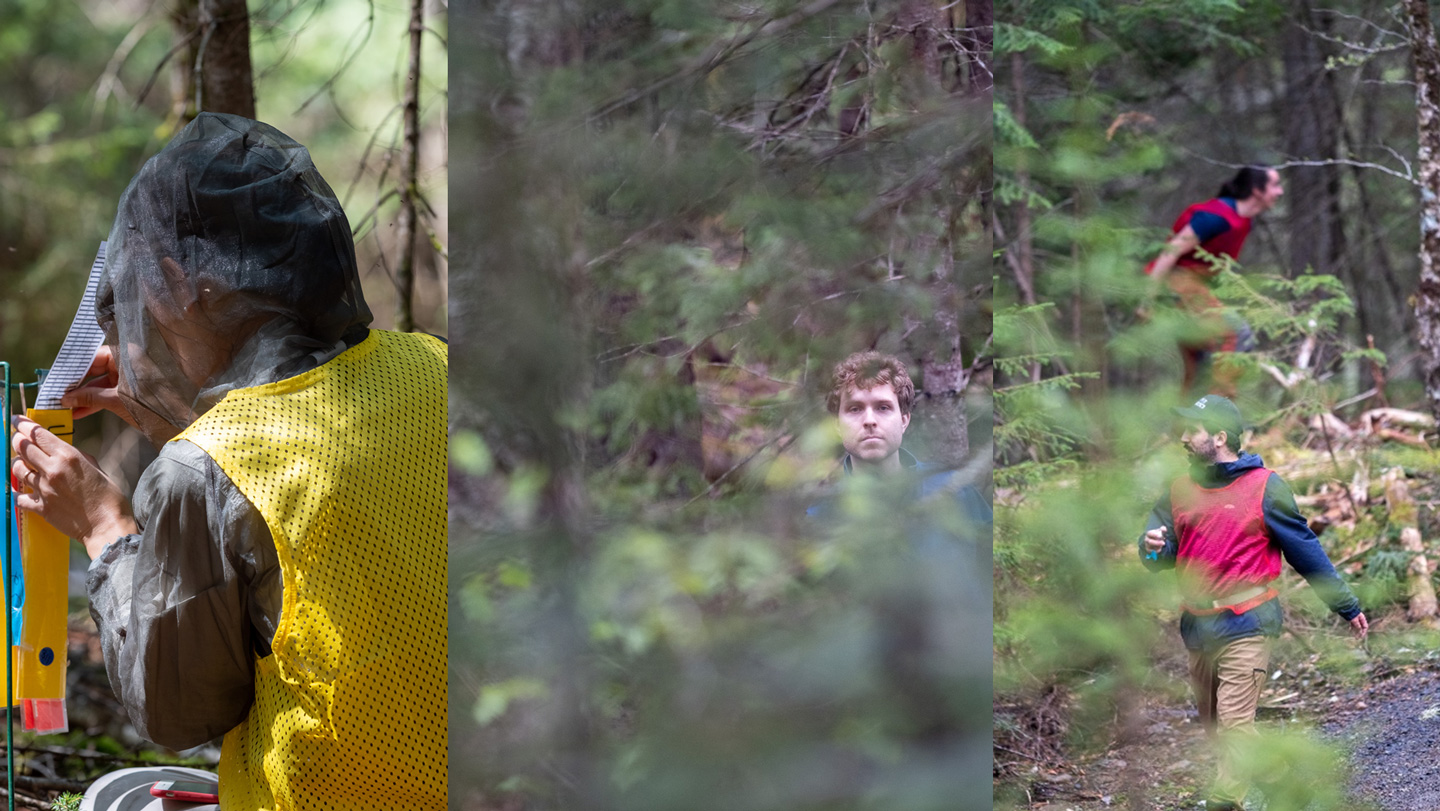
In the forests of Quebec, Canada, a unique experiment is taking place where humans don scientific roles normally reserved for wildlife. Imagine yourself as prey, constantly on alert, scanning your surroundings for danger while still needing to find food and potential mates. This is precisely the experience that ecologist David Bolduc and other researchers from Université Laval have created through an innovative game designed to explore predator-prey dynamics in a controlled yet realistic environment.
“It’s so fun,” says Bolduc about the experience, which blends the thrill of a childhood game with serious ecological research. The Trophic Interactions Experiment, or TrophIE, began as a teaching tool during a 2023 summer school program focused on analyzing complex ecological data. What started as an educational exercise has evolved into a fascinating middle ground between abstract mathematical models and challenging field studies with wild animals.
Biologist Frédéric Dulude-de Broin explains that TrophIE offers “a lot of realism, having real players evolving in a real landscape,” while still allowing researchers to control variables and measure outcomes in ways impossible with actual wildlife. The game’s structure is elegantly simple yet mirrors nature’s complexity: participants wear colored shirts designating their roles as prey, mesopredator (middle-level predators that hunt smaller animals but are hunted by larger ones), or apex predator. During each 30-minute session with 23-31 players, prey must locate food and mates while avoiding capture, mesopredators hunt prey while evading apex predators, and apex predators hunt both other groups. Each player’s movements are precisely tracked using GPS technology.
This human-centered approach offers distinct advantages over traditional wildlife studies. As Bolduc points out, “To do this with animals requires capturing both predators and prey and hoping that they interact.” The game allows researchers to monitor an entire “ecosystem” simultaneously—something nearly impossible in natural settings. Additionally, participants can articulate their experiences, describing sensory inputs like hearing footsteps on fallen leaves or explaining decision-making processes that would remain mysterious with actual animals.
The researchers discovered that player behaviors naturally mirrored wildlife patterns in several key ways. Participants gravitated toward familiar areas, prey avoided exposed main trails that offered greater risk, and the twin imperatives of safety and competition influenced decision-making. However, the human element also introduced creative problem-solving, such as prey players calling for mates from designated safe zones—an unexpected but logical strategy within the game’s parameters.
While the findings provide fascinating insights into predator-prey dynamics, the researchers acknowledge important limitations. Playing a game for fun differs significantly from an animal’s life-or-death struggle for survival. Liana Zanette, a wildlife ecologist at Western University not involved with the study, praises TrophIE as “really quite brilliant” for educational purposes but cautions that any conclusions should be verified through studies with actual wild animals.
Despite these limitations, the game offers something numbers alone cannot: embodied understanding. After each session concludes, players engage in animated discussions about their experiences, comparing strategies and reactions. As Bolduc observes, “These are things we read about, but feeling them really kind of unlocks another part of your brain.” By temporarily stepping into the role of predator or prey, researchers gain a visceral understanding of the ecological principles that shape wildlife behavior—a unique perspective that might ultimately enhance conservation efforts and ecological models through this innovative blend of play and science.