



The Ingenious Deception of the Black-Bulb Yam
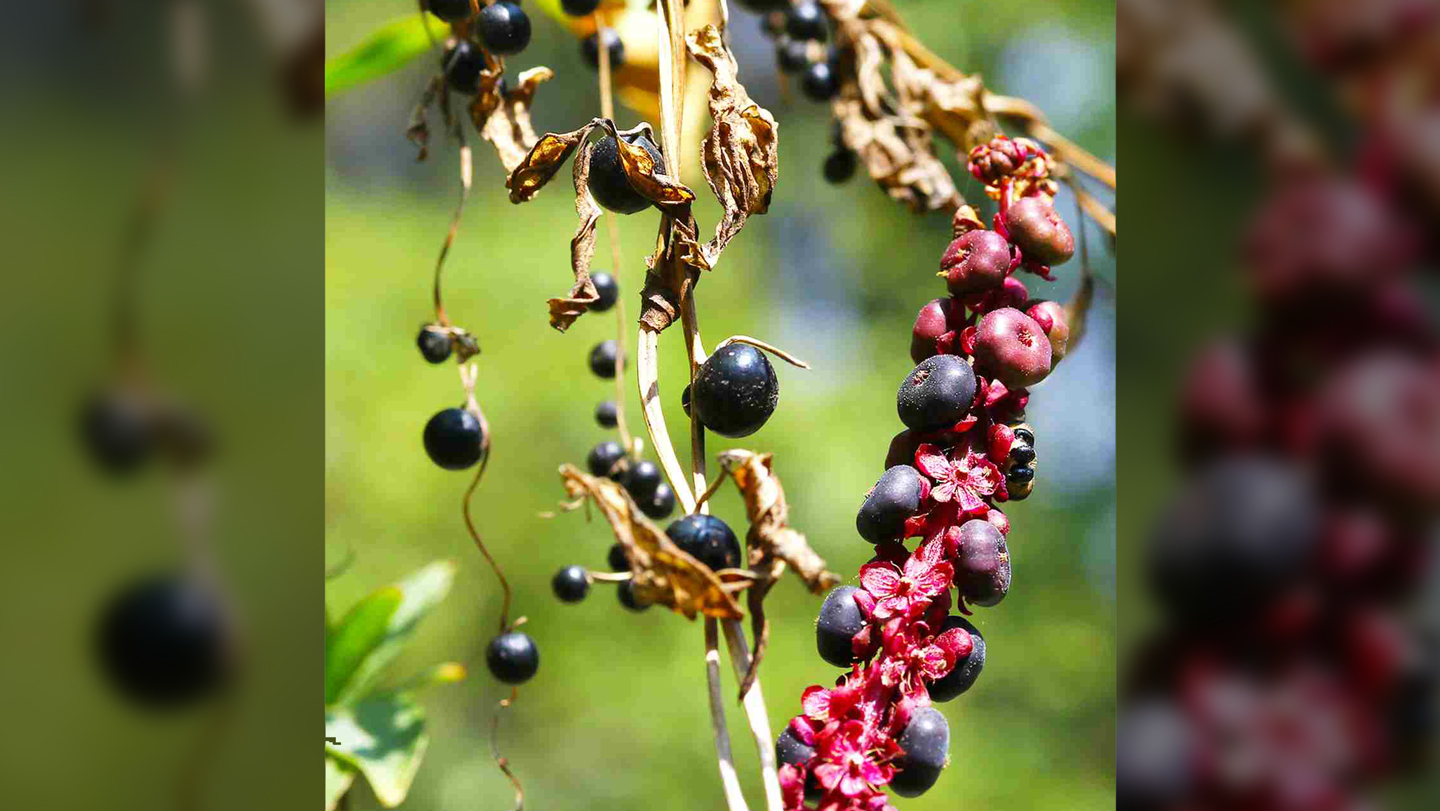
In the quiet corners of Southwest China, a clever botanical con artist has been practicing its deception for countless generations. The black-bulb yam (Dioscorea melanophyma) has developed a remarkable evolutionary strategy that fooled not only birds but also experienced researchers. When Gao Chen and his team from the Kunming Institute of Botany were collecting seeds in 2019, they mistakenly picked up what they thought were berries. Only later, when cutting them open to find no seeds inside, did the truth dawn on them: “They can cheat me, then, I think they can cheat birds,” Chen realized. What they had discovered was an extraordinary case of plant mimicry that pushes the boundaries of our understanding of plant evolution and adaptation.
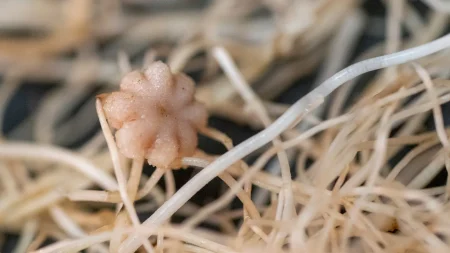
The black-bulb yam has lost the ability to reproduce sexually through seeds, a significant evolutionary disadvantage that would normally limit its ability to spread to new habitats. Most plants that reproduce asexually do so through detachable buds called bulbils, which typically fall off and grow near the parent plant. This limited dispersal range would make the species vulnerable to local environmental changes. However, the black-bulb yam evolved an ingenious workaround. Unlike the typical white or dull-colored bulbils of other plants, this yam produces bulbils that are black and shiny, perfectly mimicking the appearance of real berries that grow in the same ecosystem. This deceptive disguise has transformed the yam’s reproductive strategy, enabling it to trick birds into eating these fake berries and dispersing them far beyond what would be possible if they simply fell to the ground near the parent plant.
The research team went to extraordinary lengths to prove this was intentional mimicry rather than coincidence. They analyzed and compared the appearance and color of actual berries found near the yam and discovered 15 species where the yam’s bulbils and real berries were visually indistinguishable. Setting up camera traps over three years, they documented 22 different bird species visiting these bulbils, with several species actually consuming them. Laboratory experiments revealed that the brown-breasted bulbul (Pycnonotus xanthorrhous) – the bird most frequently duped by this trickery – generally prefers real berries when given a choice. However, when berries become scarce, particularly during winter months, the birds readily eat the fake berries instead. Most remarkably, these bulbils pass through the bird’s digestive system completely unharmed in about 30 minutes, during which time the bird might travel 750 meters or more – essentially giving the yam a free ride to new territory without offering any nutritional reward to its unwitting courier.
“The results extend the mimicry concept to nonreproductive structures of the plant,” notes Pedro Jordano, an ecologist with the Spanish Research Council who was not involved in the study. While plant deception is not entirely unknown in nature – the Japanese dogsbane, for instance, attracts grass flies with flowers that smell like dying ants, and certain South American vines can alter their leaf appearance to match host plants – the black-bulb yam’s strategy represents something distinctly different. This isn’t a case of mimicry for pollination or protection; it’s mimicry specifically evolved for seed dispersal in a plant that ironically produces no seeds. As John Pannell, a plant evolutionary biologist from the University of Lausanne, puts it: “The birds are foxed into dispersing the bulbils because of their resemblance to fruits they are used to eating,” and they receive absolutely nothing in return for their service.
The evolutionary genius of this strategy lies in how it addresses a fundamental challenge for asexually reproducing plants. Without sexual reproduction, these plants cannot generate the genetic diversity that helps species adapt to changing environments over time. Their identical clones are all equally vulnerable to the same diseases, predators, or environmental shifts. This vulnerability is partially offset if the plant can at least spread to diverse geographical locations, increasing the chances that some clones will survive even if others perish due to local conditions. The black-bulb yam’s fake berries solve exactly this problem, creating what Kenji Suetsugu, an evolutionary ecologist at Kobe University, calls “a clever evolutionary workaround.” By deceiving birds into distributing its bulbils widely, the yam hedges against local environmental changes despite its genetic limitations.
This discovery connects to a broader pattern of seed deception that biologists have observed since Charles Darwin’s time. Some plants produce seeds that appear to be encased in fleshy, nutritious fruit but actually offer no food reward to the animals that consume and transport them. Black beans employ this kind of trickery, as Chen and colleagues reported in a separate study. What makes the black-bulb yam case so remarkable is that it has evolved this mimicry strategy with vegetative structures rather than true seeds or fruits. The implications of this finding extend beyond this single species, suggesting that the complex relationships between plants and their seed dispersers may involve more deception and manipulation than previously recognized. As Jordano observed, the fact that these bulbils have evolved to so convincingly mimic berries “is amazing for any sensible naturalist.” It reminds us that in the quiet competition of nature, deception can be just as powerful a strategy as cooperation, and that plants, despite their apparent passivity, can be among nature’s most creative tricksters.