





An Unlikely Alliance: How Killer Whales and Dolphins May Be Teaming Up to Hunt
In the vast blue expanses off British Columbia’s coast, an unexpected partnership has been unfolding beneath the waves. Marine ecologist Sarah Fortune and her colleagues from Dalhousie University have observed what appears to be a remarkable collaboration between two species often viewed as competitors: fish-eating killer whales (Orcinus orca) and Pacific white-sided dolphins (Lagenorhynchus obliquidens). This potentially groundbreaking discovery challenges our understanding of interspecies relationships in the marine world and offers a fascinating glimpse into the complex social dynamics of these intelligent marine mammals. The research team noticed something unusual during their regular observations – rather than competing for the same fish, these predators seemed to be operating with a surprising level of organization, raising the intriguing possibility that they might actually be hunting together.
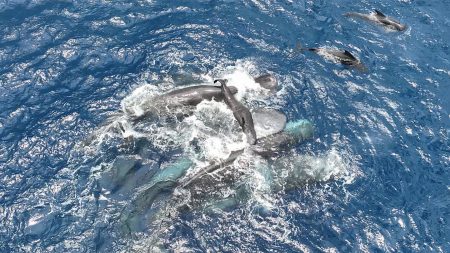
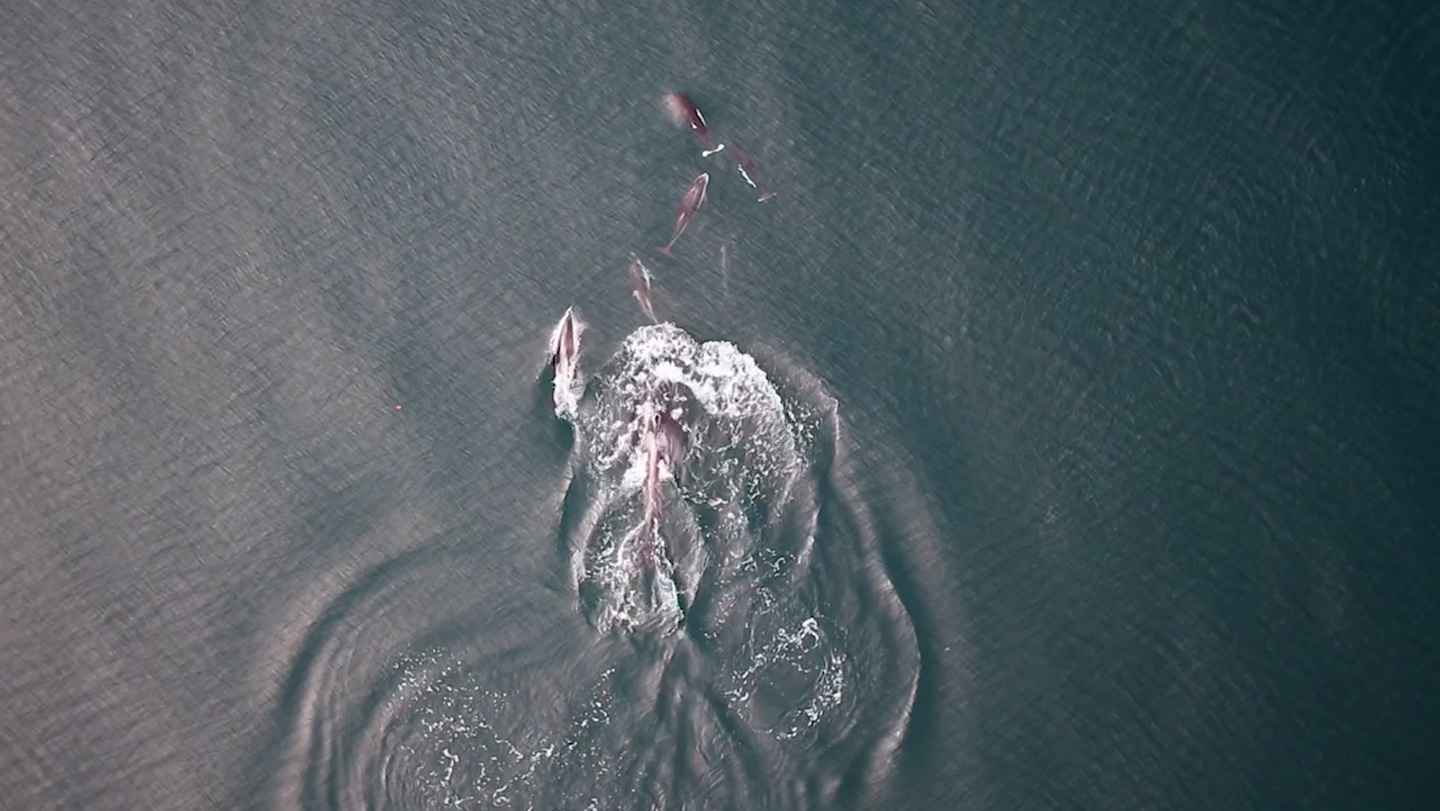
To investigate this unusual behavior, Fortune’s team deployed a comprehensive suite of technologies to capture evidence. They utilized drones to film the animals from above, acoustic equipment to detect nearby salmon, and specially designed suction cup tags equipped with cameras and recording devices to track the orcas’ movements underwater. The resulting data painted a compelling picture of coordination. Over a four-day observation period, killer whales were documented following dolphins on deep dives 25 times, suggesting they might be “eavesdropping” on the dolphins’ echolocation calls to locate schools of salmon. The drone footage further revealed hundreds of instances where dolphins swam near the heads of killer whales in what appeared to be coordinated swimming patterns. Most tellingly, in all observed interactions between these species, the orcas were engaged in hunting, killing, or consuming salmon, with dolphins present during half of the occasions when killer whales were sharing their catch.
The findings, published in Scientific Reports on December 11, point to a mutually beneficial relationship that leverages each species’ unique strengths. “If you have other animals that are also echolocating, able to track elusive prey that’s avoiding being eaten, then it could be beneficial to have multiple sonar-scanning animals to help keep track of where that fish is,” explains Fortune. This arrangement appears advantageous for both parties: the killer whales potentially benefit from the dolphins’ superior echolocation abilities to locate elusive salmon, while the dolphins, unable to swallow whole adult salmon, can feast on the pieces left behind after an orca’s kill. The dolphins might also gain protection from other orca pods that could potentially hunt them, creating a relationship built on practical benefits rather than altruism.
Marine mammal specialist Heather Hill from St. Mary’s University in San Antonio, who wasn’t involved in the study, finds these observations consistent with known patterns of interspecies coordination. “There are a number of instances in which there’s interspecific cooperation or coordination of activities for foraging purposes among many animals, including marine mammals,” she notes. What makes this particular case fascinating is the sophisticated nature of the apparent collaboration between species that possess some of the ocean’s most complex cognitive abilities. The underwater footage captured by the camera tags attached to killer whales provides unprecedented insights into how this collaboration unfolds beneath the surface, showing details of their interactions that would have been impossible to observe using traditional research methods.
The potential orca-dolphin hunting collaboration represents a rare example of cooperative foraging between different marine mammal species, though scientists remain cautious about attributing intentionality to the behavior. Hill suggests that while fascinating, this interaction may not necessarily be deliberate on both sides: “It’s cool that the killer whales can potentially utilize what the dolphins are doing. And the dolphins are basically taking advantage of the killer whales.” This nuanced perspective recognizes that what appears as cooperation might actually be a sophisticated form of mutual exploitation, with each species opportunistically benefiting from the other’s hunting strategies without necessarily intending to help one another. Whether intentional or not, the outcome is the same – both species appear to hunt more effectively together than they would alone.
The discovery opens up exciting new avenues for research on marine mammal behavior and interspecies relationships. As Hill points out, “When speaking about collaborative hunting, there’s a ton of open questions that we still need to answer.” Modern technologies like drones, underwater cameras, and acoustic monitoring equipment are revolutionizing marine mammal research, allowing scientists to observe behaviors that previously remained hidden beneath the waves. These technological advances “really will open up our eyes to see just how often these things happen,” potentially revealing that such interspecies collaborations may be more common than previously thought. The research highlights how much we still have to learn about the social lives and hunting strategies of marine mammals, suggesting that the complex relationships between different species in marine ecosystems may be far more sophisticated than we’ve previously understood.
This potential collaboration between killer whales and dolphins serves as a powerful reminder of nature’s complexity and the remarkable adaptability of intelligent marine mammals. It challenges our tendency to view different species as strictly competitors and underscores the nuanced ways in which animals can interact to mutual benefit. As our technological capabilities expand and allow for more detailed observation of marine life, we may discover that the oceans harbor many more such unexpected alliances. The story of orcas and dolphins potentially hunting together not only enhances our scientific understanding but also deepens our appreciation for the intricate web of relationships that sustain life in our oceans – a reminder that cooperation, in various forms, can be found throughout the natural world, even in the most unexpected places between species that might otherwise be rivals.