


Imagine waking up one morning to realize that the alarming predictions about rising oceans weren’t scary enough—they’ve been seriously understated all along. That’s the bombshell revelation from a recent study published in Nature on March 4, where researchers Katharina Seeger and Philip Minderhoud from Wageningen University in the Netherlands uncovered a colossal oversight in hundreds of global and regional analyses on sea level rise and coastal flooding. Picture this: out of 385 peer-reviewed studies spanning from 2009 to 2025, about 99 percent underestimated ocean heights by an average of 20 to 30 centimeters. Some even messed up projections by a full century’s worth of expected rise. And get this—even the United Nations’ Intergovernmental Panel on Climate Change (IPCC) relied on 45 of these flawed studies in its Sixth Assessment Report. It’s like planning a beach vacation without checking the tide charts; you might think the water’s only ankle-deep, but suddenly, you’re waist-high in trouble.
The crux of the problem lies in how researchers measured sea levels versus land elevations. Ideally, you’d use real-deal data, like tidal gauges, ocean buoys, or satellite readings to get an accurate sense of the ocean’s surface. But most studies swapped that precision for something called a geoid—a kind of digital, blob-like model of the global ocean based on Earth’s gravity and rotation. It’s handy for a rough sketch, but not for fine details. Geoids can be off by meters in data-sparse areas, and they completely ignore the wild, dynamic factors shaping actual sea levels, such as swirling currents, whipping winds, daily tides, fluctuating water temperatures, and even storm surges. Seeger and Minderhoud discovered that 90 percent of the studies didn’t bother correcting for these geoid flaws with actual measurements—a standard practice in oceanography that’s somehow slipped past coastal hazard experts. Another 9 percent jumbled up how they aligned sea and land data, leaving only a measly 1 percent that got it right. It’s akin to using a fuzzy map to navigate a hurricane; the path might look straight, but in reality, the storm’s chaos can lead astray, and this oversight has left us all more vulnerable than we ever knew, with sea levels creeping higher and faster than our maps show, threatening coastal communities that’ll soon find their backyards underwater if nothing changes.
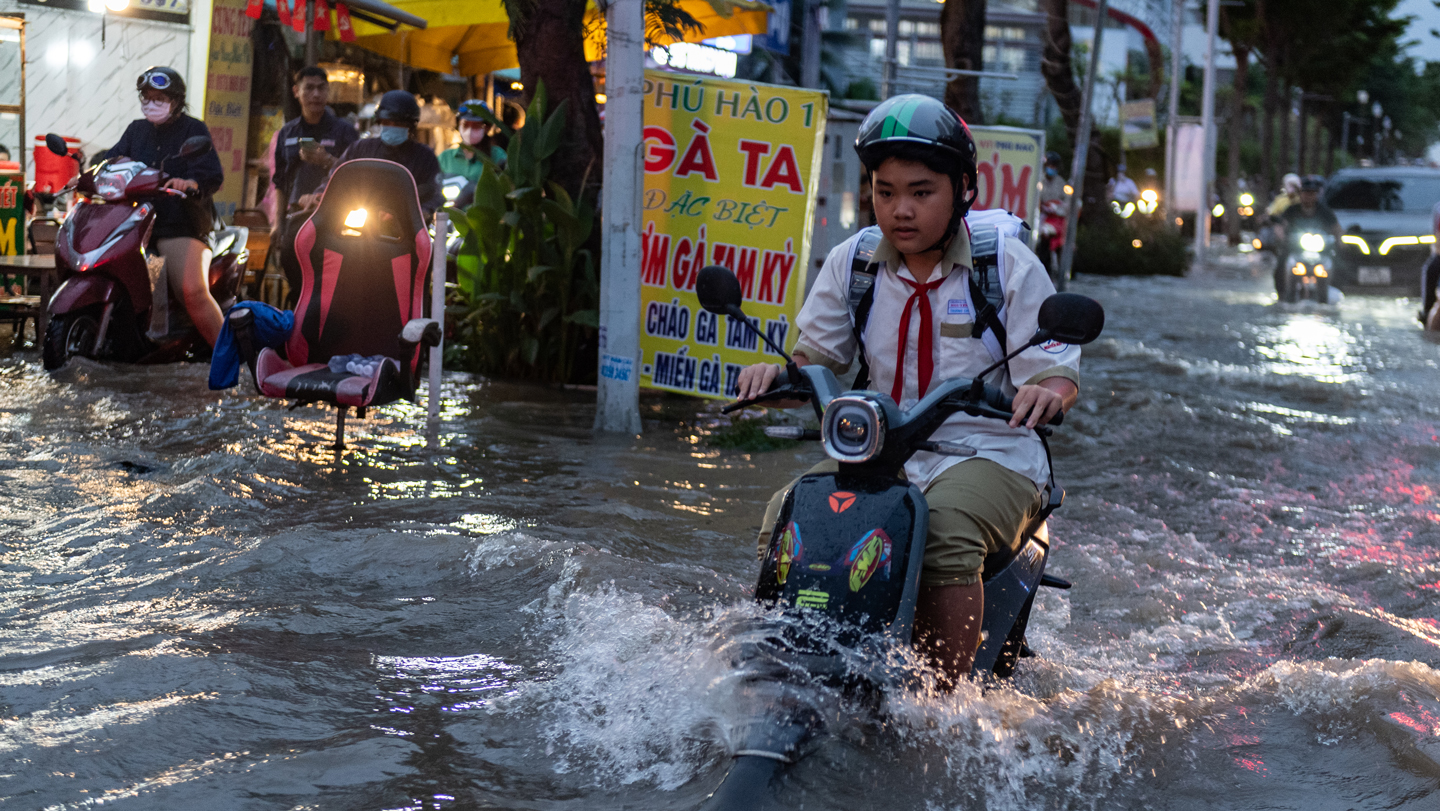
Now, let’s put a human face on this: think about that one-meter rise in sea levels, which scientists now say could barr a dock underfoot lived by up to 132 million more people than previously thought—an extra 68 percent slammed by reality’s cruel correction. Families along shores might lose homes they’ve cherished for generations, kids playing in waves could grow up displaced, and economies tied to ports could crumble. Sea level rise isn’t some distant doomsday; it’s a slow-burning threat that’s been sneaking up while we underestimated its fuse. Climate scientist Anders Levermann from Germany’s Potsdam Institute for Climate Research describes it poignantly: ‘Sea level rise is slow but dangerous if you ignore it… We’ve done that unknowingly. These estimates now tell us that we are much further in the future than we thought we were.’ It’s a wake-up call for you and me, urging us to rethink our coastal lives—maybe it’s time to elevation spot elevations or invest in smarter levies, because the ocean’s holding us no favors, and our complacency has made the flood worse than whispered in the winds.
Experts are weighing in to amplify the urgency. Coastal geologist Patrick Barnard from the University of California, Santa Cruz calls out the peril: ‘The advance of the oceans is even worse than what’s been reported.’ He warns that big-picture studies like these shouldn’t blindly guide local plans; without on-the-ground verification, cities could bounce checks on solutions that crumble like sandcastles. Seeger and Minderhoud, at a March 3 briefing, emphasized that corections are a must, drawing from oceanography’s toolbox but overlooked in hazard research. They’ve poured in satellite-based datasets to reveal the raw truth: underestimations average 24 to 27 centimeters, but spike dramatically in places like Southeast Asia and the Indo-Pacific, where levels could be over a meter higher than thought—imagine entire villages vanishing beneath waves we didn’t see coming. In contrast, overestimations popped up in spots like the northern Mediterranean and Antarctica, where lower-than-expected rises might mislead resilience efforts. Europe and eastern North America fared relatively well with smaller errors, but let’s not pat ourselves on the back; the global underestimation paints a darker picture, one where delayed responses might drown out the futures of millions, from bustling metropolises to remote island paradises.
Diving deeper, these geographical nuances highlight how unequally the impacts hit. In Southeast Asia, where gravitational data lags, studies wildly underrepresented the tide’s true height, potentially dooming low-lying deltas and archipelagos to faster submersion. Island nations in the Pacific face similar fates, their fragile shores eroding faster than our projections captured. Conversely, in the northern Mediterranean, Antarctica, and some Atlantic and Pacific isles, the errors leaned the other way, perhaps lulling inhabitants into a false sense of security just when they need alertness most. It’s a patchwork quilt of confusion, woven by incomplete data—a stark reminder that climate change doesn’t play fair, discriminating against regions with weaker monitoring systems. For everyday folks, this means reassessing everything from home insurance to vacation plans; a property once deemed safe might now be flirting with flood zones, and communities must adapt or relocate before the water claims another inch. The study’s revelations humanize the science, transforming abstract numbers into urgent narratives of displacement, loss of cultural heritage, and the raw scramble for higher ground as the seas assert their dominion.
In the end, Seeger and Minderhoud’s work isn’t just a critique; it’s a lifeline. They’ve made publicly available updated coastal sea level data, fusing the latest satellite obsessions for continuity with reality. ‘We hope we as a scientific community can… just move forward all together,’ Seeger says, inviting collaboration to mend our collective blind spot. For you, the reader—this could spark a personal pivot: maybe advocate for better coastal policies, support community resilience programs, or simply educate friends on the hidden depths of our oceans’ rage. Sea level rise, once dismissed as gradual, now looms as a tidal wave of underestimated peril, but armed with accurate maps, we can build better barriers, save lives, and preserve the blue-married lovers we cherish. It’s time to face the tide head-on, not as silent victims, but as informed stewards ready to ride the wave of change before it swallows us whole. Let’s not let ignorance pull us under; instead, let’s rise above, together, forging a future where human ingenuity outpaces the ocean’s relentless advance. So, the next time you’re by the beach, remember—this isn’t just science; it’s a story of survival, written in the rising lines of our shared home.