





The Science Behind Real-World Levitation: Fiction vs. Reality
In the magical realms of fiction, levitation appears effortless and dramatic. Whether it’s Ron Weasley’s simple “swish-and-flick” wand movement to lift a troll’s club in Harry Potter, the graceful martial arts of element benders launching boulders in Avatar, or Scarlet Witch’s casual gestures flinging away enemies in Marvel films, fantasy makes defying gravity look simple. But how does this compare to what’s actually possible in our physical world?
While real-world science can indeed create upward forces strong enough to counteract gravity through sound, magnets, and electricity, the practical applications are far more modest than fictional portrayals suggest. Acoustic levitation, one of the most visually striking methods, uses high-frequency sound waves – typically beyond human hearing range – to create alternating regions of high and low sound pressure in the air. The high-pressure areas push objects away, effectively trapping them in the quieter pockets between waves. However, this technique has severe limitations, primarily working only with extremely lightweight objects like Styrofoam beads. According to Luke Cox, a mechanical engineer at Impulsonics, levitating a human would theoretically require sound waves of at least 275 hertz with 1.25-meter wavelengths – comparable to the lowest notes on a bass guitar. The power requirements would be astronomical, potentially requiring a nuclear plant’s energy output, and the heat generated would pose serious dangers to anyone being levitated.
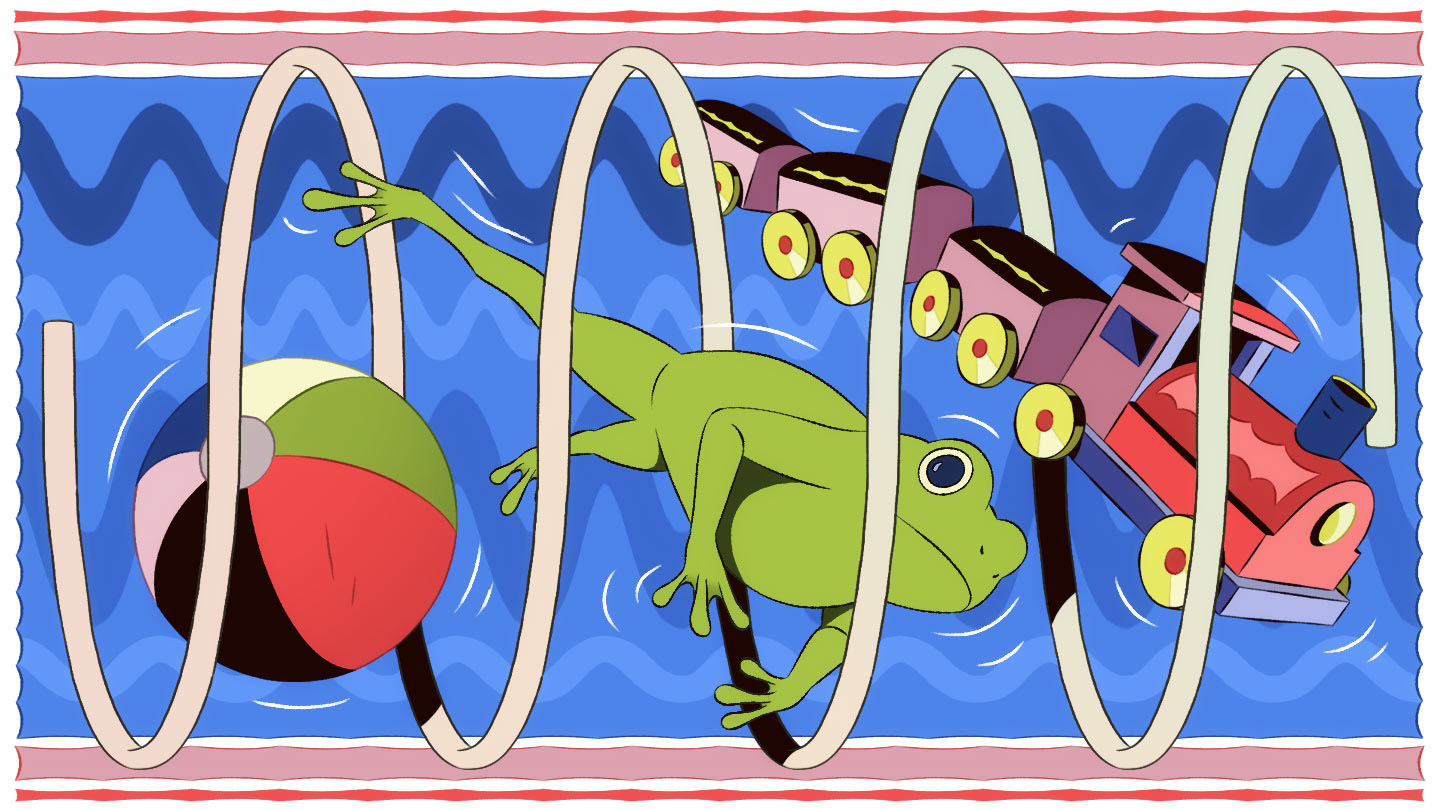
Magnetic levitation offers more practical applications for larger objects, as demonstrated by maglev trains that hover centimeters above their tracks. While direct levitation of non-magnetic objects presents greater challenges, the principle of diamagnetism – where certain materials become weakly magnetized in a strong field and repel that field – has produced some remarkable demonstrations. Most famously, in 1997, scientists successfully levitated a live frog by placing it inside nested wire coils generating a magnetic field 16 teslas strong – approximately ten times the strength of industrial car-lifting magnets. This experiment captured public imagination, and the frog emerged unharmed from its floating experience. Theoretically, this approach could work for humans, but the power requirements would be staggering – estimated at around 40 teslas from a magnet running on 1 gigawatt of power, equivalent to half the Hoover Dam’s output.
Nature offers its own fascinating examples of levitation, such as ballooning spiders that electrically charge themselves by spinning silk threads. This charge interacts with Earth’s electric field, allowing them to lift off and ride wind currents to heights of several kilometers. However, physicist Igor Bargatin from the University of Pennsylvania points out that scaling this method up for human-sized objects would require building up so much electrical charge that it would likely trigger lightning strikes before achieving liftoff – definitely not a practical transportation method for humans!
Despite falling short of fictional portrayals, real-world levitation techniques still offer valuable scientific and industrial applications. Acoustic levitation provides contamination-free handling of sensitive laboratory samples, while magnetic levitation can improve motor performance by allowing components to float and rotate without mechanical wear. These practical applications may lack the dramatic flair of fantasy levitation, but they represent significant scientific achievements that continue to advance various fields of research and technology.
The gap between fictional and real-world levitation highlights both the constraints of physics and the ingenuity of scientists working within those constraints. While we may never achieve the casual boulder-tossing abilities of our favorite fictional characters, the pursuit of levitation technology continues to yield innovative solutions to real-world problems. Scientists remain undeterred, continually exploring new possibilities for harnessing these forces in ways that don’t involve deadly collateral damage – a significant improvement over some fictional depictions!
As research progresses, we may yet discover new methods of manipulating gravity and other forces that bring us closer to the seemingly magical abilities portrayed in fiction. Until then, we can appreciate both the imaginative freedom of fantasy worlds and the remarkable, if more limited, achievements of real-world physics – each impressive in their own distinct ways.