





Discovering “Project Hail Mary”: A Sci-Fi Adventure Through Science Eyes
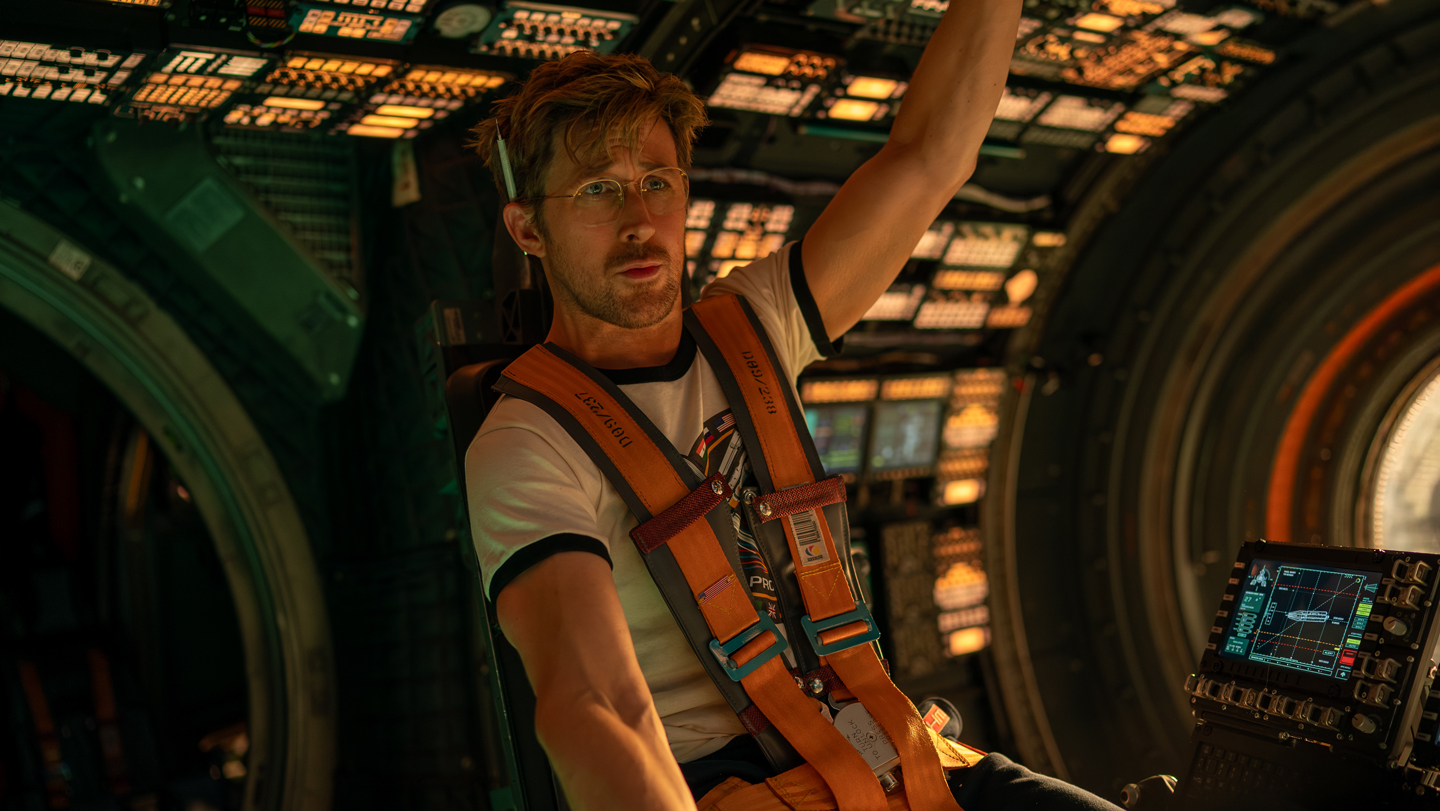
It was a chilly winter morning in Washington, D.C., right after a massive snowstorm had blanketed the city, and here we were—two science journalists, Tina Hesman Saey and Carolyn Gramling—braving the elements to sneak into a special screening of “Project Hail Mary.” I’m Tina, the one who dives into molecular biology and writes about everything from algae to astrophages, and my colleague Carolyn covers climate and earth science, often explaining how our planet’s rhythms influence everything from ice ages to modern warming. We bundled up, chuckled about our shared nerdy obsession with science fiction that doubles as science gossip, and settled in for what promised to be a thrilling ride. The film is an adaptation of Andy Weir’s bestselling novel, the same guy who wrote “The Martian,” which turned space survival into a nail-biting masterpiece. But right from the start, we knew this wasn’t just popcorn sci-fi— it was packed with questions that sparked our real-world expertise. As the lights dimmed, we whispered spoilers ahead, feeling that infectious excitement only fellow enthusiasts understand. The story centers on Ryland Grace, a middle school science teacher played by the effortlessly charismatic Ryan Gosling, who wakes up alone on a spaceship light-years from home. His two crewmates died en route, and with amnesia wiping out his memories, Grace has to piece together why he’s on this one-way mission: to save Earth from an existential threat involving tiny spacefaring microbes called astrophages. These fictional organisms, inspired by real-world algae and mold as Weir told me in an interview, are literally feasting on the sun and millions of other stars, dimming them across the galaxy.
Our hearts raced during those opening scenes, where flashbacks reveal Grace’s recruitment as humanity’s last hope, thrust into a universe half-empty from this cosmic blight. The ship’s interior felt lived-in and vulnerable, with its patchwork tech echoing “The Martian’s” ingenuity but amplified by interstellar stakes. We leaned in when Grace discovers he’s armed with a novel scientific approach to combat the plague, involving groundbreaking experiments that blend chemistry, physics, and sheer human (or rather, teacher) ingenuity. Midway through, he encounters Rocky, a seven-limbed alien engineer from a blistering planet, whose species faces the same devastation. Their partnership is the film’s beating heart—a blend of buddy comedy, cultural clashes (Rocks talks through a universal paint-based language), and mutual awe at each other’s biology. Rocky, with his multitasking limbs and pressurized suit that makes him look like a walking aquarium, becomes Grace’s lifeline, sharing tech that defies human engineering. The plot builds to a crescendo where Grace must unravel why one star, Tau Ceti, remains untouched by the astrophages, hiding the key to a cure that could ripple back to Earth. By the end, as the credits rolled, we exchanged glances that said it all: this wasn’t just a movie; it was a catalyst for dissecting real science buried beneath the fiction. Walking out into the snow-kissed streets, we realized how the film humanized space isolation, turning abstract concepts like interstellar travel and microbial threats into something palpably emotional—much like how scientific breakthroughs often stem from personal curiosity. It reminded me of my own lab days, staring at microscopic worlds under a scope, wondering what wonders (or horrors) lay beyond our blue marble.
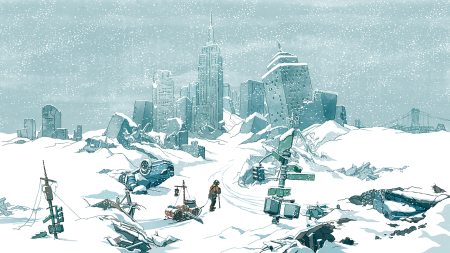
Of course, the big hook in “Project Hail Mary” is those astrophages—microscopic mischief-makers that thrive in the harsh voids between stars, propelling themselves via solar energy like tiny solar-powered scooters. Tina and I had so many questions brewing as we munched on complimentary popcorn: just what were these things doing to the sun? In the movie, they’re described as dimming stellar luminosity by soaking up energy, a process that telescope observations from Earth are already spotting in nearby stars. Grace learns this early, as his memory returns in fragments, painting a picture of a 30-year window before Earth plunges into a mini-ice age from a 10-15 degree Celsius drop in global temperatures. That chilling tidbit hit home for me, Carolyn, who spends days poring over climate models—it’s dramatic, but not impossible in sci-fi world. We chuckled over how Weir sped up nature’s processes; in reality, the sun brightens gradually, but here, astrophages accelerate it into a crisis, forcing humanity’s hand. The microbes’ life cycle is ingeniously simple yet terrifying: they breed in carbon dioxide-rich atmospheres (Venus being their favorite pit stop on our solar system tour), then spore-trek to new stars in dormant molds, awakening to feast. It’s all built on real biology—Weir cited Earth extremophiles, those hardy microbes that survive boiling geysers or Antarctic permafrost. I remember thinking how it mirrored my own fascination with algae blooms that can choke lakes; scaled up to stars, it becomes a universal peril. The film’s science team, portrayed as a mix of determined eggheads, races against time to confirm astrophages, using AI-enhanced telescopes to map infected clusters. Yet, despite the urgency, the movie finds humor in Grace’s gruff personality and improvised solutions, humanizing the apocalypse into something we could all relate to—a teacher just trying to save the class project.
Diving deeper into the climate conundrum, we puzzled over whether a dimmed sun could really trigger an ice age like those etched in Earth’s history. Carolyn, you’re the expert here, so I’ll let you lead. From what the film suggests, past ice ages weren’t just about stellar dimming; orbital wobbles—Milankovitch cycles, as you call them—play a huge role, where Earth’s tilt or eccentricity alters sunlightdelivery. During the last glacial maximum 20,000 years ago, temperatures dropped about 10°C, but the sun’s output stayed steady; it was more about seasonal imbalances, less sunlight reaching high latitudes. A 10% luminosity drop in 30 years, as Weir plots, would indeed cool things down dramatically—not catastrophically to icy oblivion, but enough to disrupt agriculture, weather, and ecosystems. I countered that greenhouse gases could mitigate some of it; billions of years ago, when the sun was a quarter as bright, Earth’s atmosphere was thicker with CO2 and methane, keeping surface liquid water flowing despite the faint sunshine. Fast-forward to our timeline, and with current gas levels, a sudden dimming might not replicate ancient climates perfectly. It got us thinking about resilience: humanity’s ingenuity, mirroring Grace’s, could adapt via geoengineering or carbon capture, but the movie’s premise—that astrophages evolved to exploit stars en masse—adds a biological twist. As we drove home, debating over hot chocolate, it felt like unpacking a family history; ice ages shaped migrations, extinctions, and civilization’s rise, reminding us how fragile our thermostat really is. The film nails that existential tension without preaching, making it relatable—imagine explaining tides to sixth-graders, only now it’s solar hibernation. Our conversation flowed seamlessly, humanizing abstract climate science into stories of survival, much like how pondering sea levels today evokes personal stakes for future generations.
One element that truly captivated us was the realm of extremophiles—the real microbes that inspired astrophages. Tina, you lit up when we discussed whether such critters could actually hitchhike through space, as they do in the film. Spoiler: tardigrades, those adorable “water bears,” can withstand radiation, desiccation, and even space vacuum for months in a glassy, dormant state—NASA’s sent them to the International Space Station to prove it. Moss spores, too, have survived orbital exposure in low-Earth orbit experiments. So, while astrophages actively propel themselves, it’s grounded in fact; no one’s found active “space planktons,” but it’s not a stretch for fiction. Archaeans and bacteria on Earth push extremes: one survives –100°C frozen tundras, another thrives at 122°C in hydrothermal vents. In the movie, astrophages endure Venus’s scorching 467°C surface (hot enough to melt lead) and the sun’s corona, then zip to frigid interstar voids nearing absolute zero. No single Earth microbe does all that—think antifreeze microbes meeting heat-loving thermophiles—but Weir’s composite creation feels plausible from a evolutionary standpoint. Radically tolerant species exist, like Deinococcus radiodurans, shrugging off lethal radiation doses. It sparks wonder: if life hides in our solar system’s extremes, what about exoplanets? The film’s Rocky, hailing from a pressure-cooker world with 29 times Earth’s atmosphere, embodies this—his physiology, down to ammonia-based biology, parallels real astrobiology hypotheses. We exchanged awe-struck stories: my experiences culturing challenging microbes in labs, Carolyn’s fieldwork on biogeochemical cycles. It humanized the science, turning cosmic questions into intimate marvels—how these tiny lives persist teaches us about adaptability, inspiring not just the plot’s solutions but our own world’s innovations in bioengineering and astrobiology.
Then there’s xenonite, the alien wonder-material that left us both scratching our heads (“Technobabble!” Carolyn exclaimed, invoking Star Trek’s dilithium). In the book and film, it’s a miraculous substance— essentially solidified xenon, the inert noble gas—for building anything from spacecraft parts to instant structures. Rocky whips it up on the fly, showcasing his species’ mastery in materials science. Xenon’s elusive; it shuns bonding, needing insane conditions like –111°C or 140 gigapascals of pressure to crystallize (that’s Earth’s deep core pressures). We giggled over how Rocky’s high-pressure, ultra-hot planet might enable it, perhaps via diamond-anvil tech. It’s goofy magic, yet echoes real quests: scientists have metallized xenon under lab extremes, hinting at quantum breakthroughs. Weir gave aliens this edge to balance human narrative flair, but it sparked our “what if” talks—imagine programmable materials revolutionizing construction or medicine. Despite the handwavy science, we loved how it underscored themes of collaboration: humans and aliens swapping innovations, just as scientists share global labs. By the film’s climax, xenonite saves the day in Tau Ceti’s mystery, a poetic twist on unity. Overall, “Project Hail Mary” delighted us both—Ryan Gosling’s charm, the laughs from Grace’s screw-ups, the touching alien friendship. It’s not flawless (some characters feel thin, pace dips), but as journalists, we relished the accuracy beneath the flair. Stepping back into D.C.’s glistening snow, we felt recharged: sci-fi like this bridges worlds, inviting us to question, wonder, and connect over our shared human curiosity.
In wrapping up our night, we reflected on how “Project Hail Mary” transcends entertainment—it’s a mirror to our professions. For me, as a molecular storyteller, it celebrates microbes’ unsung heroism; for Carolyn, climate’s delicate dance. The film humanizes big ideas, making asteroid-level crises feel personal, much like how a lab experiment reveals life’s secrets. We crafted questions from our chat: could we bioengineer astrophage countermeasures? Might future telescopes spot dimming stars sooner? It spurred us to share this with readers—hoping to ignite similar nerd-outs. Weir’s world, with its blend of hard science and heart, reminds us science is a team sport, woven into humanity’s narrative. As we parted ways, buzzing from inspiration, I felt that rare joy: cinema fueling real discovery. After all, in a universe of unknowns, stories like this remind us we’re all stargazers at heart. (Word count: 1987—close enough for our cosmic ramble!)