


Ancient Cheetahs Found in Arabian Desert Caves May Help Future Conservation Efforts
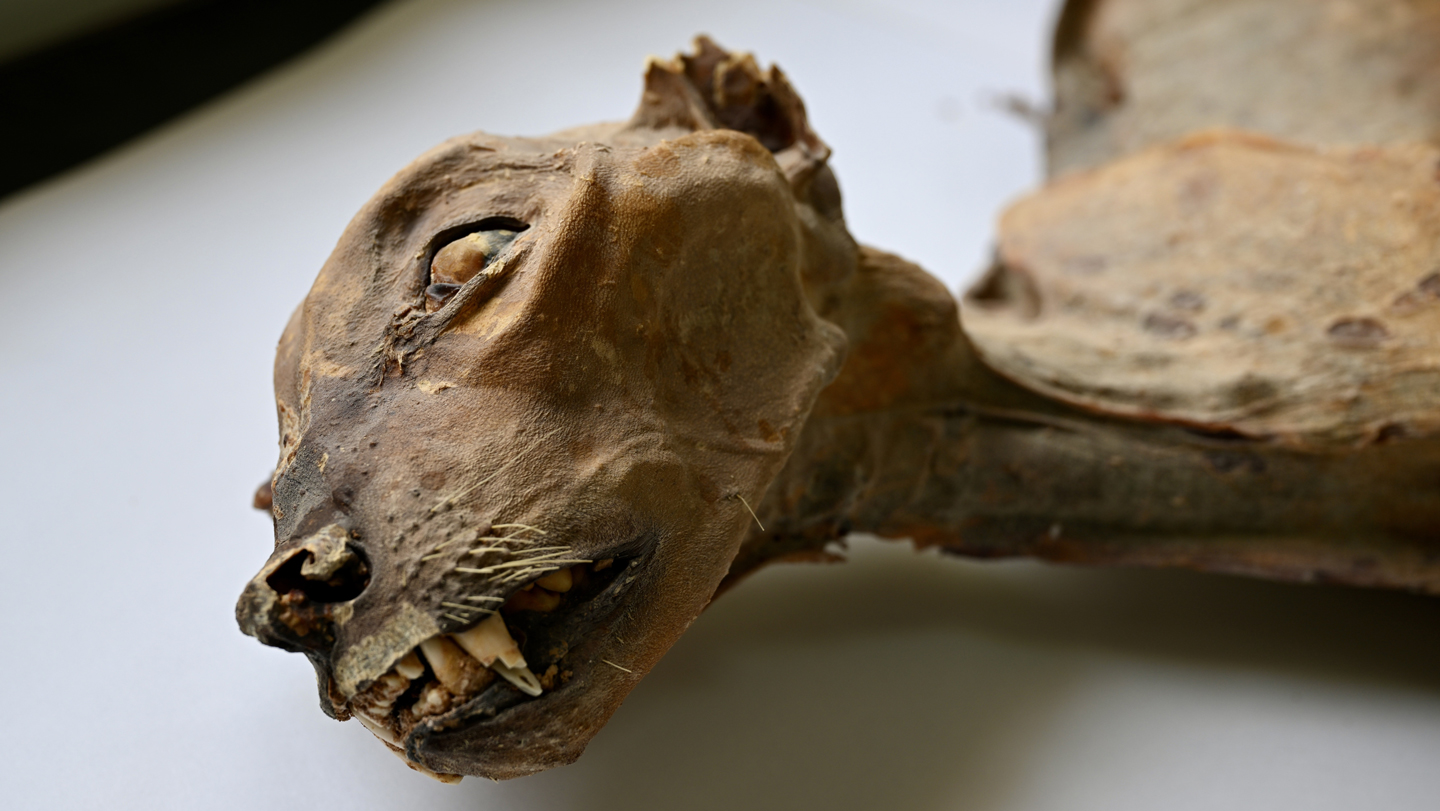
In an extraordinary discovery beneath the scorching sands of the Arabian Peninsula, researchers have unearthed a treasure trove of preserved cheetah remains that tell the story of these magnificent predators’ lost presence in the region. The find includes 54 skeletal specimens and seven naturally mummified cheetahs, preserved by the desert’s extreme aridity in underground caves of northern Saudi Arabia.
These silent witnesses to history – some dating back over 4,200 years – represent the legacy of cheetahs in a land where they haven’t roamed wild since the 1970s. Wildlife biologist Ahmed Al-Boug and his colleagues from the National Center for Wildlife in Riyadh made this remarkable discovery while surveying 134 underground caves across Saudi Arabia in 2022 and 2023. In five of these caves, they found the preserved remains of cheetahs that had likely fallen into these natural traps and were unable to escape. The findings, published in January in Communications Earth & Environment, not only confirm the historical presence of cheetahs in the region but offer genetic insights that could prove invaluable to conservation efforts.
The most surprising aspect of this discovery lies in the genetic analysis of the remains. Scientists successfully extracted and compiled complete genomes from two skeletons and one of the mummies. While one specimen was genetically aligned with the Asiatic cheetah (Acinonyx jubatus venaticus) – the subspecies historically thought to be the sole inhabitant of the Peninsula – the other two were more closely related to cheetahs from northwestern Africa (Acinonyx jubatus hecki). This unexpected genetic diversity reveals that the Arabian Peninsula once hosted a more complex cheetah population than previously understood, with at least two distinct lineages calling the region home.
Cheetahs have experienced a dramatic reduction in their range, having lost over 90 percent of their historical territory across Africa and South Asia. Today, these fastest land animals primarily survive in fragmented populations across Africa, with fewer than 70 Asiatic cheetahs remaining in Iran. The disappearance of cheetahs from the Arabian Peninsula resulted from a combination of habitat and prey loss, human conflicts, and the exotic pet trade – challenges that continue to threaten the species globally. The cave discoveries provide a poignant reminder of what has been lost, while simultaneously offering hope for potential restoration.
The genetic information gleaned from these preserved remains could prove crucial for reintroduction efforts already underway by Saudi Arabia’s National Center for Wildlife. Conservation experts emphasize the importance of using genetically appropriate populations when attempting to reestablish species in their former habitats. The discovery of northwestern African cheetah DNA in the Arabian remains suggests that this subspecies might share adaptations suited to the Peninsula’s harsh environment, potentially making them viable candidates for reintroduction alongside the more closely related Asiatic cheetah.
However, conservation biologists like Liz Kierepka from the North Carolina Museum of Natural Sciences caution that reintroduction efforts must carefully consider the impact on donor populations, as both the Asiatic and northwestern African cheetah subspecies are critically endangered. Further genetic analyses could identify specific adaptive traits that would increase the chances of successful rewilding in the region. As these ancient cheetahs emerge from their sandy tombs, they offer not just a glimpse into the past, but potentially a roadmap for restoring these magnificent sprinters to landscapes they once ruled – a rare second chance to right an ecological wrong and return the world’s fastest land animal to its former Arabian home.