



The Unsung Heroes: How Tree Bark Microbes Fight Climate Change
In an extraordinary revelation that broadens our understanding of nature’s complexity, scientists have discovered that trees do much more than capture carbon dioxide—they also harbor microscopic allies that consume other harmful greenhouse gases. A groundbreaking study published in Science on January 8 reveals that microbes living in tree bark are actively feasting on hydrogen, methane, and carbon monoxide, effectively creating a previously unrecognized natural defense system against climate change.
“This is a hidden benefit of trees that we previously didn’t realize was happening,” explains Luke Jeffrey, a biogeochemist at Southern Cross University in Australia who led the research. The scale of this microbial ecosystem is staggering—approximately 41 million square kilometers of tree bark exist worldwide, an area roughly equivalent to North and South America combined. Each square meter of bark hosts an estimated six trillion microbes, forming a vast but previously overlooked ecological network that Jonathan Gewirtzman, a Yale University forest ecologist not involved in the study, describes as being “hidden in plain sight.”
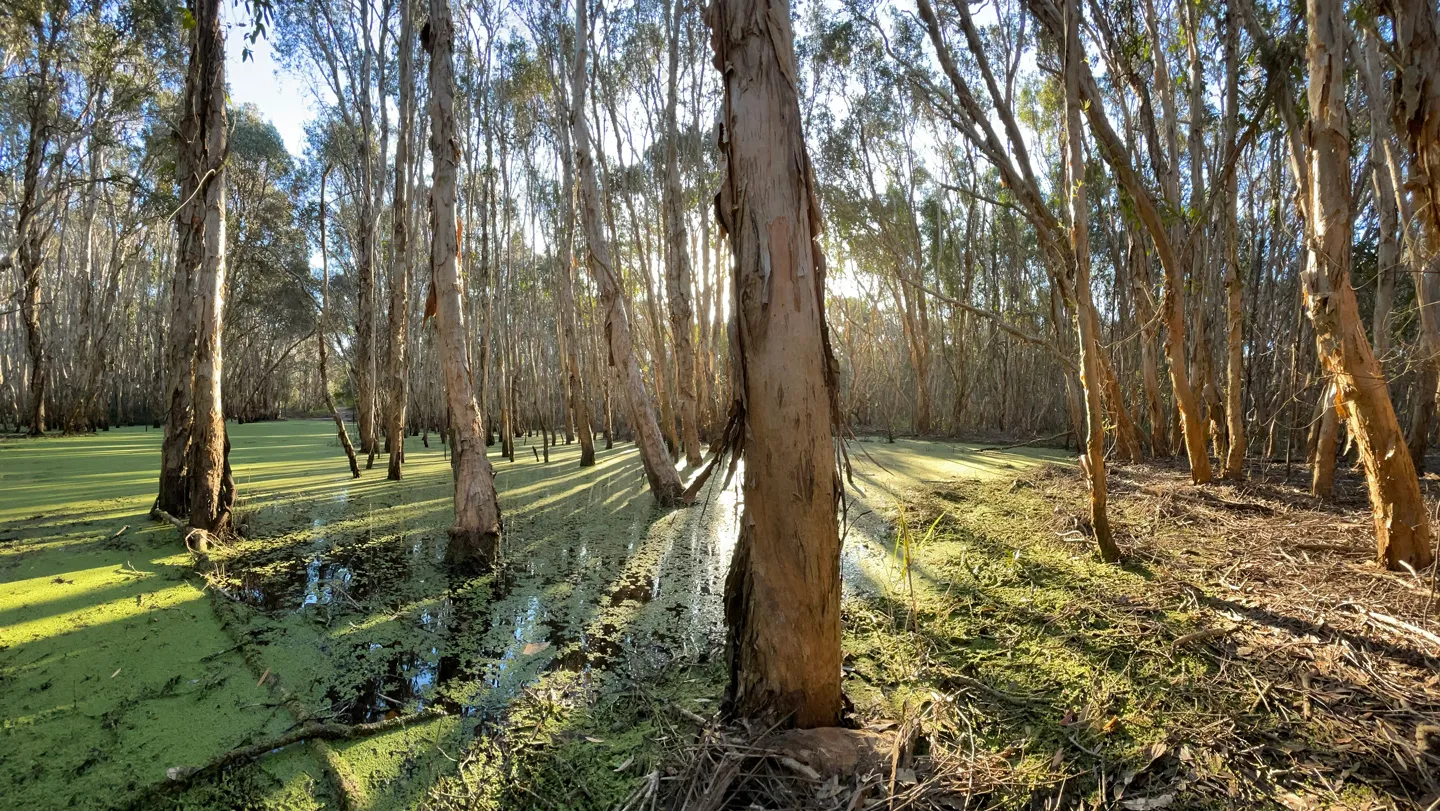
The discovery emerged from investigations into methane sources, a greenhouse gas 28 times more potent than carbon dioxide over a century. Scientists had long puzzled over discrepancies in methane measurements in the Amazon, where only about half the expected methane was detected escaping from wetlands. In 2017, researchers realized that much of this “missing” methane—15 to 20 million metric tons annually—was actually seeping through Amazonian tree trunks. Initially, trees were thought to be merely passive conduits for soil methane, but Jeffrey’s team uncovered something remarkable in 2021 while studying Australia’s paper bark trees: the amount of methane exiting tree bark was approximately 35 percent less than what entered from below. This suggested that bark microbes were actually consuming the gas during its journey outward.
Building on this finding, the research team expanded their investigation to eight common Australian tree species, analyzing the collective genomes of thousands of microbial species. Their results showed that microbes that oxidize hydrogen for energy were even more abundant than methane-eaters, with carbon monoxide-consuming microbes also present in significant numbers. Most surprisingly, these microorganisms don’t just intercept gases rising through trees—they actively pull methane, hydrogen, and carbon monoxide from the surrounding air, despite their trace atmospheric concentrations (ranging from just 2 parts per million to 40 parts per billion).
The global impact of this microbial activity is substantial, with an estimated 25 to 50 million tons of methane alone being consumed by tree bark microbes worldwide, according to a 2024 study. This finding has profound implications for climate change mitigation strategies, as Pok Man Leung, an ecophysiologist at Monash University who participated in the research, points out: “That could be a really huge ecosystem service that these microbes are providing” by removing major greenhouse gases.
The practical applications of this discovery could reshape reforestation and conservation efforts. Different tree species harbor distinct microbial communities that consume varying amounts and types of greenhouse gases. This knowledge could inform more strategic tree planting programs specifically designed to combat climate change. As Chris Greening, a microbiologist involved in the study, suggests: “You’re not just thinking about the tree you’re planting, but also the microbes within the tree. You can ideally get rid of three or four climate-active gases for the price of one.” This represents a new frontier in our battle against global warming—leveraging the invisible but mighty microbial allies that have been quietly working alongside trees all along, enhancing the already significant environmental benefits that forests provide in our changing world.