




The Ancient Art of Tilling and Its Modern Pitfalls
Picture yourself as a farmer through the ages, starting from our earliest ancestors who meticulously tilled the soil by hand. For millennia, humans have turned the earth to prepare for planting, carefully managing the delicate balance of moisture, air, and nutrients that make the ground fertile and nurturing. This practice was about harmony, working with nature to create pathways that water could follow, nourishing roots and sustaining life. But fast-forward to today, and agriculture has escalated things with deep plowing and massive machinery that seem efficient at first glance. These modern methods, however, are more destructive than helpful, as revealed in a study published in Science on March 19. Researchers found that such intense tilling disrupts the natural web of tunnels and pores underground, where rainwater should seep in naturally. It’s like tearing up a finely woven net—suddenly, water can’t infiltrate properly, leading to problems that affect not just crop growth but also the soil’s ability to withstand extreme weather. Imagine planting seeds in a field where the ground rebels against floods by becoming waterlogged or turns brittle and drought-plagued. That’s the resilience we’re losing, and it’s a wake-up call for how our farming habits are undermining the very earth we depend on.
This disruption isn’t just hypothetical; it’s a real issue that’s been brewing under our feet for years. When soil is heavily plowed and compacted by weighty machines, it compresses those vital pathways, making them narrower or clogged. Water, which should travel downward to refill underground reserves, gets stuck at the surface instead. This pooling leads to quicker evaporation under the sun, meaning less water reaches the roots where it’s needed most. In regions prone to heavy rains or dry spells, this breakdown can amplify disasters—think of eroded topsoil washing away in floods or crops wilting during a heatwave. The study highlights how counterproductive this is; we’re essentially sabotaging the natural systems that evolved over thousands of years to support abundant harvests. Farmers might see immediate benefits from tilling, like easier planting or weed control, but the long-term costs are hidden belowground. Without those intricate networks, the soil loses its spongelike quality, unable to buffer against climate vagaries. It’s a reminder of how human ingenuity, meant to improve life, can ironically harm the foundations of our food supply. We need to rethink this, perhaps drawing lessons from traditional practices that were gentler and more sustainable.
Enter the innovative tool that’s helping us peek into this unseen world: fiber-optic cables, transformed from internet lifelines into powerful sensors for the earth. Geophysicist Qibin Shi and his team from the Chinese Academy of Sciences in Beijing turned these everyday cables into a dense array capable of detecting tiny seismic vibrations—subtle tremors caused by water moving through soil. It’s fascinating how technology repurposes itself; these cables, which carry our digital communications, are finely tuned instruments that feel the ground like an extension of our nerves. By laying them out, scientists can listen to the earth’s whispers, capturing data on how moisture flows invisibly below. This approach is like having X-ray vision for the subsurface, revealing patterns that were once mysteries. The sensitivity of fiber-optics makes it possible to pick up even the faintest shifts, far beyond what traditional tools could achieve. For farmers and scientists, this means a new way to understand and care for the land, treating it not as an inert medium but as a living, breathing entity full of movement and energy.
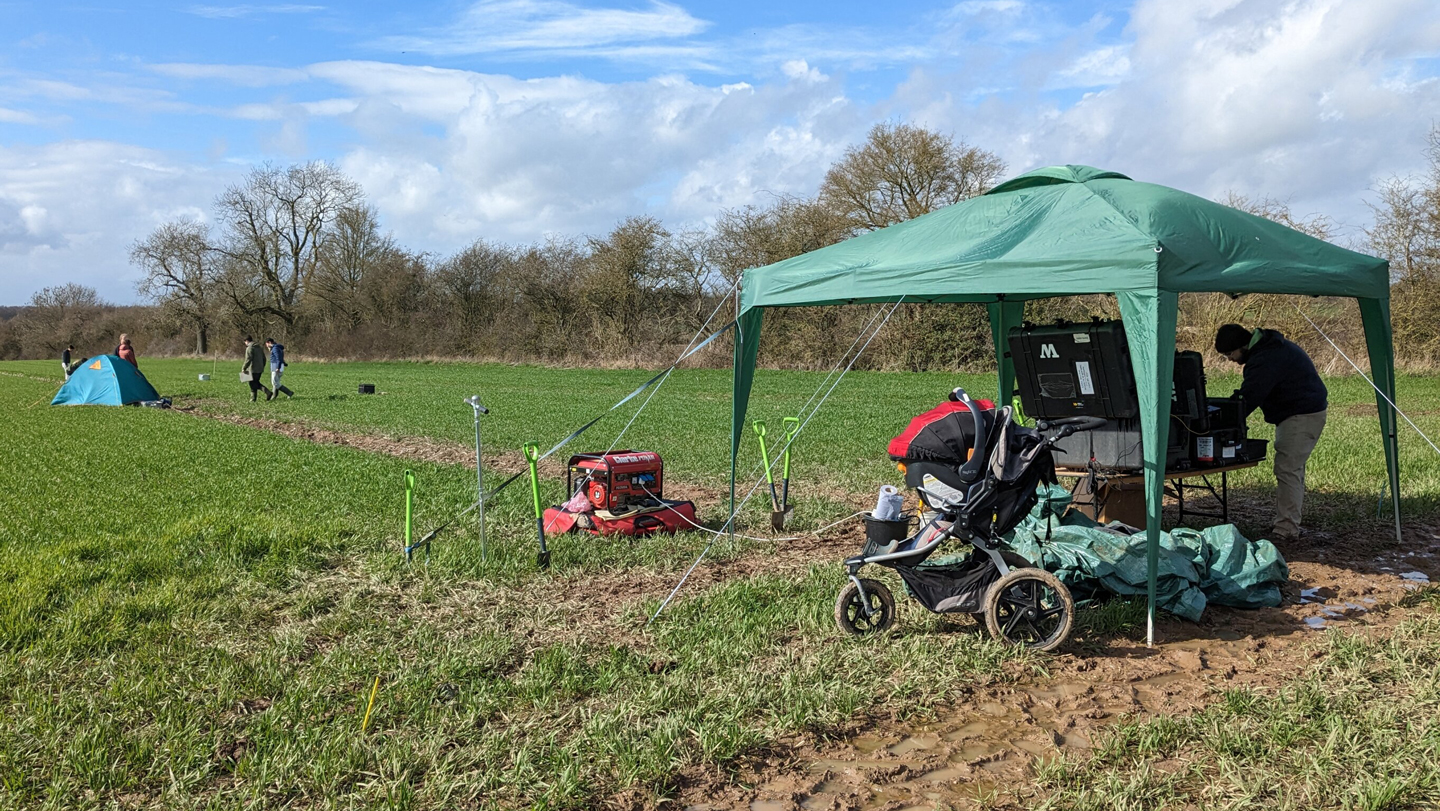
The researchers tested this setup at a real-world spot—the Harper Adams University test farm in Newport, England—creating an experimental playground divided into 27 plots. Each plot was prepared differently to mimic various farming styles. Some were left untouched, grassy and natural, like a wild meadow blooming with biodiversity. Others were tilled to 10 centimeters deep, a moderate touch meant to loosen the top layer without going overboard. The deepest went to 25 centimeters, a thorough upheaval that cuts through more soil layers. But they didn’t stop there; the team varied the tillage by the machinery’s weight, which directly affects compaction— the denser the tools, the more the soil gets squeezed. This thoughtful design reflects the real choices farmers face: Do you go light and gentle, preserving structure, or heavy and aggressive for efficiency? By observing these variations, the study captures the spectrum of tilling practices, from minimalist no-till farming that’s gaining popularity for its earth-friendly vibes to the traditional deep plows that many still rely on. It’s a practical glance into how our tools reshape the ground, and the results offer clues on better ways to farm without inflicting long-term scars.
During a rainy stretch in March 2023, the fiber-optic sensors buzzed with activity, logging seismic signals around the clock. For three days, they watched as rainwater interacted with the soil, painting a vivid picture of infiltration—or the lack thereof. In the heavily tilled and compacted plots, water behaved stubbornly: It lingered near the surface, forming pools that evaporated quickly in the sunshine, wasting precious resources. Deeper percolation was stymied, leaving the soil thirsty where it mattered. Conversely, in the untilled or lightly worked areas, water flowed more freely, distributing itself evenly through natural channels. This isn’t just about damp earth; it’s about survival. Evaporation means moisture doesn’t stick around to feed plants during dry times, and poor drainage invites runoff that can erode hillsides. The data from those sensors told a story of imbalance, where human intervention tipped the scales against nature’s balance. Farmers might not see the immediate drama, but this subtle shift affects yields, soil health, and even the broader environment. It’s a call to observe and adapt, using tools like these to fine-tune practices that keep water where it belongs—nourishing roots and replenishing aquifers.
To dig deeper into why this happens, the team built a computer model simulating the data—a digital twin of the soil’s inner workings. They discovered that water’s movement isn’t driven by gravity alone, as you might expect a river to flow downhill. Instead, in the porous soil, it’s all about capillary action, an invisible push-and-pull dance. Picture tiny pathways between soil particles like capillaries in our bodies—thin tubes where water clings to the surfaces and pulls other water molecules along due to forces of adhesion and cohesion. This capillary pressure is dynamic and powerful, sucking water through the matrix with suction that’s stronger where pathways are undisturbed. But when tilling compacts or disrupts these tubes, that pressure intensifies messily, creating barriers that halt flow. It’s akin to clogging your kitchen sponge; what should absorb and distribute fluid gets backed up. In heavily worked soil, this suction traps water at the top, preventing it from reaching deeper layers. The model revealed this mechanics underlying the seismic signals, explaining why no-till soils perform better—they maintain open networks where capillary forces work harmoniously without interruption. Understanding this helps us appreciate soil as a complex ecosystem, not a simple dirt pile, and guides smarter farming to preserve these natural pumps.
Beyond farming, the fiber-optic approach offers exciting prospects for broader monitoring, making it easier and cheaper to track soil moisture on a grand scale. Farmers could set up these systems quickly, getting real-time insights into their fields without constant manual checks. Imagine a dashboard showing where water is pooling or evaporating, allowing adjustments on the fly—perhaps irrigating more in dry spots or draining flood-prone areas. The technology also extends to hazard warnings, alerting communities to impending floods or the risks of liquefaction during earthquakes, where saturated soil turns jelly-like and unstable under tremors. This proactive tool could save lives and livelihoods, turning passive ground into a vigilant guardian. As we face a warming world with erratic weather, such innovations humanize science by empowering people to act. From ancient tillers to future sensor wizards, we’re learning to listen to the earth again, fostering resilience in soil, crops, and communities alike. This study isn’t just about plowing less; it’s about planting hope for sustainable agriculture that works with nature, not against it. By reimagining our relationship with the soil, we can nurture the planet back to health, ensuring that the earth continues to support us as abundantly as it has for generations.