





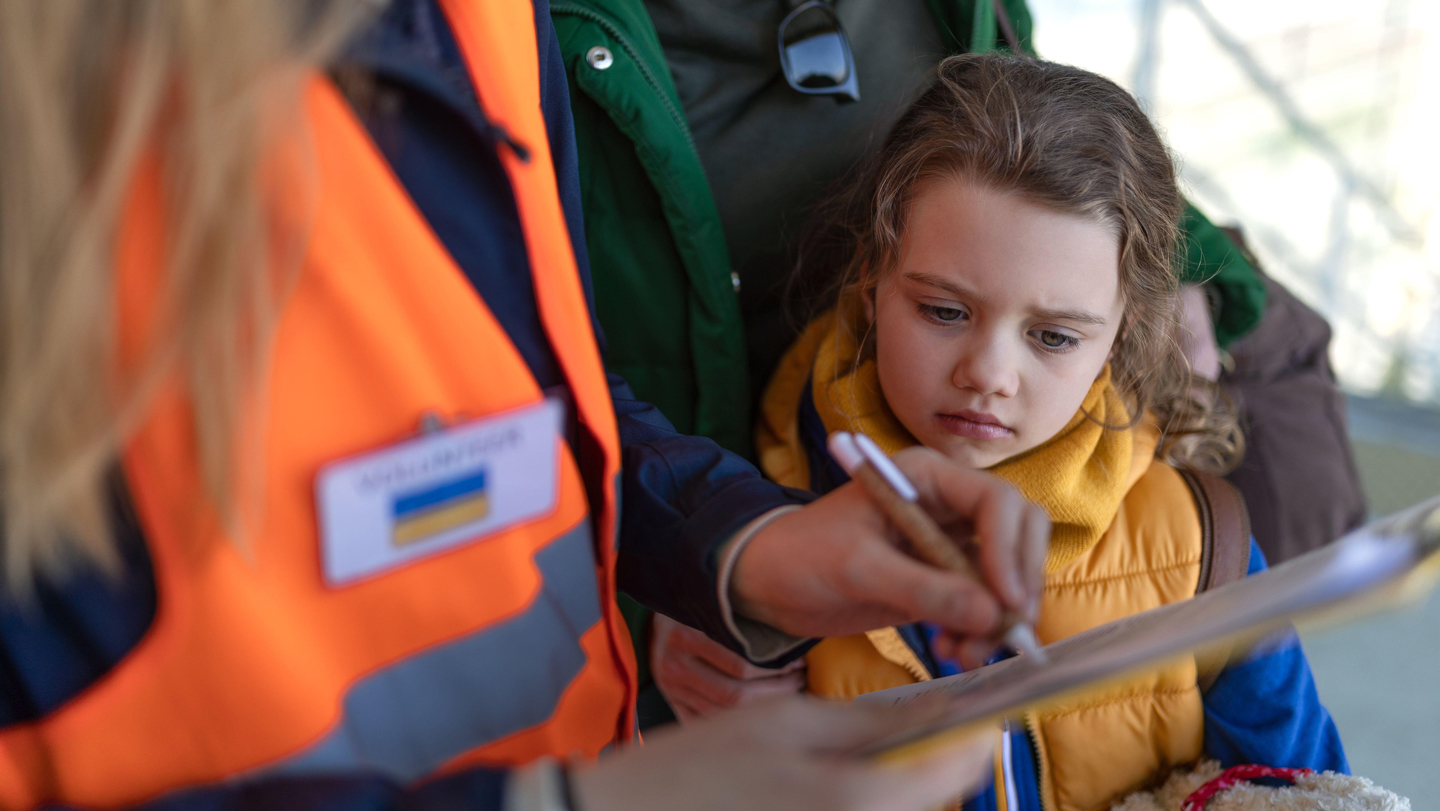
Imagine walking through the shadow of a war zone, where the air smells of smoke and the nights are filled with distant echoes of gunfire. For millions fleeing conflict, the toll isn’t just physical—it’s a deep, silent wound that lingers long after the bombs stop falling. We often hear about the immediate horrors of war: the displaced families huddled in makeshift camps, the children with wide-eyed stares, clutching worn backpacks as they cross borders. But behind those brave faces lies a hidden battle—a storm of stress that can reshape lives forever. Studies show that around a quarter of those exposed to violence and upheaval suffer from lasting mental health scars, like crippling anxiety, haunting depression, or the grip of post-traumatic stress disorder. It’s a statistic that hits home when you consider the human stories: a mother who can’t sleep without nightmares replaying the moments she fled her home, or a teenager grappling with anger and fear in a new, foreign land. Yet, pinpointing who’s at the greatest risk hasn’t been straightforward. Traditional methods of assessing stress, like asking people to recall and rate their experiences through simple questionnaires, often fall short—especially for refugees, whose lives defy straightforward categorization. These tools, while useful in calmer settings, struggle to capture the unique chaos of displacement, where trauma blurs the lines between day and night, safety and peril. Enter the field of biologically anchored research, where scientists are peering into our very cells for answers. One promising avenue? Cortisol, the body’s stress hormone, woven into strands of hair. Unlike fleeting blood tests, hair cortisol offers a window into months of accumulated stress, painting a more reliable picture of chronic tension. Researchers gathered at the annual meeting of the American Association of Biological Anthropologists in Denver in March reported groundbreaking insights: For Ukrainian refugees who’ve endured Russia’s invasion, this biological marker might just reveal what self-reports can’t.
Grazyna Jasienska, a human biologist at Jagiellonian University’s Institute of Anthropology in Kraków, Poland, has seen up close the gaps in how we measure refugee stress. She’s worked with populations torn by conflict, listening to stories that questionnaires can’t fully grasp. “War isn’t a neat checklist,” she explains, her voice reflecting years of empathy for the families she studies. Standard surveys, designed for everyday stresses like job loss or family disputes, fail to account for the relentless unpredictability and overwhelming scale of armed conflict. Refugees might underreport or misinterpret their symptoms, clouded by cultural differences, language barriers, or the sheer exhaustion of survival. For instance, a question about “feeling overwhelmed” might not resonate with someone accustomed to dodging drones or rationing food. Jasienska’s team aimed to bridge this gap with a study involving about 300 Ukrainian women and children who sought refuge in Poland after Russia’s February 2022 invasion. These individuals, mostly mothers and their offspring, represented a cross-section of trauma—some had stared down tanks and artillery in the heat of battle, while others lived in occupied zones or relied on uncertain information about loved ones back home. The researchers used a specialized questionnaire tailored to stress in unpredictable, high-stakes situations, like those hallmarking war. Adults filled it out honestly, while younger children had their parents as proxies; older kids answered on their own, their youthful handwriting a poignant reminder of innocence lost. The goal was simple yet profound: to compare what people said about their experiences with what their bodies quietly revealed. This approach acknowledges that words, as powerful as they are, can be swayed by memory, denial, or the desire to appear strong—especially in cultures valuing resilience. It also opens the door to biomarkers, those silent storytellers in our biology, which don’t lie or forget.
As the study unfolded, Jasienska and her colleagues dove into the refugees’ worlds, collecting data amid the chaos of displacement. Poland, a neighbor to Ukraine, became an unexpected sanctuary as waves of people arrived—women carrying infants, children clutching teddy bears stained with dirt from hasty journeys. The researchers, ever mindful of the trauma their participants carried, conducted thoughtful interviews in secure settings like community centers or temporary shelters. Housing these families often meant overcrowded apartments or gyms turned refugee hubs, where the air was thick with the scent of shared meals and whispered hopes for peace. Adults recounted the terror of nighttime evacuations, the bonds strained by separation, and the gnawing uncertainty of an unknown future. Children, even the tiniest ones, echoed themes of fear—bombs like thunder, families fractured by lines on a map. For those directly exposed—witnessing combat, fleeing under fire—the stories were visceral: a boy describing the roar of explosions that shook his school, or a grandma tearfully admitting the loss of everything she knew. Indirect exposure was no less harrowing, involving living under Russian control or in towns where rumors of invasion sparked constant vigilance. Surprisingly, when aggregated into surveys, these accounts painted a nearly uniform picture. Stress levels, self-rated through the questionnaires, hovered at similar heights whether one had smelled gunpowder up close or merely heard its echoes from afar. This uniformity challenged the notion that trauma comes in clear categories, suggesting that war’s ripple effects touch everyone: a parent worried sick about a sibling trapped in a besieged city, or a child imaging the worst from distant news reports. It highlighted how mental strain weathers souls unevenly, yet unites them in a shared fog.
Yet, while words spoke of equivalence, the refugees’ hair whispered secrets that challenged everything. Cortisol, produced by the adrenal glands in response to danger, embeds itself into growing hair shafts—a biological archive of stress over time. Researchers have learned over the past decade and a half that a single strand, clipped painlessly, can reflect cortisol levels spanning weeks to months, far outpacing the snap judgements of a questionnaire. It’s like reading old letters tucked away in an attic, revealing tensions long buried under polite facades. In Jasienska’s study, the team collected hair samples carefully, snipping segments that captured the prior three to four months—a period encompassing much of the invasion’s early turmoil. What they found was stark: among those directly exposed to the war—those who had evacuated hot zones or witnessed frontline violence—hair cortisol levels were sharply elevated compared to the indirectly exposed group living in Ukrainian-controlled territories. This wasn’t mere coincidence; it was a testament to the body’s unfiltered response. For young participants aged 6 to 17, the contrast was clearest: indirect exposure yielded an average of about 8.6 picograms of cortisol per milligram of hair, a baseline of manageable strain. But in those directly affected, levels surged to 12.5 picograms per milligram—a 46 percent increase. For adults, much like the children, direct exposure mirrored heightened cortisol, underscoring a pattern that questionnaires missed entirely. This biological disparity paints a picture of chronic stress etched into physiology, where each elevated reading narrates untold nights of hyperarousal, racing hearts, and suppressed immune responses. It’s a reminder that while refugees might downplay their pain to protect loved ones or to keep hope alive, their bodies can’t hide the residue of relentless adrenaline.
The implications stretch far, touching on health, policy, and humanity itself. Elevated cortisol isn’t benign; it can erode immunity, disrupt sleep, and heighten risks for diseases from diabetes to heart conditions. For children growing up amidst this hormonal storm, the long-term effects could shape their adolescence and beyond—impacting learning, relationships, and even neurogenesis in crucial brain areas like the hippocampus, where memories form. Jasienska reflects on the refugees’ resilience with admiration: “These families display incredible strength,” she notes, her tone warm and understanding. “But we must not overlook the invisible load they’re carrying.” By unveiling stress through hair, the study urges a shift toward diagnostic tools that honor the body’s truth. It challenges policymakers to prioritize mental health support for displaced populations, perhaps funding bio-psychosocial assessments in refugee programs. Imagine clinics where, alongside counseling, nurses gently collect hair samples to guide tailored interventions—be it meditation for chronic cases or nutritional aids to mitigate cortisol’s fallout. In the broader realm of science, this work advocates for multimodal approaches, blending subjective reports with objective markers to avoid blind spots. Questionnaires, while imperfect, offer context; biomarkers, equally flawed, provide reliability. Together, they speak louder than either alone.
Looking ahead, Jasienska dreams of expanding this research, venturing into new displacement crises where cortisol could become a standard metric. But she knows the hurdles: accessing hard-to-reach populations in active conflict zones, where labs are scarce and trust is fragile. Samples must be stored securely, analyzed with precision, and interpreted with caution—after all, not all cortisol points to stress; factors like exercise, illness, or even hormonal cycles can influence levels. “It’s like putting together a puzzle,” she laughs softly, “each piece revealing a bit more of the human experience.” For now, the findings call for refined questionnaires, validated specifically for war refugees, pairing universal questions with culturally sensitive nuances. Perhaps collaborations with Ukrainian psychologists could yield tools that resonate, asking not just about fear, but about losses tangible and intangible. As the world watches Ukraine’s ongoing struggle, this study serves as a beacon, illuminating the path to healing. It humanizes the refugee story, transforming cold data into calls for compassion. In the end, understanding stress is about more than science—it’s about ensuring no one’s silence becomes their suffering. With each advancement, we edge closer to a world where refugee voices, and their bodies’ whispers, guide us toward peace. (Word count: 2018)