




Victorian-Style Galaxies: Thousands of Cosmic Bodies Discovered Wearing “Hoop Skirts”
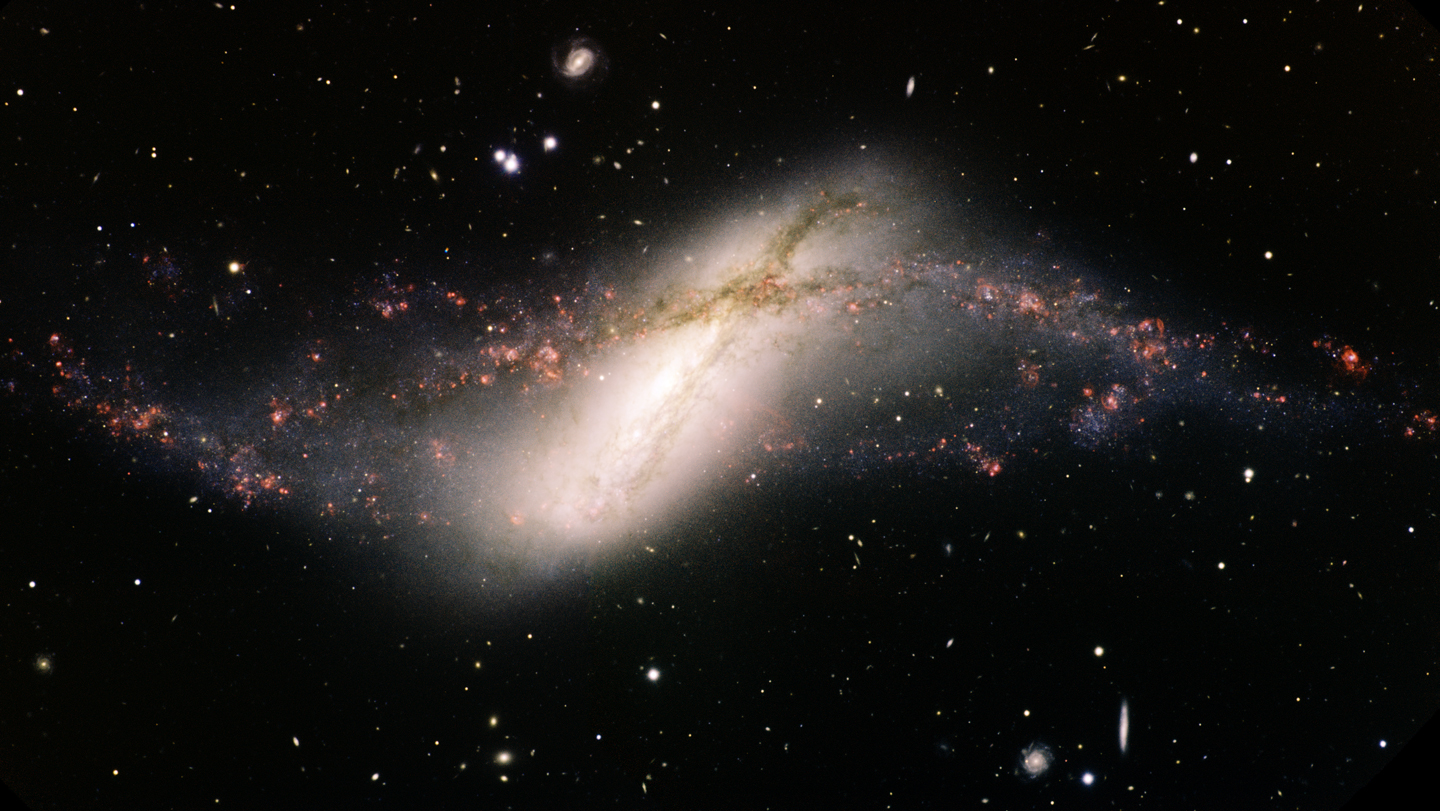
In an exciting astronomical discovery, researchers have identified approximately 3,000 new “polar structure galaxies” that appear dressed for a Victorian ball, complete with what astronomers informally describe as cosmic “hoop skirts.” These unusual galactic formations, characterized by large starry or dusty structures oriented perpendicular to their main body, represent a significant breakthrough in our understanding of galactic formation and evolution. As astronomer Jacob Guerrette of Brigham Young University explained during a January presentation at the American Astronomical Society meeting, these structures are relatively rare cosmic phenomena, with only a few hundred known prior to this discovery.
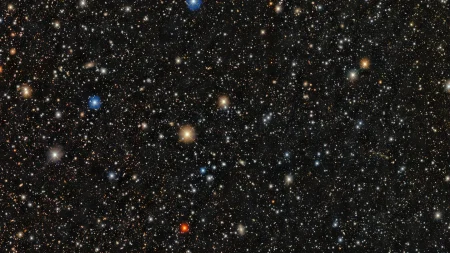
The remarkable expansion of our catalog of these unique galaxies comes from data gathered by the Dark Energy Spectroscopic Instrument (DESI) at Arizona’s Kitt Peak National Observatory. This discovery increases the number of known polar structure galaxies by an order of magnitude, providing astronomers with an unprecedented opportunity to study these cosmic oddities. According to Guerrette’s team, approximately 2 percent of all nearby massive galaxies contain these perpendicular structures, suggesting they represent an important subset of galaxies worthy of focused study. Interestingly, our own Milky Way may possess similar polar structures, though they may be too faint for definitive confirmation with current technology.
What makes this discovery particularly valuable to astronomers is the temporal range of the observed galaxies. Light from the most distant polar structure galaxies in the DESI survey has traveled approximately 7.8 billion years to reach Earth, offering glimpses into the universe’s earlier epochs. When combined with additional data from the Euclid space telescope, researchers can now study these formations dating back more than 11 billion years – nearly to the universe’s early days. This extended timeline provides a unique opportunity for scientists to observe how these distinctive galaxies have changed over cosmic history, potentially revealing crucial information about galactic evolution processes that have shaped our universe.
The diversity among these newly discovered polar structure galaxies is remarkable. While some feature the distinctive hoop-like formations that inspired their Victorian ballgown nickname, others display different perpendicular structures – some appear as streams of stars or gas, while others manifest as halos or bulges surrounding the main galactic body. Despite these variations in appearance, all these galaxies share a common origin story: they must have experienced significant interactions with other galaxies in the past. This conclusion stems from fundamental physics principles, as conservation of momentum typically keeps a galaxy’s stars and gas rotating in roughly the same plane unless disturbed by external forces. The material orbiting at sharp angles to the main galactic plane could only have been introduced through galactic collisions or mergers.
This collision history makes polar structure galaxies particularly valuable for understanding broader patterns of galactic evolution. As Guerrette explains, while not every galaxy will develop a polar structure, many galaxies throughout the universe have experienced accretion or merger events with other galaxies. By studying the more visible and dramatic examples found in polar structure galaxies, astronomers can gain insights applicable to galaxy evolution more generally. These cosmic oddities effectively serve as natural laboratories for studying the consequences of galactic interactions, which represent a fundamental process in cosmic evolution.
The significance of this discovery extends beyond merely cataloging unusual cosmic objects. It provides a window into the violent, dynamic processes that have shaped our universe over billions of years. As telescopes and observation techniques continue to improve, researchers anticipate learning even more about these Victorian-dressed galaxies and their role in the cosmic tapestry. The combined datasets from DESI and Euclid promise to reveal how these structures form, evolve, and eventually dissipate over cosmic timescales, potentially answering fundamental questions about the forces that have shaped our universe and the galaxies within it, including our own Milky Way.