




The Sun’s Mysterious Boundary: A Pufferfish-Like Atmosphere Protecting Our Solar System
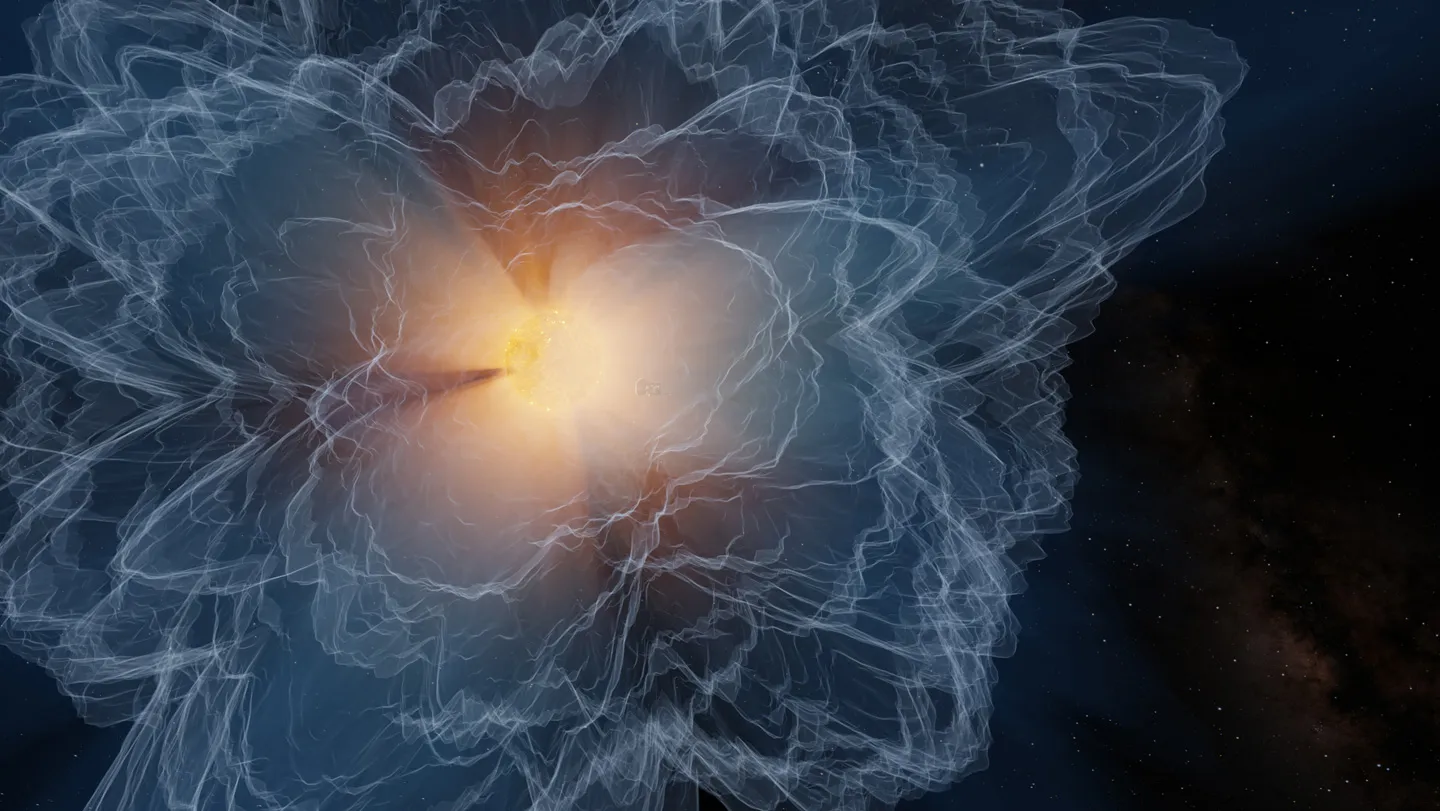
In a groundbreaking scientific discovery, researchers have created the first verified maps of the shifting boundary between the sun and the rest of our solar system, revealing an unexpected resemblance to a pufferfish. “The structure is basically this kind of corrugated, spiky shape,” explains heliophysicist Sam Badman from the Harvard-Smithsonian Center for Astrophysics. This boundary, known as the Alfvén critical surface, serves as an invisible line of demarcation between the sun’s corona and the solar wind. More fascinatingly, researchers have observed that as solar activity increases, this boundary expands and becomes spikier, much like a pufferfish inflating itself when threatened.
The significance of mapping the Alfvén surface extends far beyond mere scientific curiosity. This knowledge could revolutionize our ability to predict how solar activity affects satellites orbiting Earth, impacts human and animal health, and influences atmospheric phenomena such as the breathtaking auroras that dance across our polar skies. The Alfvén surface represents a crucial “point of no return” for plasma and particles departing the sun to become solar wind. Until recently, scientists could only estimate its shape and dimensions using observations from spacecraft positioned approximately at Earth’s distance from the sun, leaving much about this mysterious boundary to theoretical models.
A major breakthrough came in 2021 when NASA’s Parker Solar Probe achieved what was previously thought impossible: it penetrated below the Alfvén surface, venturing about 13 million kilometers from the sun’s surface. This historic crossing marked humanity’s first direct contact with the sun’s atmosphere. Since this initial journey, the intrepid spacecraft has completed 15 more dips into the corona, with its closest approach reaching just 6.1 million kilometers from the sun’s surface in December 2024. These unprecedented missions have provided scientists with direct measurements that, when combined with remote data from other sun-observing spacecraft, have allowed Badman and his colleagues to create detailed maps of the boundary’s shape and the properties of the plasma contained within it.
The research team’s observations have revealed fascinating changes in the Alfvén surface throughout the sun’s 11-year magnetic cycle. As our star transitions from solar minimum (characterized by relatively few sunspots and flares) to solar maximum, the boundary undergoes a remarkable transformation, expanding outward while becoming more chaotic and less spherical in shape. This dynamic nature of the sun’s atmosphere highlights the complexity of our nearest star. Looking ahead, researchers are eager to continue tracking these changes as the Parker Solar Probe repeatedly crosses this boundary during the sun’s return to solar minimum over the next five years, potentially revealing even more secrets about our star’s atmospheric behavior.
The implications of these findings extend well beyond our solar system. Many exoplanetary systems feature planets orbiting extremely close to their host stars, some of which exhibit much stronger magnetic activity than our sun. In these systems, the Alfvén surface likely extends much further out, potentially engulfing nearby planets completely. Badman notes that planets perpetually trapped within their star’s Alfvén boundary would face harsh conditions: “That probably won’t be good news for habitability.” This insight provides astronomers with new perspectives on the habitability of exoplanets and the protective qualities that a properly positioned Alfvén surface might provide.
As our understanding of the sun’s protective boundary continues to evolve, so too does our appreciation for the delicate balance that makes life possible on Earth. The pufferfish-like atmosphere of our sun represents not just a scientific curiosity but a fundamental protective mechanism that shields our planetary neighborhood from the harshest effects of solar activity. Through continued observation and exploration, scientists hope to unlock more secrets of this dynamic boundary, enhancing our ability to predict space weather and better understand the intricate relationship between stars and their planetary systems throughout the universe.